
If you’re comparing Aventon vs Yuba in 2026, I want to be upfront about something right away. These two brands aren’t really chasing the same customer.
One sells a broad, do-it-all lineup. The other has spent close to two decades specializing in one problem: how do you replace car trips with a bike that can carry people, groceries, and everyday gear?
Aventon is where I point most people who want a well-rounded e-bike without a bike-shop price tag. Torque sensors, app-based GPS security, a dedicated cargo platform, and a genuine mid-drive mountain bike all sit under one roof.
Yuba specializes in cargo bikes. Its lineup is built around hauling kids, groceries, pets, or gear, with electric models using Bosch or Shimano mid-drive systems and non-electric options available in some markets.
So which brand actually deserves your money?
I compared the brands across motor systems, pedal-assist sensing, battery capacity, comfort, build quality, security features, cargo practicality, and value. Specs and prices can vary by model, market, and model-year availability, so check the linked manufacturer pages before buying.
How I evaluated this: I looked at current specs, pricing, warranty terms, dealer and support networks, and real-world impressions from independent reviewers and long-term owners. My focus was on everyday riding, cargo hauling, and honest practicality, not just numbers on a spec sheet.
If you’ve read my other brand matchups, like Aventon vs Tern, Aventon vs Super73, or Aventon vs Juiced Bikes, you already know my approach. Here’s where Aventon and Yuba each win.
Aventon vs Yuba: Quick Comparison
| Category | Aventon | Yuba |
| Best for | A broad, tech-integrated lineup | Cargo bikes designed around carrying loads |
| Motor performance | Hub-drive options plus an A100 mid-drive | Electric models include cargo-focused mid-drives |
| Pedal-assist sensing | Torque sensors on many current models | Depends on the electric model and drive system |
| Ride feel | Sportier and more bicycle-like | Low, stable, built to carry weight |
| Commuter e-bikes | Dedicated commuter models available | No dedicated commuter-focused range |
| Lightweight e-bikes | Soltera line and other lighter options | Cargo-first lineup; not a direct focus |
| Fat-tire/moto-style | Excellent, Aventure line | Not offered |
| Cargo e-bikes | Yes, dedicated Abound platform | Excellent, the entire lineup |
| Frontloader cargo | Not offered | Yes, SuperCargo CL |
| Mid-drive e-bikes | Yes, including the Ramblas A100 | Yes, on current electric models |
| Unique formats | None | Frontloader box bikes, compact cargo models |
| Smart security | Connected GPS and app features on select models | No equivalent brand-wide cellular GPS system |
| Dealer support | Broad partner-dealer network | Smaller, cargo-bike-focused dealer network |
| Price range | Varies by model and sale | Varies by model, configuration, and market |
| Overall value | Very good | Excellent, if cargo is genuinely the job |
What’s the Difference Between Aventon and Yuba?
The quickest way I can explain these two brands is to look at what each one is actually trying to be.
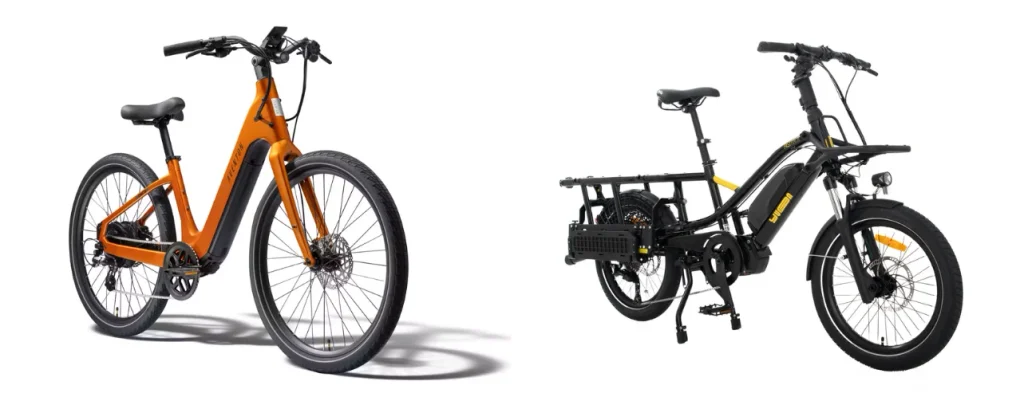
Aventon builds a broad, tech-forward catalog. Select current models include the Aventon Control Unit, which supports connected features such as GPS tracking, movement alerts, app-based ride data, and over-the-air updates. The lineup spans commuter and city bikes, fat-tire models, a dedicated cargo platform, and a mid-drive electric mountain bike.
If you’re deciding between Aventon’s own models first, my guide to which Aventon electric bike is best for you is a good starting point.
Yuba has been building cargo bikes since 2007. Its range is organized around how much and what you need to carry, with electric models using Bosch or Shimano mid-drive systems and some markets also offering non-electric cargo bikes. The Kombi is a compact option for everyday loads, while models such as the Boda Boda and Spicy Curry+ offer longtail layouts for passengers and gear.
The SuperCargo CL frontloader puts cargo in a box ahead of the rider, a layout some parents prefer because they can keep children in view. Yuba does not compete with Aventon across a similarly broad commuter, lightweight, fat-tire, and trail-bike range. Its depth is in cargo-bike design.
Neither approach is wrong. They just serve very different riders.
Motor Power
This isn’t really a fair fight on paper, and I think it’s worth saying so plainly.
Aventon’s hub-motor models vary by model and market, with current examples such as the Abound SR and Aventure 3 using a 750W hub motor rated at 80Nm. The Ramblas uses Aventon’s A100 mid-drive motor, rated at 100Nm. Always compare the specific models you’re considering rather than treating one motor figure as representative of the whole brand.
Yuba’s electric cargo models use mid-drive systems selected for loaded riding. The exact motor depends on the model and model year, so confirm the manufacturer’s specification for the bike you’re buying rather than assuming every model shares the same unit or torque rating. In general, a cargo-tuned mid-drive can make controlled starts and hill climbing feel more natural when the bike is carrying passengers or heavy bags.
Wattage alone doesn’t tell the full story. If you want to understand what those numbers mean on the road, my guide to how fast a 48V electric bike can go explains why torque and gearing matter more than a single spec, and my guide to the best electric bikes for steep hills covers why that matters even more once you’re carrying passengers.
Winner: Yuba for cargo hauling
Yuba’s cargo-focused electric models and mid-drive systems are designed around loaded starts and hill climbing. Aventon’s A100 mid-drive is a meaningful exception to any blanket comparison, so the fairest verdict depends on the exact bikes.
Torque Sensors and Ride Feel
Both brands get the fundamentals right here, which I appreciate given how different the price points are.
My guide to what pedal assist is on an electric bike breaks down torque and cadence sensing if you want the full explanation.
Aventon runs torque sensors across most of its current lineup, and select models let you toggle between torque and cadence with Sensor Switch. Power feels proportional to effort.
Yuba relies on the torque sensing built into its Bosch and Shimano drive units, which I’d call best in class. That matters even more on a cargo bike than a commuter, since a jerky or delayed power delivery is a real problem when you’ve got a kid strapped into a seat behind you.
Winner: Split
Both brands deliver proportional, well-calibrated power. Yuba’s advantage is that its sensing stays consistent even under heavy cargo loads, where Aventon’s current lineup isn’t really tested the same way.
Range and Battery Size
Range on a cargo bike means something different than it does on a commuter, since weight changes everything.
Aventon’s batteries generally run 345Wh to 720Wh, fully integrated into the frame.
Yuba’s battery capacity varies by electric model and model year. The Kombi EP5 is listed with a 504Wh battery, while the Spicy Curry+ uses a 625Wh pack. Check the current specification for the Boda Boda and SuperCargo CL in your market before publishing exact capacity figures. Battery size alone does not establish real-world range, especially on a cargo bike where passenger and cargo weight, terrain, assist level, and speed can make a substantial difference.
Actual range depends on:
- Rider weight
- Terrain and hills
- Wind and temperature
- Tire pressure
- Assist level and average speed
- Throttle use
- Cargo weight
There is no dependable miles-per-watt-hour rule that applies to every rider or cargo setup. Use manufacturer range figures as estimates, then allow for lower range with heavy loads, hills, cold weather, high assist, or frequent stops. If you’re hauling a heavier load regularly, check my guide to the best electric bikes for heavy riders, since payload affects range more than most spec sheets admit.
It’s also worth reading up on how to charge an electric bike, how much it costs to charge an electric bike, and what actually goes into choosing the best battery for an electric bike before you commit to a cargo setup you’ll ride daily.
Winner: Split
Aventon’s top-end battery sizes are competitive on paper, but Yuba’s packs are purpose-tuned for loaded cargo riding in a way Aventon’s current lineup doesn’t need to be.
Comfort and Ride Quality
Both brands aim for comfortable, but they’re solving completely different problems.
Aventon builds consistently comfortable bikes, with suspension seatposts, adjustable stems, and suspension forks on most models, tuned for an upright, bicycle-like ride.
Yuba’s comfort story is about stability under load rather than plushness. Its longtail and frontloader designs prioritize a planted feel with passengers or cargo on board, although geometry and handling differ across models. Fit and step-over height vary by model and frame configuration. A low step-through or cargo-bike frame can make mounting easier when carrying children, but check the published rider-height range and, ideally, test ride the exact model. None of these ride like a sporty commuter, but that’s not really what they’re built for.
Winner: Split
Aventon is more comfortable for everyday solo pedaling. Yuba is more comfortable and composed once you actually load it up, which is the whole point.
Build Quality and Durability
Both brands build genuinely solid bikes, just for different jobs.
Aventon generally has the edge on finish and fit for the money, backed by a consistent production history at a more accessible price.
Yuba builds around cargo-bike stability, practical accessories, and components suited to regular hauling. Brake brands, weights, safety certifications, and maximum load ratings vary by model, so check the individual specification rather than applying one claim to the entire range. Cargo bikes can be heavy because of their frames, wheels, racks, and accessories; the trade-off is stability and carrying capacity. If component wear and weight matter to you, my guide to how much the average electric bike weighs is worth a look.
Both brands use hydraulic disc brakes on their current lineups, and it’s worth understanding how hydraulic brakes stack up against mechanical ones.
Winner: Yuba for cargo-specific design
Its specialist focus and long experience with cargo-bike layouts give Yuba a strong case here. Compare the actual frame, brakes, rack ratings, and warranty for each model before making a final call.
Security and Smart Features
Aventon has a clear lead here, and it’s not close.
The Aventon Control Unit brings 4G-connected GPS tracking, unexpected-movement alerts, and keyless battery access on many current models.
Yuba’s electric models provide drive-system displays and app features where supported by the Bosch or Shimano system, but they do not offer the same Aventon-branded cellular GPS ecosystem across the range. Confirm the security features on the exact model and specification you’re considering. For a bike that’s often parked outside a school or grocery store, I think that’s a real gap worth knowing about going in.
Winner: Aventon
If GPS tracking and app-based anti-theft matter to you, Aventon is the more complete option.
Cargo E‑Bikes: Aventon Abound SR vs Yuba Kombi EP5
This is the closest the two brands come to a direct, apples-to-apples matchup.
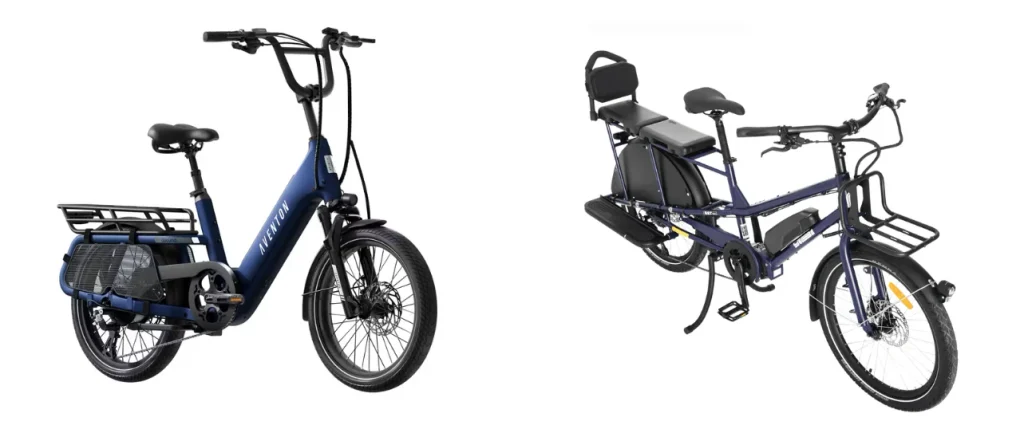
Aventon’s Abound SR uses a 750W hub motor rated at 80Nm, a torque sensor, and connected security features that include GPS positioning support and an electronic locking kickstand. Its listed price can change with promotions, so check the official product page before buying. My Aventon Abound SR review covers how it handles under load.
Yuba’s Kombi EP5 uses a Shimano EP5 mid-drive and a 504Wh removable battery. Confirm its current brake specification, load rating, and price on Yuba’s regional product page, as these details can vary by configuration and market. It sits toward the accessible end of Yuba’s electric cargo range, but remains a cargo-first design from a specialist brand.
Winner: Split
The Abound SR wins on price and smart security. The Kombi EP5 wins on mid-drive refinement and cargo-specific engineering, if you can stretch the budget.
Heavy-Duty Family Cargo: Aventon Abound LR vs Yuba Spicy Curry+
If you’re hauling kids, groceries, or both on a regular basis, this is the matchup that actually matters.
Aventon’s Abound LR extends the Abound platform with a longer rack and a higher payload rating, keeping the same torque sensor and ACU security suite as the SR. I’d call it the more budget-conscious choice for family cargo duty.
Yuba’s Spicy Curry+ pairs a Bosch Cargo Line motor with a 625Wh battery and is listed by Yuba with capacity for up to three passengers and 440 lb of hauling capacity on its US product page. Be careful to distinguish a stated hauling capacity from a gross vehicle weight limit, and check the current regional specification and price. It is built for families who want to replace many car trips, but its price is substantially higher than the Abound LR.
Winner: Split
The Spicy Curry+ is the more capable, more refined cargo bike if your budget allows it. The Abound LR gets most families most of what they need for meaningfully less money.
Where the Two Brands Stop Overlapping
This is where each brand does something the other simply doesn’t.
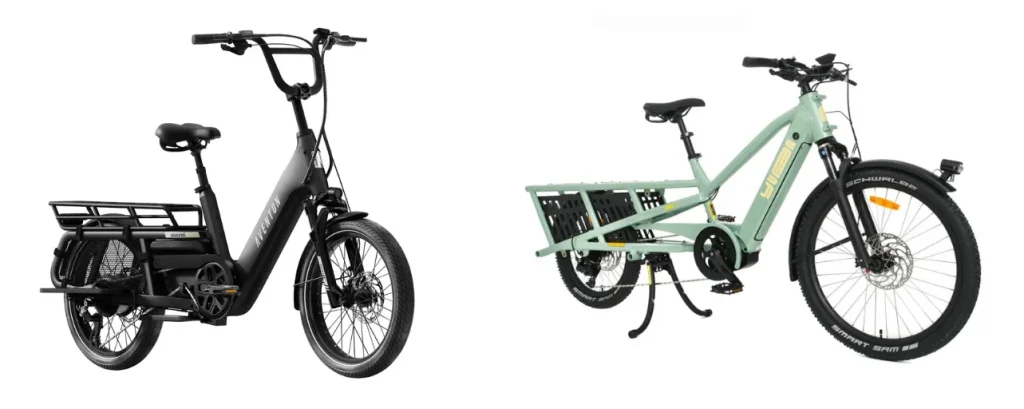
Aventon builds commuters, lightweight city bikes, fat-tire bikes, and a mid-drive mountain bike. Yuba doesn’t.
Models like the Aventon Level 3, the Aventon Soltera 2.5, and my roundup of the best fat-tire electric bikes cover everyday commuting, light city riding, and off-road capability respectively. The Aventon Ramblas ADV runs the A100 mid-drive motor at 100Nm with a coil fork and dropper post for real trail riding. Yuba has nothing in these categories, and it never set out to.
Yuba builds a dedicated frontloader cargo bike and a genuinely deep cargo specialty. Aventon doesn’t.
The SuperCargo CL puts cargo in a box out front rather than on a rear rack, which some parents prefer for keeping toddlers in view. The mini Boda Boda and FastRack cover smaller footprints for tighter city streets. If you’re weighing cargo options more broadly, my reviews of the RadRunner Plus, the Fiido T2, and the Lectric XPedition 2.0 cover more budget-friendly cargo builds worth cross-shopping against Yuba’s premium lineup.
Since Yuba doesn’t sell a folding bike, a commuter, or a fat-tire model, it’s worth knowing what else is out there if those formats matter to you too. My reviews of the Tern Vektron S10, the RadExpand 5 Plus, the Lectric XP Lite 2.0, the Lectric XP4 Step-Thru, the Ride1Up Portola, the Velotric Discover 2, the Velotric Discover 3, the Velotric Breeze 1, the Heybike Ranger 3.0 Pro, the Himiway D5 2.0, the Engwe Engine Pro 2.0, and the Evelo Galaxy Lux all cover ground that neither Aventon’s nor Yuba’s cargo-focused lineups touch directly.
If you want to see how these brands stack up against others, my comparisons of Aventon vs Ride1Up, Aventon vs Rad Power, and Aventon vs Velotric cover similar ground against other direct-to-consumer brands.
Yuba wins on cargo depth and frontloader options. Aventon wins on everyday variety and price accessibility.
Value for Money
This one leans toward Aventon for most budgets.
Yuba’s prices span a wide range because its catalog includes both non-electric and electric cargo bikes, and prices differ between Europe and North America. Its premium electric cargo models can cost substantially more than Aventon’s mainstream range. You’re paying for purpose-built cargo engineering, which can be worthwhile if hauling is genuinely the job.
Aventon’s pricing and feature set vary by model and sale, but it generally offers a broader set of e-bike types at more accessible entry prices. For context on pricing across the industry, my guide to why electric bikes are so expensive is worth a read, and my picks for the best electric bikes under $800 and the best electric bikes under $500 show just how far budget options have come. If a dedicated cargo bike still feels like overkill for your needs, my guide to the best electric bikes for delivery work and my comparison of what it costs versus an electric dirt bike are both worth a look for perspective.
More features and a lower average price make Aventon the stronger pick for most budgets.
Customer Support and Dealer Network
Aventon’s broader dealer network can be an advantage for shoppers who want a local test ride or in-person service.
Aventon has a broad partner-dealer network, which can make test rides, assembly, and in-person service easier where a local shop participates. Confirm the nearest authorized dealer and what services it offers before purchasing.
Yuba sells through a smaller network of specialty cargo-bike and family-bike dealers. I’d call this a trade-off rather than a weakness. Fewer locations overall, but the shops that do carry Yuba tend to have real hands-on experience fitting cargo bikes to specific families, which matters more than raw dealer count for this category.
If fit is a concern either way, my guides to the best electric bikes for short riders, the best electric bikes for short females, and the best electric bikes for tall riders can help you figure out which frame size actually works before you commit.
If in-person support and test rides matter, Aventon wins on sheer reach, though Yuba’s specialty dealers know cargo bikes deeply.
Aventon vs Yuba: Category Winners
| Category | Winner | Why |
| Motor power | Yuba | Purpose-built cargo mid-drives across the lineup |
| Pedal-assist sensing | Split | Both well-calibrated, Yuba tuned for loaded riding |
| Range and battery | Split | Yuba’s packs are purpose-tuned for cargo use |
| Comfort | Split | Aventon for solo riding, Yuba for loaded stability |
| Build quality | Yuba | Purpose-built cargo components and a deeper track record |
| Cargo | Split | Abound for price, Kombi/Spicy Curry+ for refinement |
| Frontloader cargo | Yuba | Nothing in Aventon’s lineup currently competes |
| Lineup breadth | Split | Aventon for everyday variety, Yuba for cargo depth |
| Smart security | Aventon | Integrated GPS tracking and app ecosystem |
| Value for money | Aventon | More accessible pricing on average |
| Dealer support | Aventon | Broader dealer reach versus a smaller specialist network |
Who Should Choose Yuba?
I’d point you toward Yuba if you want:
- A genuine mid-drive motor built specifically for hauling cargo and passengers
- A frontloader option that keeps kids in view up front
- High carrying capacity on selected models, subject to the model’s stated load limits
- A brand with close to two decades of cargo-bike-only focus
- Bike-shop-level component quality, and you don’t mind paying for it
Yuba makes the most sense if replacing a car for school runs, grocery trips, or hauling kids is genuinely the job the bike needs to do.
Who Should Choose Aventon?
Aventon may be the better choice if you want:
- A full lineup covering commuting, lightweight city riding, fat-tire, and trail riding
- Integrated 4G GPS tracking and app-based anti-theft security
- A torque-sensed ride at a fraction of Yuba’s price point
- The option to test ride before buying through its partner-dealer network
- A capable cargo bike without spending cargo-specialist money
Aventon makes the most sense if you want one brand covering commuting, city riding, fat-tire riding, trail riding, and cargo, without moving into the premium pricing of a cargo-bike specialist.
Aventon vs Yuba: Which Should You Buy?
So, Aventon vs Yuba: which is better?
If serious cargo hauling is genuinely what you need, and especially if you’re carrying multiple kids or want a frontloader, Yuba is worth the premium in 2026, especially in the Spicy Curry+ and SuperCargo CL.
That doesn’t make Aventon the weaker overall brand. Its lineup breadth, security ecosystem, and price accessibility solve problems Yuba’s cargo-only catalog doesn’t even try to address. If you want a commuter, a lightweight city bike, or a fat-tire trail bike alongside a solid cargo option, Aventon remains the stronger all-around choice.
If you’re weighing more brands, my comparisons of Aventon vs Trek and Aventon vs Specialized cover premium bike-shop names, while Aventon vs Giant and Aventon vs Cannondale tackle two more established makers. For budget rivals, see Aventon vs Himiway, Aventon vs Heybike, Aventon vs Mokwheel, Aventon vs Lectric, and Aventon vs Engwe.
For moto-styled alternatives, my comparisons of Aventon vs Super73, Aventon vs Juiced Bikes, and Aventon vs Cyrusher cover that end of the market, and my look at Aventon vs Tern and Aventon vs Fiido covers folding and budget territory. If you’re narrowing things down by speed class, my guides to the best Class 2 electric bikes and the best Class 3 electric bikes can help too.
The Bottom Line
Yuba wins for purpose-built cargo engineering, frontloader options, and the highest payload ratings here. Aventon wins for lineup breadth, smart security, value, and dealer reach.
Here’s the takeaway that matters more than a brand-wide winner.
Don’t pick the brand first. Pick the bike first.
- If you’re hauling multiple kids regularly, the Spicy Curry+ is about as capable as longtail cargo bikes get.
- If you want cargo kept in view up front, the SuperCargo CL’s frontloader design is worth a serious look.
- If you want strong cargo capability without cargo-specialist pricing, the Aventon Abound SR gets you most of the way there.
- If you want GPS security and a lower price across a broad lineup, Aventon is the safer everyday bet.
There isn’t one universal winner here. I’d say Yuba earns its premium price through nearly two decades of cargo-only focus, but that premium only makes sense if hauling is actually the job. Once you match the bike to how you actually use it, the right choice tends to get obvious fast.