
If you’re comparing Aventon vs Heybike in 2026, you’ve landed on two electric bike brands that pack a lot into their price tags, just in very different ways.
Both sell directly online. Both offer torque-sensor models, fat-tire e-bikes, commuter bikes, and feature-heavy electric bikes. But once you look beyond the headline wattage, the differences become much clearer.
- Aventon focuses on a polished, tech-integrated riding experience, with connected security features, commuter bikes, cargo e-bikes, fat-tire models, and the Ramblas ADV mid-drive eMTB.
- Heybike focuses heavily on features-per-dollar, with full-suspension folding bikes, large batteries, NFC controls, fat tires, moped-style models, and a growing range of high-powered electric bikes.
So which brand actually deserves your money?
Aventon Vs Heybike: How We Evaluated
I compared the current 2026 lineups across motor performance, torque sensing, battery capacity, comfort, build quality, smart features, price, and the categories where the two brands overlap most.
The goal isn’t to declare one brand universally better. It’s to show where each one makes the most sense, depending on the type of electric bike you’re looking for.
If you’ve read our other comparisons, including Aventon vs Lectric, Aventon vs Rad Power, or Aventon vs Himiway, you already know the approach.
Now let’s look at where Aventon and Heybike stand out, and where each brand has an edge.
Aventon Vs Heybike: Quick Comparison
| Category | Aventon | Heybike |
| Best for | Tech, refinement, security and lineup variety | Features-per-dollar and high-spec bikes |
| Motor performance | Strong, refined power delivery | High peak output on several models |
| Torque sensing | Common across current models | Common across newer models |
| Ride feel | More bicycle-like on many models | Bigger, more feature-packed feel |
| Commuter e-bikes | Strong lineup | Venus and Hybrid stand out |
| Fat-tire e-bikes | Aventure 3 | Mars 3.0 and ALPHA |
| Folding e-bikes | Sinch 2.5 | Mars 3.0 and Ranger 3.0 Pro |
| Full suspension | Available on select models | Major strength of the lineup |
| Cargo e-bikes | Dedicated Abound platform | No direct equivalent |
| Smart security | 4G GPS and connected features on select models | App connectivity and NFC on select models |
| Dealer support | 1,800+ shops | Growing dealer network |
| Price range | Roughly $1,199 to $2,899 across current models | Roughly $999 to $1,699 on the current main lineup |
| Value | Strong | Particularly strong for feature-heavy bikes |
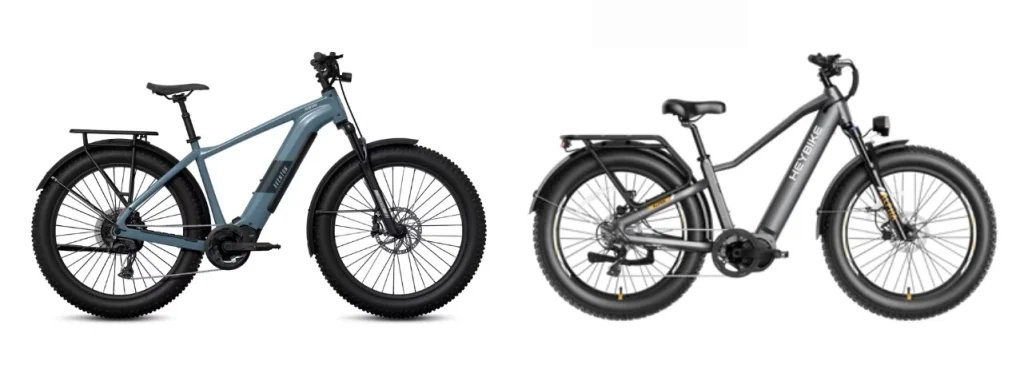
What’s The Difference Between Aventon And Heybike?
The easiest way to understand Aventon vs Heybike is to look at what each company is trying to accomplish.
Aventon has built a broad lineup around a more integrated ownership experience. Current models cover lightweight commuters, fat-tire e-bikes, cargo bikes, comfort bikes, and mid-drive performance models.
If you’re choosing between Aventon’s own models, our guide to which Aventon electric bike is best for you can help narrow things down.
Heybike takes a different route.
The brand has built much of its identity around putting big batteries, suspension, fat tires, high motor output, and extra features into bikes that remain relatively affordable.
That formula is easy to see in models such as the Saturn, Mars 3.0, Ranger 3.0 Pro, Venus and ALPHA.
Neither approach is necessarily better.
They simply appeal to different riders.
Motor Power: Aventon Vs Heybike
This is one area where Heybike’s numbers can look impressive very quickly.
Aventon uses a mixture of hub motors and mid-drive systems across its lineup. The Aventure 3, for example, uses a 750W rear hub motor with 80Nm of torque, while the Ramblas ADV uses Aventon’s A100 mid-drive system with 100Nm of torque.
Heybike also has plenty of 750W-class bikes, but its peak-power figures can be much higher.
The Mars 3.0 uses a 750W motor with up to 1,400W peak power and 95Nm of torque. The Ranger 3.0 Pro uses a 750W motor with 80Nm of torque and up to 1,200W peak output.
That doesn’t automatically mean a Heybike will feel faster or better on the road.
Motor tuning, gearing, rider weight, battery state, and tire size all affect how an electric bike actually feels.
For a deeper look at what motor wattage really means, see our guide to how fast a 750W electric bike can actually go.
Winner: Heybike
Heybike takes this category because several current models deliver higher peak output, giving riders more outright motor performance for the money.
Torque Sensors And Ride Feel
Torque sensing has become increasingly common in both brands.
A torque sensor measures how hard you’re pushing the pedals and adjusts motor assistance accordingly. That usually produces a more natural feeling than a basic cadence sensor.
Aventon has made torque sensing a major part of its current lineup, and the company’s bikes generally deliver a smooth, controlled pedal-assist experience.
Heybike has also moved strongly toward torque sensing on its newer models. The Mars 3.0 and Ranger 3.0 Pro, for example, use torque sensors rather than the cadence-based systems found on many older Heybike models.
That change matters.
The newer Heybike bikes feel much closer to what riders expect from a modern torque-sensor e-bike.
Still, Aventon has a longer track record with this type of tuning across a broad range of bikes.
Winner: Aventon
Aventon gets the edge for its longer track record of consistent torque-sensor tuning, although Heybike has closed the gap considerably with its newer models.
Range And Battery Size
Range is another area where Heybike looks particularly strong on paper.
Aventon’s current batteries range from smaller lightweight commuter packs to much larger batteries on models such as the Aventure 3, Abound and Aventure M.
Heybike goes big with battery capacity on several models.
The Ranger 3.0 Pro uses a 720Wh battery and claims up to 90 miles of range. The Mars 3.0 uses a 624Wh battery with a claimed range of up to 65 miles. The Hybrid uses an 864Wh battery and claims up to 100 miles.
The numbers look impressive, but claimed range is never the same thing as real-world range.
Your actual range depends heavily on:
- Rider weight
- Terrain and hills
- Wind
- Temperature
- Tire pressure
- Assist level
- Average speed
- Throttle use
- Cargo weight
If rider weight is one of your biggest concerns, our guide to the best electric bikes for heavy riders is worth checking out.
Winner: Heybike
Heybike takes the range category because several models offer large batteries and higher claimed ranges, particularly at their respective price points.
Comfort And Ride Quality
This is where the two brands take noticeably different approaches.
Aventon generally combines relatively clean frame designs with suspension forks, suspension seatposts, adjustable stems, and upright riding positions on comfort-focused models.
The result is a ride that still feels fairly bicycle-like.
Heybike is much more aggressive with suspension.
The Ranger 3.0 Pro uses a hydraulic front fork and adjustable rear air shock, giving it genuine full suspension in a folding fat-tire package.
The Mars 3.0 also combines a hydraulic fork with rear suspension.
Then there’s the Venus, which goes in the opposite direction. At around 45 pounds, it’s designed to provide a much lighter, more nimble experience than Heybike’s bigger fat-tire models.
If you’re regularly dealing with broken pavement, gravel, trails, or rough roads, Heybike’s suspension-heavy approach is hard to ignore.
Winner: Heybike
Heybike wins because its current lineup offers more aggressive suspension setups, especially the Ranger 3.0 Pro’s full-suspension folding design.
Build Quality And Durability
Both brands have improved their products considerably over the years.
Aventon generally has an edge in frame integration, cable management, fit, finish, and overall polish.
That doesn’t mean Heybike bikes are poorly built.
In fact, the newer models look considerably more refined than some of the brand’s earlier products.
Warranty coverage is also competitive, with both brands offering two-year coverage on their e-bikes under their respective warranty terms.
Winner: Aventon
Aventon gets the edge for overall fit, finish, frame integration, and the more polished feel across its current lineup.
Security And Smart Features
This is one of Aventon’s clearest advantages.
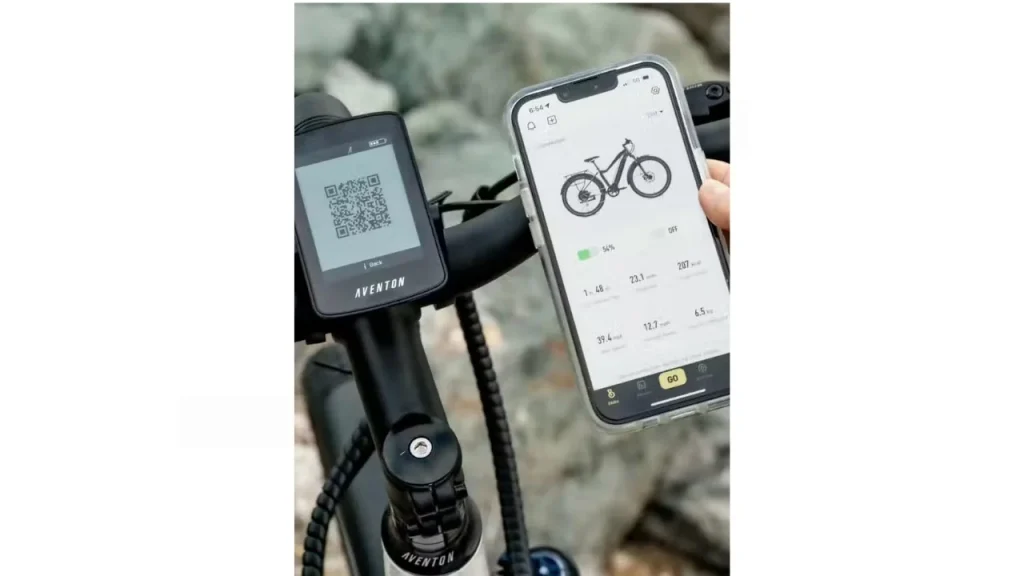
Many current Aventon models use the Aventon Control Unit, which brings connected features such as 4G GPS tracking, app-based security, ride data, and other smart functions.
That’s useful if you’re worried about where your expensive e-bike is parked.
Heybike also offers smart features on many current models.
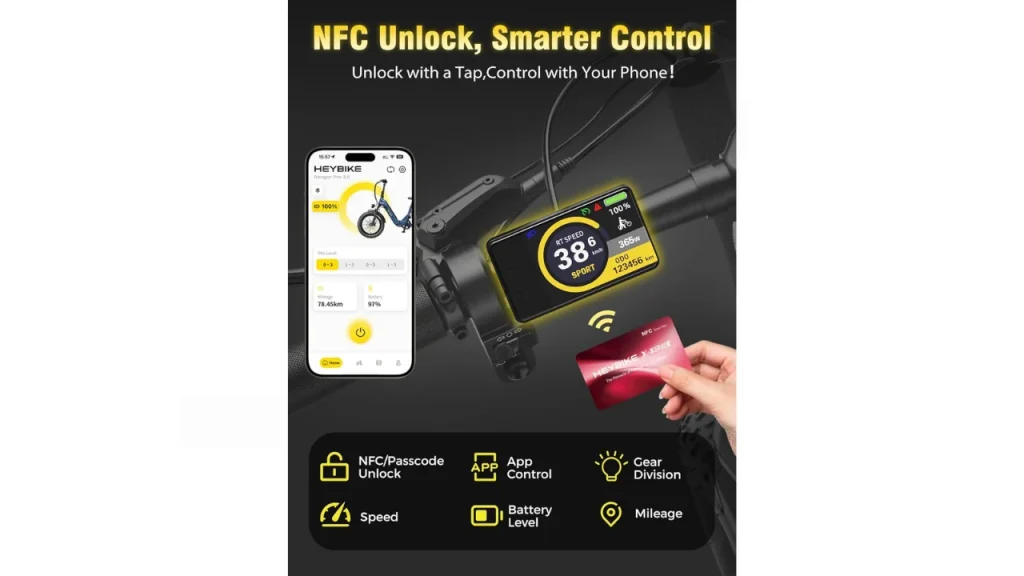
The Heybike app can provide remote controls, ride tracking and speed settings on compatible bikes. Models such as the Ranger 3.0 Pro and Mars 3.0 also feature NFC controls.
That’s useful, but NFC isn’t the same thing as cellular GPS tracking.
If integrated tracking and anti-theft technology are high on your priority list, Aventon’s system is more comprehensive.
Winner: Aventon
Aventon wins because its connected ecosystem offers integrated cellular GPS tracking and a more comprehensive approach to e-bike security.
Commuter E-Bikes: Aventon Soltera 2.5 Vs Heybike Venus
These two bikes represent a very different side of both brands.
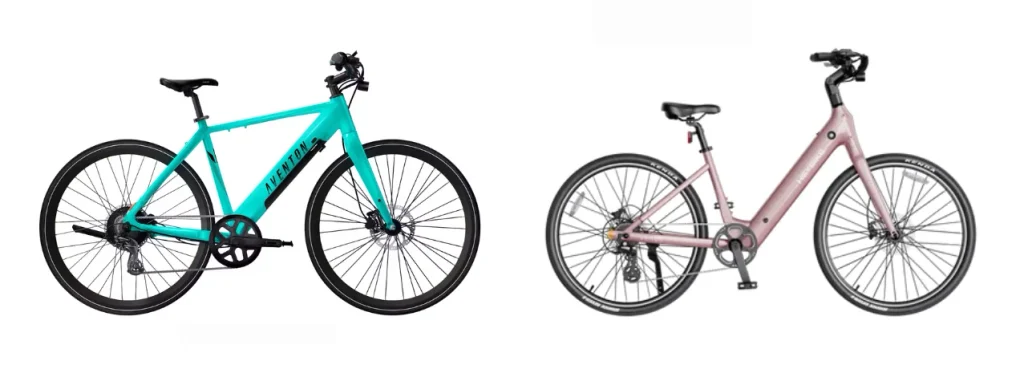
Aventon’s Soltera 2.5 is designed to stay light, simple and nimble. It weighs around 46 pounds, uses a 7-speed drivetrain, and has a torque sensor.
I’ve also spent time looking closely at this model in our Aventon Soltera 2.5 review.
Heybike’s Venus is one of the company’s most interesting departures from its usual fat-tire formula.
It’s also lightweight, with a large battery and a claimed range of up to 85 miles.
The Venus gives Heybike a credible option for riders who don’t want a giant fat-tire electric bike.
But if your main goal is a lightweight city e-bike that feels close to a traditional bicycle, the Soltera 2.5 is the more straightforward choice.
Winner: Aventon
The Soltera 2.5 offers the lighter, more bicycle-like commuting experience, making it the better fit for riders who prioritize easy handling and portability.
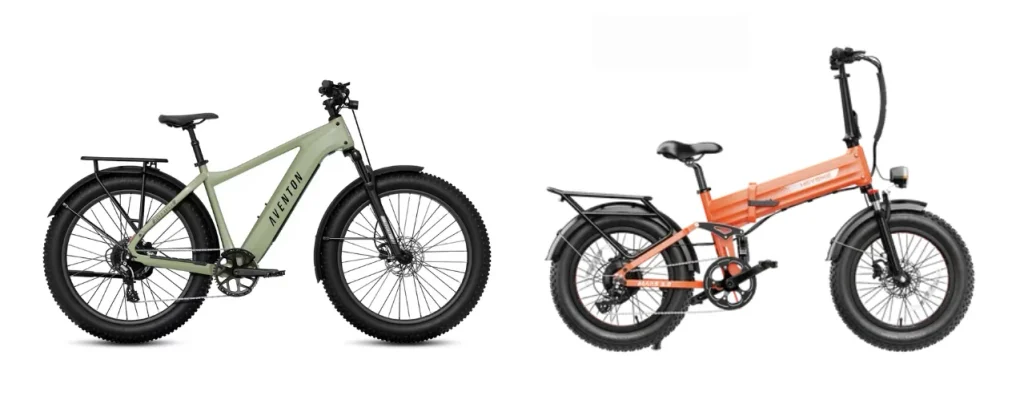
Fat-Tire E-Bikes: Aventon Aventure 3 Vs Heybike Mars 3.0
This is probably the most interesting direct matchup.
Aventon’s Aventure 3 is a full-size fat-tire e-bike with 4-inch tires, a 750W rear hub motor, 80Nm of torque, suspension, and a 65-mile claimed range.
Heybike’s Mars 3.0 is smaller and folds, but it doesn’t give up much in the performance department.
It uses a 750W motor, produces up to 1,400W peak power, generates 95Nm of torque, and claims up to 65 miles of range.
The big difference is the design.
The Aventure 3 feels like a conventional full-size fat-tire e-bike.
The Mars 3.0 gives you folding capability and a more compact storage footprint.
For more options in this category, check our guide to the best fat-tire electric bikes.
Winner: Heybike
The Mars 3.0 combines higher peak power, more torque and folding convenience at a lower price, giving Heybike the stronger overall value in this matchup.
Folding Full-Suspension E-Bikes: Aventon Sinch 2.5 Vs Heybike Ranger 3.0 Pro
This is probably Heybike’s strongest direct comparison against Aventon.
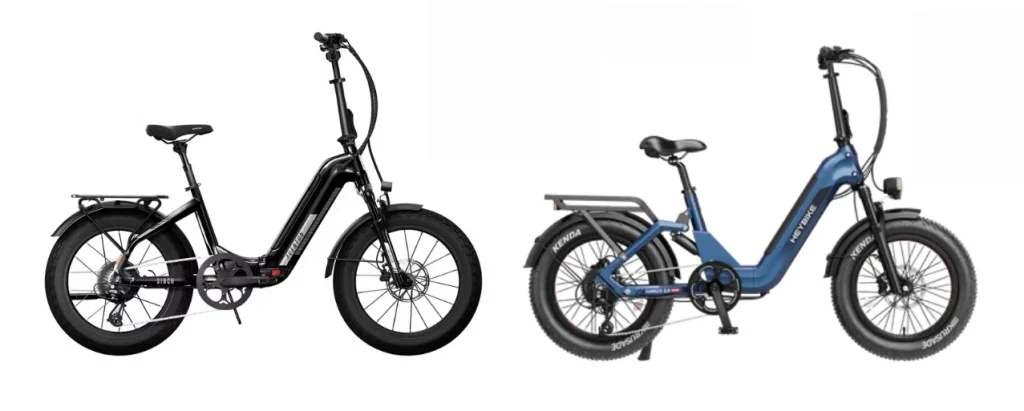
The Aventon Sinch 2.5 combines a folding frame, 4-inch tires, a torque sensor, integrated battery and suspension fork.
It’s a relatively polished package.
But the Ranger 3.0 Pro goes further with suspension.
It uses a hydraulic front fork and adjustable rear air shock, along with a 750W motor, 80Nm of torque, 720Wh battery, 90-mile claimed range, rack, fenders, turn signals, NFC control and an 8-speed drivetrain.
That’s a lot of equipment in a folding package.
The Sinch 2.5 is arguably the cleaner and more refined design.
The Ranger 3.0 Pro simply gives you more hardware.
Winner: Heybike
The Ranger 3.0 Pro wins with full suspension, a larger battery, longer claimed range, and a more feature-packed folding package.
Where The Two Brands Stop Overlapping
This is where the comparison gets more interesting.
There are several things you can buy from one brand that you simply can’t get from the other.
Heybike Builds More Moped-Style E-Bikes
Heybike has embraced the moped-style electric bike category more aggressively.
The Saturn is a good example, with a full-suspension design, fat tires and a relatively low price.
The newer Titan also pushes into a more powerful moped-style format.
Aventon doesn’t currently have a direct equivalent.
Aventon Builds Dedicated Cargo E-Bikes
Aventon’s Abound platform fills a category that Heybike doesn’t currently match directly.
The Abound SR and Abound LR are purpose-built cargo e-bikes designed to carry people and gear.
That makes a major difference if you’re buying an electric bike for deliveries, family transportation, groceries, or actual utility work.
Our Aventon Abound SR review goes deeper into that platform.
For shoppers comparing these brands, this is an important distinction.
You’re not always choosing between two versions of the same thing.
Sometimes one brand simply offers the category you need.
Winner: Split
Heybike wins for moped-style variety, while Aventon wins for its dedicated cargo-bike platform.
Value For Money
This is where Heybike makes its strongest argument.
Look at the current lineup and the pattern becomes obvious.
The Saturn is listed around $999. The Mars 3.0 is around $1,199. The ALPHA is around $1,299. The Ranger 3.0 Pro is around $1,499. The Hybrid is around $1,699.
And those bikes bring a lot of equipment for the money.
Aventon’s current lineup starts with lighter and simpler models such as the Soltera 2.5 and extends all the way to premium models such as the Aventure M.
Aventon isn’t always trying to win the specification battle.
Instead, you’re often paying for things such as integrated technology, design refinement, connected security, dealer support, and a broader range of bike types.
For more background on pricing, our guide to why electric bikes are so expensive explains some of the costs behind modern e-bikes.
Winner: Heybike
Heybike wins because it consistently puts more hardware, suspension, battery capacity and features into lower-priced models.
Customer Support And Dealer Network
This is an area where Aventon has a significant structural advantage.
Aventon says it has more than 1,800 authorized dealers and service partners across the U.S., giving riders access to test rides, assembly, maintenance and service.
Heybike is also building its dealer presence, but its model remains much more heavily centered around direct online sales.
That matters after the sale.
If your e-bike develops a problem, having a shop nearby that can physically inspect it is valuable.
For some riders, that alone can justify paying more for an Aventon.
Winner: Aventon
Aventon’s much larger dealer network gives it the clear edge for in-person support, test rides, maintenance and service.
Aventon Vs Heybike: Category Winners
| Category | Winner | Why |
| Motor power | Heybike | Higher peak output on several current models |
| Torque sensing | Aventon | Longer track record of consistent tuning |
| Range and battery | Heybike | Larger batteries and higher claimed range on several models |
| Comfort | Heybike | Stronger full-suspension options |
| Build quality | Aventon | Stronger fit, finish and overall polish |
| Commuter e-bikes | Aventon | Soltera 2.5 offers a lighter, more bicycle-like experience |
| Fat-tire e-bikes | Heybike | Mars 3.0 combines power, folding and value |
| Folding full-suspension | Heybike | Ranger 3.0 Pro offers more suspension and equipment |
| Cargo e-bikes | Aventon | Dedicated Abound platform |
| Unique formats | Split | Heybike has moped-style models; Aventon has dedicated cargo bikes |
| Smart security | Aventon | Integrated cellular GPS and connected security |
| Value for money | Heybike | More features and hardware for the price |
| Dealer support | Aventon | Much larger U.S. dealer network |
Who Should Choose Heybike?
Heybike makes sense if you want:
- Lots of features for your money
- High peak motor output
- Full suspension
- A folding fat-tire e-bike
- Large batteries and high claimed range
- Moped-style designs
- NFC controls and connected features
- A feature-heavy e-bike without moving into premium pricing
The Ranger 3.0 Pro is especially interesting if you want full suspension and folding capability in the same bike.
The Mars 3.0 makes more sense if you want a powerful folding fat-tire e-bike at a lower price.
And the Venus gives Heybike a much lighter commuter option than most of its traditional lineup.
Who Should Choose Aventon?
Aventon makes more sense if you want:
- A more polished overall ownership experience
- Integrated 4G GPS security on supported models
- A dedicated cargo e-bike
- A lightweight commuter such as the Soltera 2.5
- More options across commuter, cargo, fat-tire and mid-drive categories
- A large U.S. dealer and service network
- The ability to test ride before buying
Aventon is also worth considering if you’re less interested in chasing the biggest motor number and more interested in how the bike fits into your everyday routine.
Aventon Vs Heybike: Which Should You Buy?
So, Aventon vs Heybike: which should you buy?
The answer depends heavily on the type of electric bike you’re actually looking for.
If you’re shopping for a folding fat-tire e-bike, Heybike’s Ranger 3.0 Pro and Mars 3.0 put a huge amount of equipment into the price.
If you’re shopping for a lightweight commuter, Aventon’s Soltera 2.5 is a much more traditional bicycle-style option.
If you’re shopping for a cargo e-bike, Aventon’s Abound platform gives it a category advantage because Heybike doesn’t currently offer a direct equivalent.
If integrated GPS security and a large dealer network matter to you, Aventon has another clear advantage.
On the other hand, if your priority is getting the most hardware for your money, Heybike’s current lineup is difficult to ignore.
For additional brand comparisons, see Aventon vs Specialized, Aventon vs Mokwheel, Aventon vs Trek, Aventon vs Ride1Up, and Aventon vs Velotric.
The Bottom Line
There isn’t one universal winner in the Aventon vs Heybike matchup.
And honestly, that’s what makes this comparison useful.
Heybike wins the categories that revolve around features-per-dollar, suspension, folding fat-tire e-bikes, battery capacity and peak motor output.
Aventon wins the categories that revolve around refinement, smart security, dealer support, lightweight commuting and dedicated cargo bikes.
The biggest mistake would be choosing the brand first.
Pick the bike first.
If you want a powerful folding e-bike with full suspension, look closely at the Ranger 3.0 Pro or Mars 3.0.
If you want something light and easy to ride around town, compare the Soltera 2.5 and Venus.
If you need a serious cargo e-bike, look at the Abound.
And if connected security and local service are high priorities, Aventon’s ecosystem deserves a closer look.
That’s the real answer to Aventon vs Heybike.
The better brand isn’t the same for every rider.
The better bike is the one that fits the way you actually plan to ride.