
If you’re comparing Aventon vs Blix in 2026, I’ll be honest: these two brands have more differences than I initially expected.
Both sell electric bikes directly to consumers, but they take different approaches to design, technology, and everyday riding.
Aventon offers a broad lineup covering commuter bikes, lightweight city bikes, fat‑tire models, cargo bikes, and electric mountain bikes. Its connected security features and dealer network are also major advantages.
Blix focuses on practical electric bikes, with options such as the Vika X folding bike, Sol X cruiser, and Packa Genie cargo bike.
So which brand actually deserves your money?
I compared the two brands across motor performance, pedal‑assist sensing, battery capacity, comfort, security, and the categories where their bikes compete directly. I’ll also explain where one brand offers a clear advantage and where the choice depends on your riding needs.
How I Evaluated Aventon and Blix
I focused on current product specifications, pricing, warranty terms, support options, and everyday practicality. I also considered which bikes suit different riders rather than choosing a winner based only on motor wattage or advertised range.
If you’ve read my other comparisons, such as Aventon vs Juiced Bikes, Aventon vs Lectric, and Aventon vs Ride1Up, you already know my approach. I look at what each brand offers and how those differences affect the buying decision.
Aventon vs Blix: Quick Comparison
| Category | Aventon | Blix |
| Best for | Riders who want a broad selection and connected features | Riders who prefer practical, comfort‑focused designs |
| Motor options | Hub motors and mid‑drive models | Hub‑motor lineup |
| Pedal‑assist sensing | Torque sensors on many current models | Torque sensors on Vika X and Sol X; cadence sensing on Packa Genie |
| Commuter e‑bikes | Several equipped commuter options | Practical folding and cruiser options |
| Lightweight e‑bikes | Soltera 2.5 and other lightweight options | Vika X offers folding convenience but weighs more |
| Fat‑tire e‑bikes | Aventure family | No direct equivalent among the models compared |
| Mountain e‑bikes | Ramblas ADV | No direct equivalent among the models compared |
| Cargo e‑bikes | Abound SR | Packa Genie |
| Folding e‑bikes | No direct equivalent among the models compared | Vika X |
| Smart security | Connected GPS and app features on equipped models | Features vary by model |
| Dealer support | Broader partner‑dealer network | More limited in‑person reach |
| Overall choice | Better for variety and technology | Better for folding, cruising, and cargo‑specific needs |
Specifications, prices, features, and availability can change by model year and configuration. Confirm current details on the manufacturers’ product pages before purchasing.
What’s the Difference Between Aventon and Blix?
The easiest way to understand these brands is to look at what each does best.
Aventon builds a wide range of electric bikes. Its lineup includes lightweight commuters, fat‑tire bikes, cargo models, and the Ramblas ADV, which uses a mid‑drive motor for trail riding. Many current models also offer connected features through Aventon’s control and app ecosystem.
If you’re choosing between Aventon models, my guide to which Aventon electric bike is best for you is a useful starting point. You can also read my Aventon Level 3 review for a closer look at the brand’s commuter‑focused technology.
Blix emphasizes practical designs for everyday riding. The models highlighted in this comparison include the Vika X folding bike, Sol X cruiser, and Packa Genie cargo bike. They serve different purposes, so the right choice depends on whether you prioritize storage, relaxed riding, or carrying cargo.
Neither strategy is automatically better. Aventon gives you more categories to choose from, while Blix can make sense when one of its particular bike formats matches your needs.
Motor Power
These brands are closer than you might expect when you compare their hub‑motor bikes.
Aventon’s lineup includes hub‑motor models with different power and torque ratings, along with mid‑drive options such as the Ramblas ADV. That gives riders choices for everyday commuting as well as more demanding trail riding.
Blix also offers substantial hub‑motor power on some models. The Vika X uses a 500W rear hub motor. The Sol X uses a 750W rear hub motor, while the Packa Genie is built around a 750W rear hub motor.
The important distinction is that wattage doesn’t tell the entire story. Torque, gearing, controller tuning, battery output, rider weight, and terrain all affect how a bike accelerates and climbs.
My guides to how fast a 48V electric bike can go and how fast a 1,000W electric bike can go explain why a single motor number doesn’t predict the whole riding experience.
Winner: Split
Aventon offers more variety, including mid‑drive options for trails. Blix’s Sol X and Packa Genie still offer competitive hub‑motor power for cruising and cargo use.
Torque Sensors and Ride Feel
Pedal‑assist sensors can make a noticeable difference in how an electric bike feels.
A torque sensor measures how hard you pedal and adjusts assistance accordingly. A cadence sensor responds to pedaling movement, generally delivering assistance according to the selected level.
Aventon uses torque sensors on many current models, including the Abound SR and Soltera 2.5. That can give the bike a more responsive feel when you increase or reduce your pedaling effort.
Blix equips the Vika X and Sol X with torque sensors. The Packa Genie uses cadence sensing instead, which can still work well for riders who want straightforward assistance while carrying groceries or other cargo.
For a deeper explanation, see my guide to what pedal assist is on an electric bike. Understanding the difference between torque and cadence sensing can help you decide which system suits your riding style.
Winner: Aventon
Aventon gets the edge for the broader availability of torque sensing across its lineup, including cargo options. However, the Vika X and Sol X remain competitive choices for riders who specifically want a Blix bike with a torque sensor.
Range and Battery Size
Battery capacity is one area where Blix deserves a closer look.
Aventon battery sizes vary considerably by model. The Soltera 2.5, for example, uses a 345.6Wh battery, while other Aventon bikes offer substantially larger packs.
The Blix Vika X and Sol X each use a 614.4Wh battery. The Packa Genie starts with a 672Wh battery and can be configured with a second battery for a combined capacity of 1,344Wh.
That larger cargo‑bike setup is particularly useful for riders who carry heavy loads or want to reduce charging frequency. It still doesn’t guarantee a specific distance per charge.
Actual range depends on several factors:
- Rider and cargo weight
- Terrain and elevation
- Wind and temperature
- Tire pressure
- Pedal‑assist level and average speed
- Throttle use and riding style
Don’t assume that every 10Wh will deliver a fixed number of miles. Real‑world range can differ significantly from a manufacturer’s maximum estimate.
If you’re a heavier rider, my guide to the best electric bikes for heavy riders explains why payload capacity and battery size matter. You can also read about how to charge an electric bike, how much it costs to charge an electric bike, and choosing the best battery for an electric bike.
Winner: Blix among the models compared
Blix stands out for battery capacity in these particular comparisons, especially when the Packa Genie is equipped with its optional second battery. Aventon also offers large‑capacity batteries on selected models, so this isn’t a universal brand‑wide victory.
Comfort and Ride Quality
Both brands offer comfortable bikes, but they approach comfort differently.
Aventon has options for riders who want an upright commuter, a fat‑tire bike for varied surfaces, or a trail‑focused model. The riding position and suspension equipment depend on the bike you choose.
Blix’s Sol X is designed around a relaxed cruiser position, with a low step‑through frame and wide handlebars. The Vika X folds for easier storage while retaining practical everyday features. The Packa Genie is designed for cargo use, where stability and load distribution matter.
A comfortable bike also needs to fit your body. Frame size, saddle height, handlebar reach, step‑through height, and total weight can matter as much as suspension.
For example, the Vika X may be easier to store than a conventional full‑size bike, but its listed weight of 61 pounds with the battery installed means it’s not necessarily easy to carry up several flights of stairs. My guide to how much an electric bike weighs explains why weight matters for storage and transport.
Winner: Split
Aventon offers more choices for different riding conditions. Blix’s Sol X is a strong option for riders who specifically want a relaxed cruiser rather than a sportier commuter.
Build Quality and Durability
Both brands offer useful features, but durability should be assessed at the model level rather than assumed from a brand name.
Aventon’s broader lineup includes integrated batteries, connected electronics, and different frame and suspension designs. Its dealer network can also make service more convenient for riders who live near an authorized shop.
Blix equips its highlighted models with practical components, including hydraulic disc brakes on the Vika X, Sol X, and Packa Genie. Component quality, however, doesn’t replace regular maintenance or guarantee long‑term reliability.
Total weight is another practical consideration. A heavier bike can be more difficult to lift onto a rack, carry upstairs, or maneuver without assistance. My comparison of mechanical vs. hydraulic disc brakes on electric bikes covers the differences between these braking systems.
Winner: Aventon, narrowly
Aventon’s broader dealer network and product range give it an advantage for some owners. I wouldn’t treat that as proof that every Aventon model is more durable than every Blix model.
Security and Smart Features
Aventon has the stronger connected‑security offering on models equipped with its control unit.
Depending on the model and configuration, its connected features can include cellular GPS tracking, movement alerts, and app‑based functions. These features are useful if you park your bike outside shops, at work, or in other public places.
Blix also offers app‑based features on selected models. However, the models compared here don’t all provide the same integrated cellular GPS and anti‑theft ecosystem available on equipped Aventon bikes.
Remember that connected security doesn’t make a bike theft‑proof. A strong lock, secure parking, and sensible storage habits still matter.
Winner: Aventon
For riders who prioritize integrated GPS tracking and connected security, Aventon is the stronger choice. Check the exact model’s features and any subscription requirements before buying.
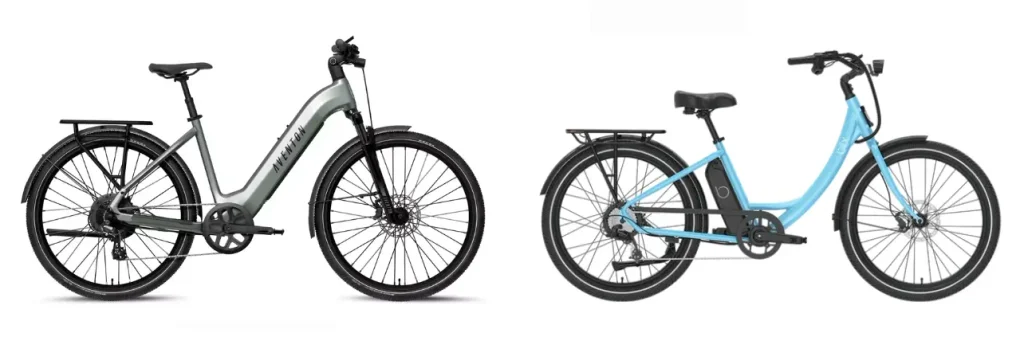
Commuter E‑Bikes: Aventon Level 4 REC vs. Blix Vika X
For daily commuting, I would compare the Aventon Level 4 REC with the Blix Vika X. They serve different types of riders, so the better choice depends on your route and storage needs.
The Level 4 REC is a conventional commuter e‑bike with a 750W hub‑drive motor, connected security features, a suspension fork, and a suspension seatpost. Aventon advertises a range of up to 75 miles. These features can make it a practical choice for longer urban rides and commutes over imperfect pavement.
The Vika X is a folding e‑bike with a 500W motor, a 614.4Wh battery, and a compact folded size of approximately 36 × 21 × 28.5 inches. Its folding design can be particularly useful if you have limited storage space or combine cycling with driving or public transportation.
I would choose the Level 4 REC for a conventional commuter setup with suspension and connected features. The Vika X makes more sense when compact storage is a major part of your daily routine.
For another commuter‑bike perspective, see my Aventon Level 3 review.
Winner: Aventon Level 4 REC for conventional commuting; Blix Vika X for folding convenience.
Lightweight E‑Bikes: Aventon Soltera 2.5 vs. Blix Vika X
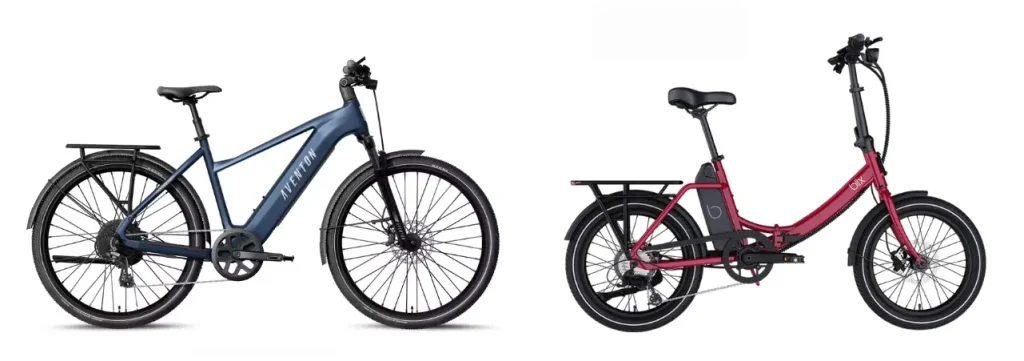
The Aventon Soltera 2.5 and Blix Vika X are worth considering if you want a manageable bike for city riding, although their designs serve different needs.
The Soltera 2.5 weighs approximately 46 pounds and uses a 350W sustained‑power motor, with a 345.6Wh battery and a claimed range of up to 46 miles. Its lighter frame makes it easier to maneuver than many heavier electric bikes, although it isn’t as compact to store as a folding model.
The Vika X weighs 61 pounds with the battery installed, or 56 pounds without the battery, according to Blix’s listed specifications. Its folding frame makes it easier to store in tight spaces, but folding convenience doesn’t make it a lightweight bike to lift or carry.
If you regularly need to lift your e‑bike, the difference in weight matters. If you mainly need to fit it into a small apartment, car trunk, or storage area, the Vika X may be more practical.
My Aventon Soltera 2.5 review looks more closely at this lightweight city bike.
Winner: Aventon Soltera 2.5 for lower weight; Blix Vika X for foldability.
Fat‑Tire E‑Bikes: Aventon Aventure 3 vs. Blix Sol X
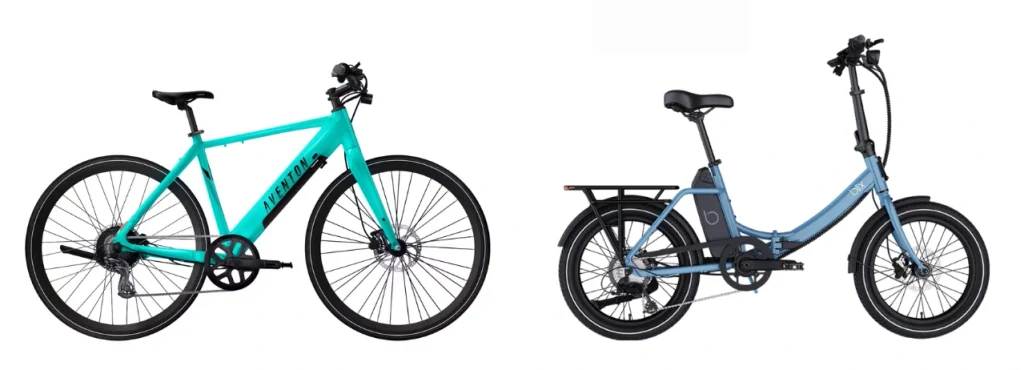
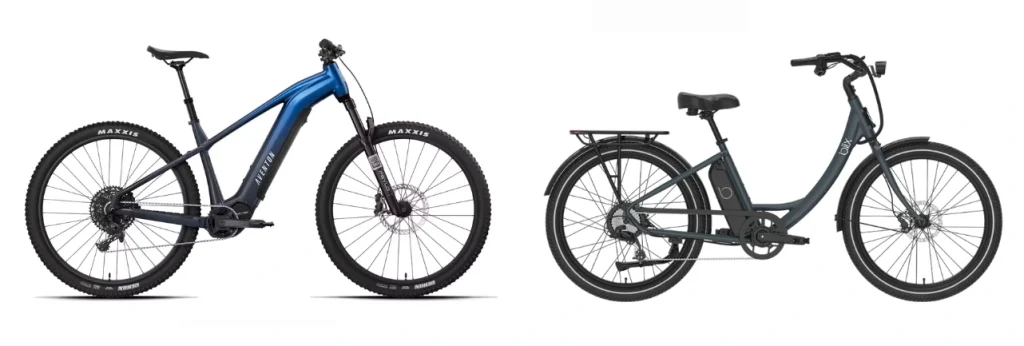
This category is not an even matchup. Aventon offers dedicated fat‑tire models, including the Aventure 3, while the Blix Sol X is a comfort cruiser with 26 × 2.4‑inch tires rather than a dedicated fat‑tire setup.
The Aventure 3 features 4‑inch all‑terrain tires, front suspension, and a 750W sustained‑power rear hub motor. Aventon lists a range of up to 65 miles. Its wider tires and suspension make it better suited to loose surfaces, rougher paths, and riders who want additional cushioning.
The Sol X is designed around comfort, upright riding, and everyday usability. Its 750W motor, torque sensor, and claimed range of up to 70 miles make it appealing for cruising, but its narrower tires aren’t a direct substitute for the Aventure’s fat tires.
The difference comes down to intended use. I’d choose the Aventure 3 for mixed terrain and dedicated fat‑tire riding. I’d consider the Sol X for paved paths, neighborhood trips, and relaxed cruising.
If you’re considering other options in this category, my guide to the best fat‑tire electric bikes covers alternatives from several manufacturers.
Winner: Aventon Aventure 3 for fat‑tire riding. Blix does not offer a direct fat‑tire equivalent among the models compared here.
Mountain E‑Bikes: Aventon Ramblas ADV vs. Blix Sol X
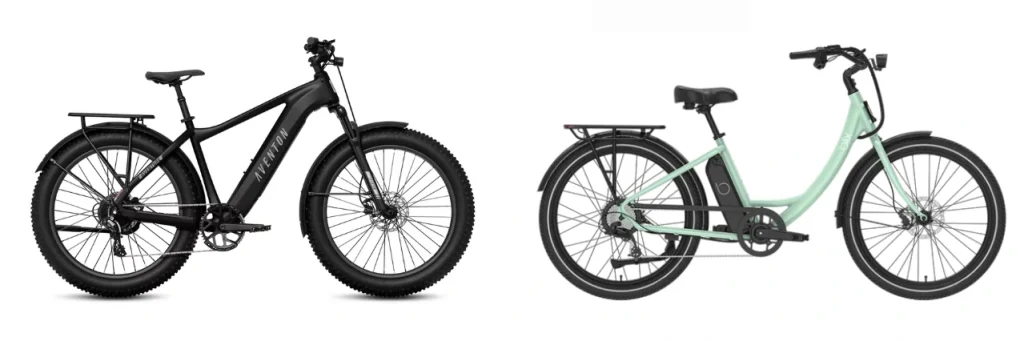
For trail riding, the Aventon Ramblas ADV is the more appropriate option to compare against Blix’s available lineup, although the two bikes are designed for different purposes.
The Ramblas ADV is a hardtail electric mountain bike with a mid‑drive motor rated at 100Nm of torque. Its trail‑focused design, suspension fork, and mountain‑bike geometry make it better suited to climbing, dirt paths, and more demanding off‑road riding.
The Blix Sol X is a comfort cruiser with a rear hub motor and an upright riding position. It can handle ordinary paved routes and suitable light paths, but it isn’t designed as a dedicated mountain bike.
If you regularly ride trails, I’d choose the Ramblas ADV. If your riding is mainly on streets, bike paths, and casual routes, the Sol X is the more relevant option. These bikes shouldn’t be treated as direct substitutes.
My Aventon Ramblas ADV review provides more detail on the bike’s mid‑drive motor and trail‑focused design.
Winner: Aventon Ramblas ADV for mountain biking. Blix doesn’t have a direct electric mountain‑bike competitor among the models compared here.
Cargo E‑Bikes: Aventon Abound SR vs. Blix Packa Genie
For carrying groceries, work equipment, or other heavy loads, compare the Aventon Abound SR with the Blix Packa Genie.
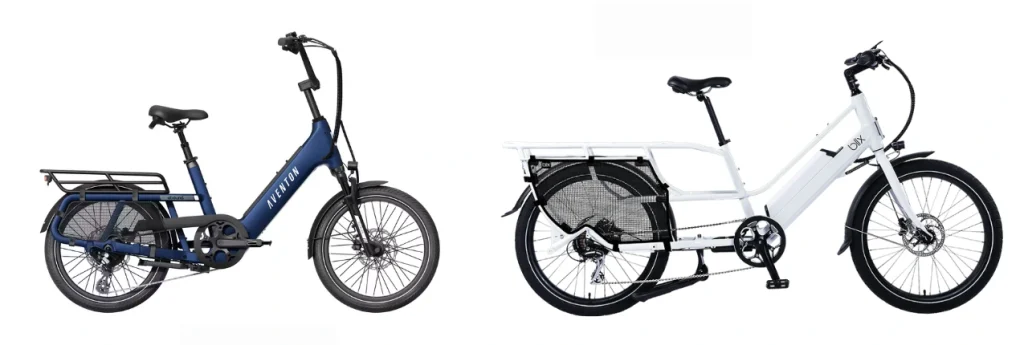
The Abound SR is a compact cargo e‑bike with a 750W hub motor, a 733Wh battery, and connected security features that include GPS and cellular connectivity. Its design supports everyday errands and passenger transport, subject to the bike’s specified passenger and payload limits.
The Packa Genie uses a 750W rear hub motor and offers a 672Wh second battery option, with a dual‑battery configuration bringing total capacity to 1,344Wh. Its modular front and rear cargo racks make it useful for carrying different types of loads.
The two bikes offer different advantages. The Packa Genie has a particularly useful battery upgrade path for riders who want more capacity. The Abound SR offers connected security features and a compact cargo‑bike design.
Before buying either bike, check the manufacturer’s rider and cargo weight limits. Payload capacity includes more than just the bags or equipment you’re carrying, and the exact limits matter for safety.
Winner: Blix Packa Genie for dual‑battery flexibility; Aventon Abound SR for connected security features and its compact cargo design.
Where the Two Brands Stop Overlapping
This is where the different strategies become especially clear.
Aventon covers more riding categories. Its range includes commuter bikes, fat‑tire bikes, cargo bikes, and dedicated electric mountain bikes. The Aventon Level 3 review and my guide to the best fat‑tire electric bikes provide more context for riders exploring those categories.
Blix’s Vika X brings something different to the table: a folding format with a torque sensor, hydraulic brakes, and a practical rear rack. Aventon has compact models, but the Vika X offers a folding format that doesn’t have a direct equivalent among the Aventon models compared here.
If you’re comparing folding options, my review of the RadExpand 5 Plus is another useful starting point.
For more brand comparisons, see Aventon vs Ride1Up, Aventon vs Rad Power, and Aventon vs Velotric. I’ve also covered Aventon vs Himiway, Aventon vs Heybike, and Aventon vs Mokwheel.
Aventon wins for variety across commuting, fat‑tire riding, and mountain biking. Blix wins if folding convenience or its particular cruiser and cargo designs match your needs.
Value for Money
Value depends on what you get for the price, not just the initial sticker amount.
Blix’s Vika X and Sol X offer torque sensing, while the Packa Genie provides an expandable battery option. Those features can be attractive if one of these models fits your use case.
Aventon offers more categories and a wider range of features, but the best value varies from model to model. A lightweight city bike and a connected cargo bike serve different needs, so comparing their prices without accounting for those differences isn’t especially useful.
I would compare the full cost of ownership, including accessories, locks, replacement parts, maintenance, and any costs associated with connected features. A lower purchase price doesn’t always mean a better long‑term deal.
For context, my guide to the best electric bikes under $800 and my list of the best electric bikes under $500 offer alternatives if you’re shopping on a tighter budget.
Blix can offer strong value if you want one of its specific bike formats. Aventon may offer better value if you need a broader choice of bike types or connected features. Compare the actual prices and included equipment before deciding.
Customer Support and Dealer Network
Support matters because electric bikes need maintenance, and electrical or mechanical problems can be difficult to solve without the right parts and expertise.
Aventon’s partner‑dealer network can help with test rides, assembly, and service where participating shops are available. That can be a meaningful advantage if you prefer to deal with a local bike shop.
Blix has a more limited in‑person footprint compared with Aventon’s wider network, so support may depend more heavily on your location and the services available to you.
Before buying either brand, I recommend checking whether an authorized dealer near you will service the exact model you’re considering. Also review the current warranty terms, including any separate coverage rules for batteries and other electrical components.
Aventon has the advantage for riders who value local test rides and in‑person support, although actual service availability depends on location.
Aventon vs Blix: Category Winners
| Category | Winner | Why |
| Motor options | Split | Aventon offers hub and mid‑drive choices; Blix has competitive hub‑motor models |
| Pedal‑assist sensing | Aventon | Torque sensing is available across more of its lineup |
| Battery capacity | Blix, in the models compared | Packa Genie offers an optional dual‑battery setup |
| Comfort | Split | Aventon offers more riding styles; Sol X focuses on relaxed cruising |
| Build and support | Aventon, narrowly | Broader dealer reach, though durability depends on the model |
| Cargo e‑bikes | Split | Abound SR for connected features; Packa Genie for battery flexibility |
| Cruiser and comfort riding | Blix Sol X for cruising | Its upright position and comfort‑focused design suit relaxed rides |
| Commuter e‑bikes | Depends on use | Level 4 REC for conventional commuting; Vika X for folding convenience |
| Lightweight e‑bikes | Aventon Soltera 2.5 | Lower listed weight than the Vika X |
| Folding e‑bikes | Blix | Vika X offers a folding design without a direct equivalent in this comparison |
| Fat‑tire e‑bikes | Aventon | Aventure 3 is a purpose‑built fat‑tire model |
| Mountain e‑bikes | Aventon | Ramblas ADV is a purpose‑built mid‑drive option |
| Smart security | Aventon | Connected GPS and app features on equipped models |
| Value for money | Depends on use | The best value depends on the model, price, and features you need |
Who Should Choose Blix?
I’d consider Blix if you want:
- A folding electric bike for compact storage
- A relaxed cruiser with an upright riding position
- A cargo bike with an expandable battery option
- A practical bike designed around a particular everyday use
- A torque sensor on a folding or cruiser model
Blix makes the most sense when one of its models matches your needs directly. If you want a folding bike, the Vika X deserves a look. If you want a cruiser, the Sol X is the more relevant option. If you need a cargo bike with the possibility of adding a second battery, compare the Packa Genie with the Abound SR.
Who Should Choose Aventon?
Aventon may be the better choice if you want:
- A broad selection of commuter and city bikes
- A relatively lightweight electric bike
- A dedicated fat‑tire model
- A purpose‑built electric mountain bike
- Connected GPS security on equipped models
- More opportunities for local test rides and in‑person service
Aventon is the more versatile option if you’re not yet sure which category of e‑bike will suit you best. Its lineup makes it easier to compare different riding styles within the same brand.
If you’re considering other established bicycle manufacturers, my comparisons of Aventon vs Trek, Aventon vs Specialized, and Aventon vs Cannondale cover some alternative approaches to electric‑bike design.
You can also read Aventon vs Super73, Aventon vs Engwe, and Aventon vs Fiido if you’re still comparing brands.
Aventon vs Blix: Which Should You Buy?
So, Aventon vs Blix: which is better?
If you want a folding bike or a relaxed cruiser, Blix deserves serious consideration. The Vika X and Sol X serve different needs, and the Packa Genie is worth comparing with the Abound SR if cargo hauling is your priority.
Aventon is the stronger all‑around choice if you want more categories to choose from, particularly if you’re interested in a fat‑tire bike, a dedicated mountain bike, or connected security features.
If you’re narrowing your options by riding style, my guides to the best Class 2 electric bikes and best Class 3 electric bikes can help you compare different speed classes.
The Bottom Line
Blix is worth considering for folding convenience, relaxed cruising, and cargo use with an expandable battery.
Aventon stands out for its broad lineup, dedicated fat‑tire and mountain bikes, connected security, and dealer support.
But here’s the real takeaway: Don’t pick the brand first. Pick the bike first.
- If you need a folding bike for compact storage, look at the Vika X.
- If you want a relaxed cruiser with substantial motor power, consider the Sol X.
- If cargo capacity and battery flexibility matter most, compare the Packa Genie with the Abound SR.
- If you want a lightweight city bike, a fat‑tire bike, or a dedicated electric mountain bike, Aventon offers more options to explore.
There isn’t one universal winner. The right choice depends on how you ride, where you store your bike, what you carry, and how much support you want after buying it.
Once you match those needs to the right model, the decision becomes much easier.