
If you’re comparing Aventon vs Vintage Electric in 2026, I think one distinction matters more than any single specification: these brands are built around very different kinds of riding.
Aventon sells a broad, do-it-all lineup. Vintage Electric focuses on premium, motorcycle-inspired e-bikes designed around performance, distinctive styling, and limited-run production.
Aventon is where I point most people who want a versatile e-bike without spending motorcycle money. Its lineup includes lightweight city bikes, commuters, fat-tire models, cargo bikes, and genuine mid-drive electric mountain bikes.
Vintage Electric takes a more specialized approach. Its current performance lineup includes the 72 Volt Roadster 3.0, 72 Volt Scrambler 3.0, and 72 Volt Shelby 3.0. The company also sells the 48 Volt Tracker Classic.
So which brand actually deserves your money?
I compared both brands across motor performance, pedal-assist systems, battery capacity, range, comfort, build quality, security, practicality, and value. I also checked the current models listed by Aventon and Vintage Electric.
If you’ve already read my comparisons of Aventon vs Tern, Aventon vs Super73, or Aventon vs Juiced Bikes, you’ll recognize my approach. I focus on what each brand does well, where it falls short, and which riders will get the most from it.
How I Evaluated Aventon and Vintage Electric
I focused on current manufacturer listings rather than relying on older models that may no longer be available.
For Aventon, that includes the Aventure 3, Soltera 2.5, Soltera 3 ADV, Abound SR, Abound LR, Ramblas ADV, Aventure M, Level 4, Pace 5, and Current series.
Vintage Electric’s current range includes:
- 72 Volt Roadster 3.0
- 72 Volt Scrambler 3.0
- 72 Volt Shelby 3.0
- 48 Volt Tracker Classic
I compared motor configurations, torque, battery capacity, claimed range, tires, suspension, braking, smart features, carrying capability, pricing, and support.
One important point about range: manufacturer estimates are not guarantees. Rider weight, terrain, temperature, wind, tire pressure, speed, and throttle use can all affect how far an e-bike travels. My guide to how fast a 48V electric bike can go explains why voltage alone doesn’t determine performance. Riders who regularly tackle steep climbs should also consider my guide to the best electric bikes for steep hills.
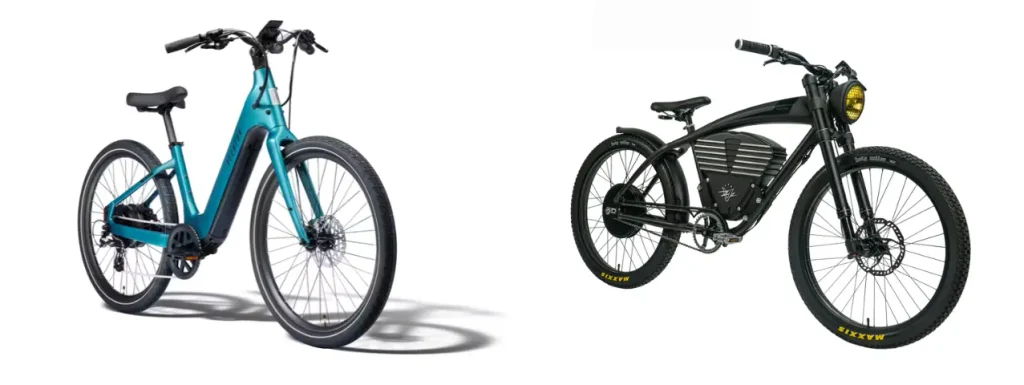
Aventon vs Vintage Electric: Quick Comparison
| Category | Aventon | Vintage Electric |
| Best for | Commuting, recreation, cargo, and trail riding | Premium, motorcycle-inspired performance |
| Motor options | Hub-drive and mid-drive | High-output 72V performance systems on key models |
| Pedal assistance | Torque sensing on many current models | More throttle-focused riding experience |
| Lightweight bikes | Yes, including the Soltera line | No direct equivalent among its flagship performance models |
| Fat-tire options | Aventure lineup | Scrambler-style performance models |
| Cargo bikes | Dedicated Abound platform | No directly comparable dedicated cargo platform |
| Mid-drive e-bikes | Yes, including the Ramblas ADV | No directly comparable mid-drive eMTB |
| Smart security | Connected features on compatible models | More performance-focused product approach |
| Styling | Modern bicycle design | Distinctive motorcycle-inspired styling |
| Price | Broad range, including more accessible models | Premium pricing for flagship performance models |
| Best overall value | Most everyday riders | Riders specifically seeking its performance and design |
The biggest advantage Aventon has is variety. You can choose a lightweight city bike, a commuter, a fat-tire e-bike, a cargo bike, or an electric mountain bike without changing brands.
Vintage Electric has a narrower focus. It appeals to riders who want a distinctive, premium machine rather than a conventional electric bicycle.
That difference becomes even clearer when comparing Aventon vs Himiway, Aventon vs Heybike, and Aventon vs Mokwheel. Those matchups offer more overlap in everyday e-bike categories than this one.
What’s the Difference Between Aventon and Vintage Electric?
Aventon builds a broad, technology-focused catalog. Depending on the model, its bikes offer connected security features, app integration, torque sensing, integrated batteries, and practical equipment for commuting or carrying cargo.
Vintage Electric focuses more heavily on high-performance systems, distinctive frames, and a motorcycle-inspired riding experience.
Neither approach is inherently better.
If you want one brand to cover daily transportation, city riding, weekend trails, and cargo, Aventon is the more versatile choice. If you already know you want a premium, moto-inspired bike, Vintage Electric deserves a closer look.
For more comparisons with different priorities, see Aventon vs Lectric, Aventon vs Ride1Up, and Aventon vs Rad Power.
Motor Power
This isn’t a straightforward comparison because the two brands approach motor performance differently.
Aventon uses hub motors across much of its lineup, while models such as the Ramblas ADV and Aventure M use mid-drive systems. Motor output and torque vary by model, so it’s important to compare individual bikes rather than treating one specification as representative of the entire brand.
Vintage Electric’s 72V performance models are built around high-output drive systems. The Roadster 3.0 and Scrambler 3.0 list a 750W/4,000W drivetrain, while the Shelby 3.0 features a 4,000W drivetrain. Those figures represent different operating and peak-performance contexts, so they shouldn’t be compared directly with a nominal motor rating from another brand.
The key distinction is that Vintage Electric puts much more emphasis on high-output, motorcycle-inspired performance.
Aventon offers more variety, including mid-drive options that suit riders who want a bicycle-like pedaling experience. For more context, compare Aventon vs Trek and Aventon vs Specialized.
Winner: Vintage Electric for high-output performance; Aventon for motor variety.
Torque Sensors and Ride Feel
Pedal-assist technology has a noticeable effect on how an e-bike feels.
A torque sensor measures how hard you pedal and adjusts assistance accordingly. A cadence sensor primarily detects whether you’re pedaling and provides assistance based on the selected setting.
My guide to what pedal assist is on an electric bike explains the difference in more detail.
Aventon emphasizes torque sensing across many current models. That helps its bikes feel more responsive when you pedal harder and more controlled when you ease off.
Vintage Electric is more focused on its throttle-oriented, moto-inspired experience. Its flagship models are designed around power and acceleration rather than a conventional bicycle-like pedaling experience.
If you want to pedal regularly and feel connected to the bike, Aventon is the more natural choice. If you prefer a powerful, motorcycle-inspired ride, Vintage Electric may appeal more.
Winner: Aventon for conventional pedal-assisted riding.
Range and Battery Size
Battery capacity is another area where model-level comparisons matter.
Aventon offers different battery sizes across its lineup. Lightweight city models prioritize lower weight, while larger commuters, cargo bikes, and performance models use higher-capacity batteries.
The Soltera 2.5, for example, has a 345.6Wh battery and a claimed range of up to 46 miles. By contrast, the Current ADV uses an 800Wh battery and is rated for up to 105 miles under suitable conditions.
Vintage Electric’s 72V performance models use large battery systems. The Roadster 3.0 and Scrambler 3.0 list a 1,300Wh battery, while the Shelby 3.0 also features a 1,300Wh battery.
Those capacities are considerably larger than the battery on a lightweight city bike, but they don’t guarantee a particular real-world range. High power output and fast riding can consume energy quickly.
Actual range depends on:
- Rider weight and cargo
- Terrain and hills
- Wind and temperature
- Tire pressure
- Average speed
- Assist level and throttle use
- Stops and acceleration
For heavier riders, my guide to the best electric bikes for heavy riders explains why payload capacity and battery size deserve attention together. You can also read how to charge an electric bike for practical battery-care advice.
Winner: Split. Vintage Electric offers large batteries on its flagship performance models. Aventon gives buyers more choices across different riding styles and budgets.
Comfort and Ride Quality
Aventon offers different riding positions for different purposes. Its city and commuter models emphasize everyday usability, while its fat-tire bikes add cushioning and stability for mixed surfaces.
Vintage Electric’s flagship models have a more planted, motorcycle-inspired feel. Their styling, frame design, and riding position are part of the appeal.
However, the most comfortable option depends on the rider, fit, road conditions, and intended use. A heavy performance bike isn’t automatically more comfortable for every person or every journey.
For fit guidance, see my articles on the best electric bikes for short riders, best electric bikes for short females, and best electric bikes for tall riders.
Winner: Split. Aventon suits a wider range of everyday riding needs. Vintage Electric stands out for its distinctive performance-bike character.
Build Quality and Durability
Both brands sell bikes that are positioned above the cheapest entry-level e-bike market, but the way they justify their prices differs.
Aventon combines integrated design, modern electronics, and a broad selection of bike types. Its advantage is the ability to choose a model specifically designed for commuting, cargo, or trails.
Vintage Electric emphasizes premium styling, handcrafted details, and limited-run performance models. Buyers are paying for the overall product experience as well as the motor and battery system.
I wouldn’t claim that one brand is automatically more durable without long-term comparative testing. Durability also depends on maintenance, riding conditions, parts availability, and how heavily a bike is used.
For other premium-brand comparisons, see Aventon vs Giant and Aventon vs Cannondale.
Winner: No universal winner. Vintage Electric emphasizes premium craftsmanship, while Aventon offers more practical options for different types of riding.
Security and Smart Features
Aventon has an advantage for riders who want connected features. Compatible models offer elements of the Aventon Control Unit ecosystem, including GPS-related security, movement alerts, app-based controls, and ride information.
The exact features depend on the model, so check the current specifications before buying.
Vintage Electric’s selling point is its performance-oriented design rather than a comparable lineup-wide connected-security ecosystem. Owners should still consider a quality lock, secure parking, and any compatible tracking accessories.
Winner: Aventon. Its connected security features are a stronger fit for riders who want integrated technology.
Commuter E-Bikes: Aventon Level 4 REC vs Vintage Electric Roadster 3.0
This is an interesting comparison, but the bikes serve different kinds of commuters.
The Aventon Level 4 REC is designed for everyday transportation. It offers a 750W hub motor, 80Nm of torque, a 733Wh battery, and a claimed range of up to 75 miles. It also emphasizes integrated commuter equipment and connected features.
The Vintage Electric Roadster 3.0 takes a more premium approach. Its 72V performance system, 1,300Wh battery, and motorcycle-inspired styling are aimed at riders who want more than a conventional commuter.
The trade-off is price and practicality. The Roadster 3.0 is considerably more expensive than the Level 4 REC, and its performance-oriented character may be unnecessary for ordinary urban trips.
If your main goal is getting to work, running errands, and keeping costs reasonable, Aventon makes more sense. If you want a premium ride with a distinctive design and high-output performance, the Roadster is more appealing.
Winner: Aventon for everyday commuting; Vintage Electric for premium performance and style.
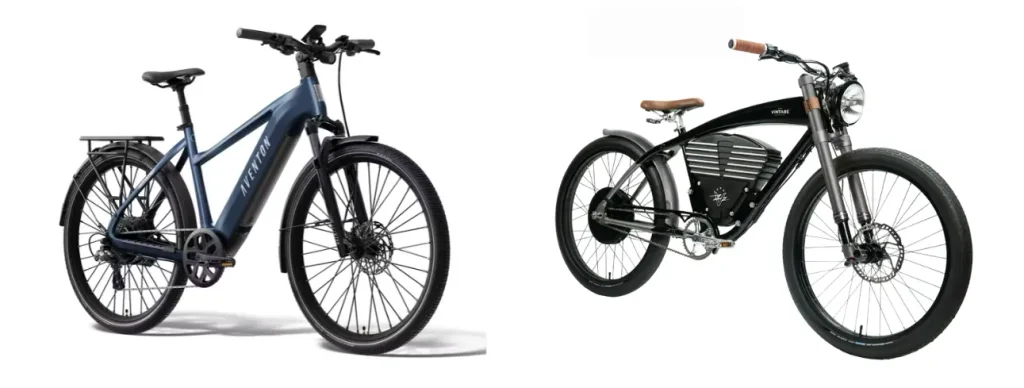
Lightweight E-Bikes: Aventon Soltera 2.5 vs Vintage Electric
This matchup is more about choosing the right type of bike than comparing two direct competitors.
The Aventon Soltera 2.5 weighs around 46 pounds, uses a 350W sustained hub motor with 540W peak output, and has a 345.6Wh battery. Aventon claims up to 46 miles of range.
It is designed for riders who want a relatively light city bike that still provides electric assistance.
Vintage Electric’s current flagship performance models are built around much larger batteries and high-output drivetrains. They are not direct alternatives for someone whose priority is a lightweight bicycle.
If you want to compare lightweight designs further, my Aventon vs Fiido comparison offers another perspective on compact and city-oriented options.
Winner: Aventon. The Soltera 2.5 is the clear fit for lightweight everyday riding.
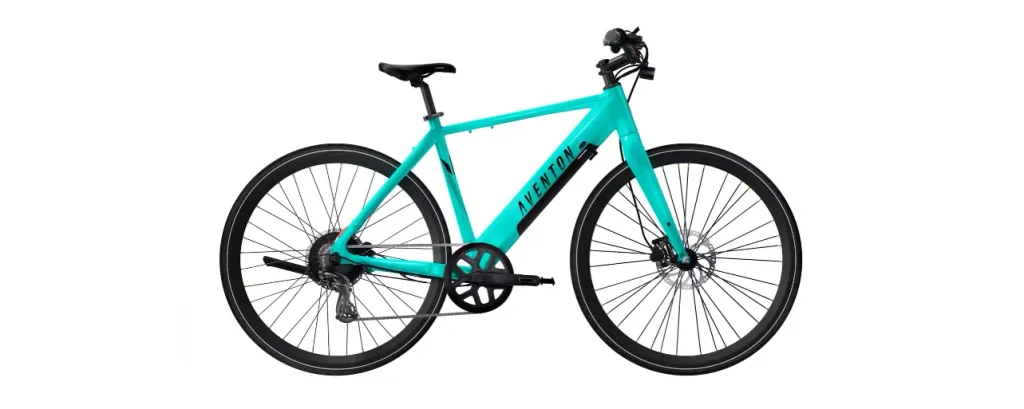
Fat-Tire E-Bikes: Aventon Aventure 3 vs Vintage Electric Scrambler 3.0
The Aventure 3 and Scrambler 3.0 both appeal to riders who want a substantial bike, but they approach that goal differently.
The Aventon Aventure 3 uses 4-inch fat tires, a 750W hub motor with 1,440W peak power, and a claimed range of up to 65 miles. Its design is aimed at recreational riding, rougher paths, and everyday versatility.
The Vintage Electric Scrambler 3.0 has a more motorcycle-inspired design and a 72V performance system. Its large battery and high-output drivetrain make it a very different proposition from a conventional fat-tire commuter.
For a wider view of the category, read my guide to the best fat-tire electric bikes.
The Aventure 3 is the more practical option for riders who want a versatile fat-tire e-bike. The Scrambler 3.0 is better suited to someone who values its performance-oriented character and distinctive design.
Winner: Aventon for versatility; Vintage Electric for the moto-inspired experience.
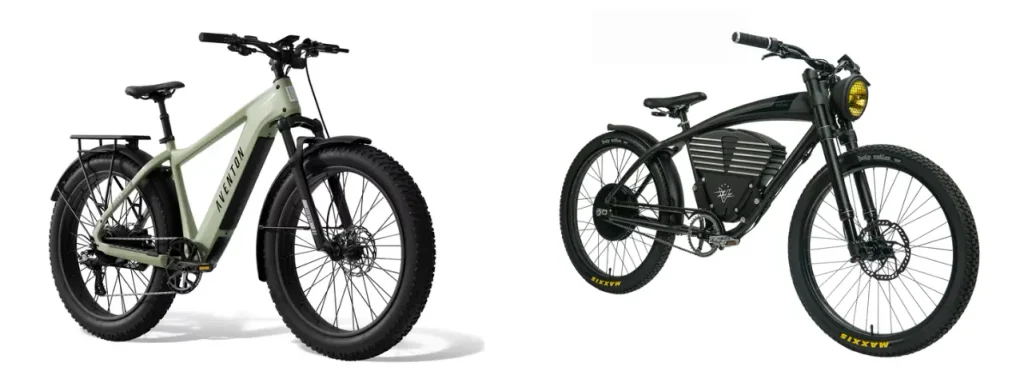
Mountain E-Bikes: Aventon Ramblas ADV vs Vintage Electric
This is one of the clearest categories for Aventon.
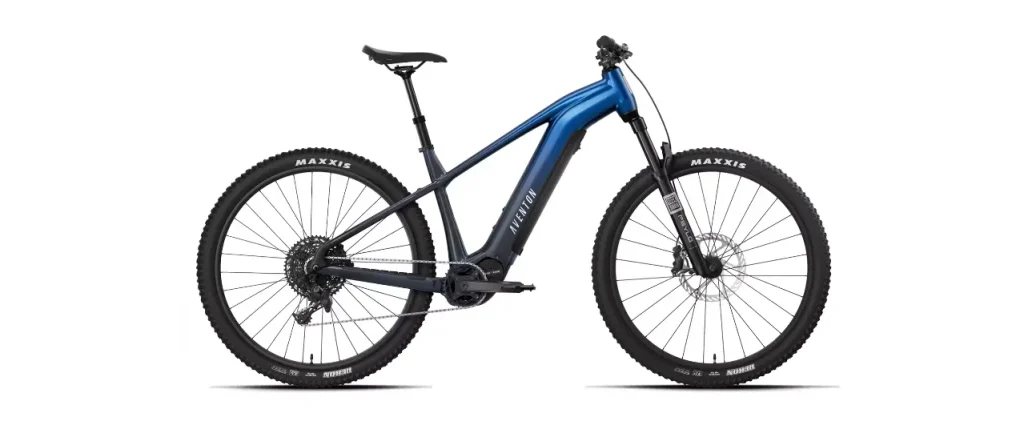
The Ramblas ADV is a dedicated hardtail electric mountain bike. Its A100 mid-drive motor delivers 100Nm of torque, and its design is intended for trail riding.
Aventon also offers other performance-oriented models, including the Aventure M and Current series. Those bikes serve different purposes, so it is worth checking each model’s suspension and intended terrain rather than assuming they are interchangeable.
Vintage Electric’s Scrambler and Roadster are performance-oriented bikes, but they are not direct equivalents to a dedicated trail eMTB. Their power and motorcycle-inspired appearance do not automatically make them suitable for technical mountain-bike trails.
My guide to the best electric mountain bikes covers the features that matter for trail riding. For another comparison with a more traditional bicycle manufacturer, see Aventon vs Cannondale.
Winner: Aventon. The Ramblas ADV is designed for a riding category Vintage Electric does not directly compete in with its flagship performance models.
Cargo E-Bikes: Aventon Abound SR vs Vintage Electric
Aventon has a clear advantage if carrying people or gear is part of your daily routine.
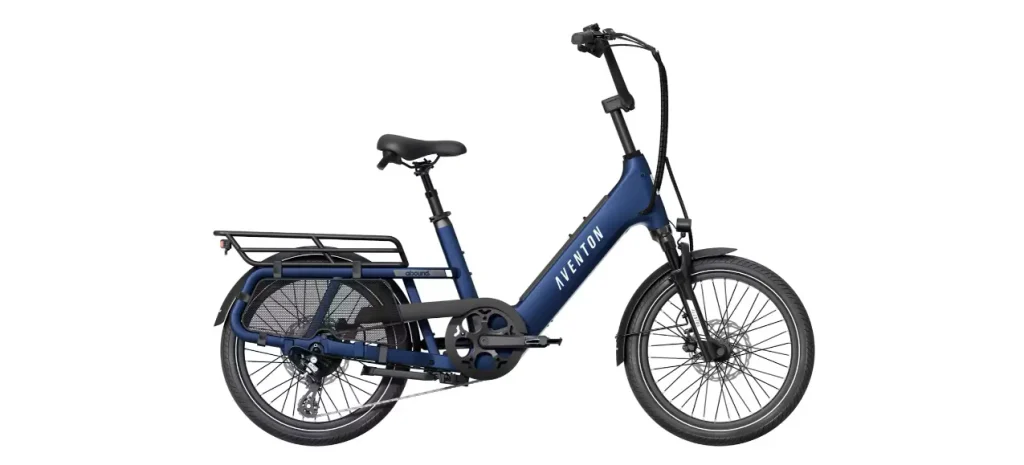
The Abound SR is a dedicated compact cargo e-bike. Aventon also offers the Abound LR, giving buyers more choice in its cargo range.
Vintage Electric offers accessories and racks for selected bikes, but adding a rack to a performance bike is not the same as buying a purpose-built cargo platform.
If you need an e-bike for groceries, family transportation, or delivery work, the Abound is the more appropriate starting point. My guide to the best electric bike for Uber Eats and roundup of the best electric bikes for delivery work offer more practical guidance.
Winner: Aventon. It offers a dedicated cargo-bike platform.
Where the Two Brands Stop Overlapping
The more closely you compare these brands, the more obvious their different priorities become.
Aventon covers commuting, city riding, cargo, fat tires, and electric mountain biking. Vintage Electric focuses on a narrower range of premium, motorcycle-inspired products.
That means there are cases where a direct comparison doesn’t make sense. A lightweight city bike and a high-output performance bike are built around different priorities, even if both have pedals and electric motors.
If you’re exploring more alternatives, take a look at Aventon vs Cyrusher, Aventon vs Yuba, and Aventon vs Blix.
Winner: Split. Aventon wins on category coverage and practical versatility. Vintage Electric wins for riders specifically seeking its premium moto-inspired approach.
Value for Money
For most riders, Aventon is the more accessible starting point.
Its current range includes models around $1,199, such as the Soltera 2.5, and extends into more expensive performance models. That gives buyers more room to match a bike to their needs and budget.
Vintage Electric’s flagship performance models are much more expensive. The Roadster 3.0 and Scrambler 3.0 are currently listed at $5,995 promotional pricing, compared with regular pricing of $6,995. The Shelby 3.0 is listed at $6,495, compared with regular pricing of $7,495. The Tracker Classic is listed at $4,995.
Those are current website prices and may change. I would check the manufacturer’s listing before purchasing.
Vintage Electric’s premium pricing may make sense if you specifically want its performance, styling, and build approach. But it is harder to justify if all you need is an everyday commuter.
For context on how pricing varies across the industry, read why electric bikes are so expensive, along with my guides to the best electric bikes under $800, best electric bikes under $500, and best electric bikes under $2,000.
Winner: Aventon for most budgets. Vintage Electric offers a more specialized premium product, but most everyday riders don’t need to spend that much.
Customer Support and Dealer Network
Aventon has a broad partner-dealer network, which can make test rides, professional assembly, and in-person service easier where a participating shop is available.
Vintage Electric has a more specialized sales and support footprint. That can be appropriate for a premium performance product, but buyers should check local support and parts availability before committing.
The important thing is not just the size of a company’s network. It is whether you can access competent service where you live.
Winner: Aventon for broad accessibility. Confirm local service options for either brand before buying.
Aventon vs Vintage Electric: Category Winners
| Category | Winner | Why |
| High-output performance | Vintage Electric | Flagship 72V performance systems |
| Motor variety | Aventon | Hub and mid-drive options |
| Conventional pedal assistance | Aventon | Strong focus on torque sensing |
| Large battery options | Vintage Electric on flagship models | 1,300Wh batteries on key 72V models |
| Lightweight city riding | Aventon | Soltera lineup |
| Everyday commuting | Aventon | More practical and accessible options |
| Fat-tire versatility | Aventon | Aventure lineup |
| Moto-inspired style | Vintage Electric | Distinctive performance designs |
| Dedicated mountain biking | Aventon | Ramblas ADV |
| Cargo utility | Aventon | Abound SR and LR |
| Connected security | Aventon | App and GPS-related features on compatible models |
| Price accessibility | Aventon | More entry points across the lineup |
| Premium specialist appeal | Vintage Electric | Focused design and performance |
| Overall versatility | Aventon | Covers more riding categories |
Who Should Choose Aventon?
Aventon makes more sense if you want:
- A bike for commuting, city riding, recreation, or trails.
- A lighter e-bike for everyday use.
- Torque-sensing pedal assistance.
- A dedicated cargo model.
- Connected security features on compatible bikes.
- More choice across a wider range of prices.
- A bike that feels closer to a conventional bicycle.
If you’re still narrowing down your options, my Aventon Soltera 2.5 review, Aventon Ramblas ADV review, and Aventon Abound SR review can help you compare individual models.
Who Should Choose Vintage Electric?
Vintage Electric makes more sense if you want:
- A premium, motorcycle-inspired e-bike.
- A high-output 72V performance system.
- A large battery on a flagship model.
- Distinctive styling rather than a conventional bicycle appearance.
- A product focused on performance and visual character.
- A specialized bike and are comfortable paying a premium for that experience.
I wouldn’t choose Vintage Electric simply because its motor figures look bigger. I would choose it because I specifically wanted the kind of bike the company builds.
Aventon vs Vintage Electric: Which Should You Buy?
So, Aventon vs Vintage Electric: which is better?
For most people, I’d choose Aventon. Its lineup is broader, its prices start much lower, and it offers practical bikes for commuting, city riding, cargo, and mountain biking.
Vintage Electric is the more compelling option if its particular combination of performance, styling, and premium construction is exactly what you want. The Roadster 3.0 and Scrambler 3.0 are not budget substitutes for an Aventon commuter. They are different products aimed at a different buyer.
If you are comparing other premium brands, my articles on Aventon vs Macfox, Aventon vs Engwe, and Aventon vs Velotric can help you explore other approaches to e-bike design and value.
You should also check my guides to the best Class 2 electric bikes and best Class 3 electric bikes if your local rules and intended speed class will affect your choice.
The Bottom Line
Vintage Electric wins for premium, moto-inspired performance and distinctive styling.
Aventon wins for versatility, everyday practicality, connected features, and price accessibility.
My advice is simple: don’t choose the brand first. Choose the bike that fits the way you actually ride.
If you want an everyday commuter or a versatile e-bike for different situations, start with Aventon. If you specifically want a premium performance bike with a motorcycle-inspired look and feel, Vintage Electric deserves a serious look.
There isn’t one universal winner. The right choice depends on whether you need a practical electric bicycle or a specialized performance experience.