
Forget everything you think you know about e-bikes.
Wired unveils Viper electric bike, and it is nothing like what you’d expect. This isn’t a quiet, pedal-assisted commuter bike designed to help you avoid traffic.
This is a 55 mph, 8,000-watt beast with more torque than most cars. It has fat tires, full suspension, and an attitude that will make your heart race before you even twist the throttle.
And yes, it’s street legal. At least in some states.
If the name Wired rings a bell, you’ve probably come across their previous builds. This Illinois-based brand has been quietly pushing the boundaries of what an electric bike can legally be. But the Viper? This one takes things to a completely different level. It’s the kind of machine that makes you question whether “e-bike” is even the right word anymore.
Let’s get into it.
Two Motors. One Ridiculous Amount of Power.
Here’s the thing about the Viper. Wired didn’t hold back anywhere.
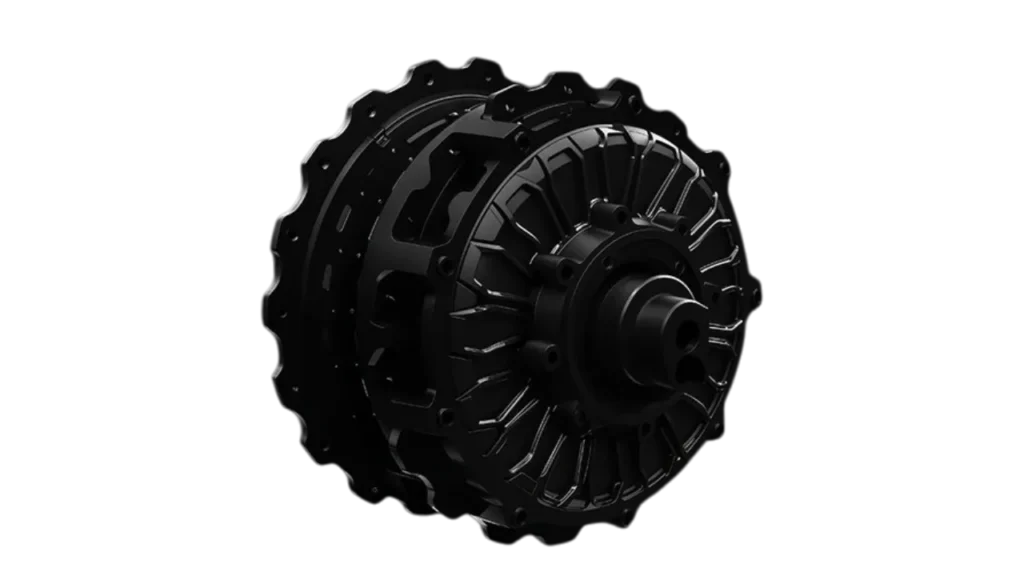
To hit that 55 mph top speed, the Viper doesn’t rely on a single motor like virtually every other e-bike on the market. It runs two motors working in perfect unison, each controlled by its own separate controller.
Together, they produce a combined peak output of 8,000 watts. That’s 10.7 horsepower for those keeping score.
But raw wattage only tells half the story.
The real jaw-dropper is the torque figure: 430 Nm, or 317 lb-ft. Let that sink in for a second. That’s more pulling power than most everyday cars sitting in driveways across America right now. On a bicycle. With 20-inch wheels.
The motors themselves come from Hentach, a Chinese manufacturer that’s been building micro and hub motors since 1995. They’re not a household name in cycling circles, but they’re far from newcomers. Today, Hentach builds motors for electric motorcycles, mopeds, scooters, lawnmowers, and even wheelchairs. These are serious engineers building serious hardware.
When you combine that torque with that power output, the result is a riding experience that genuinely shocks first-timers. One look at any test rider’s face the moment they open up the throttle tells you everything you need to know.
- Also Read: Feremo Electric Bike System By Taiyo Yuden
Why 20-Inch Wheels Actually Make Sense Here
You might be thinking: 20-inch wheels on a 55 mph machine? That sounds like a recipe for disaster. It’s actually the opposite.
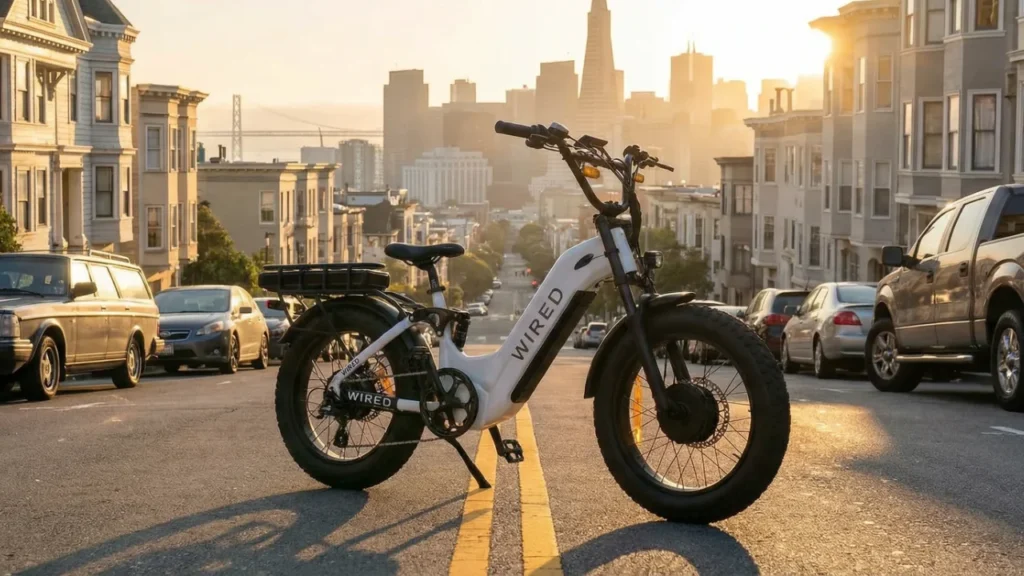
Smaller wheels mean a lower center of gravity. A lower center of gravity means better stability at high speeds. Add in the Viper’s step-through frame design, which drops the overall weight of the bike even further toward the ground. Suddenly you’ve got a platform that’s surprisingly planted when you’re pushing the limits.
Physics is doing a lot of the heavy lifting here, and Wired clearly understood that when they designed this thing. Sometimes the unconventional choice is the smart one.
- Also Read: Best Fat Tire E-Bikes
The Suspension Setup That Keeps You in Control
Going fast is one thing. Staying in control while doing it is another challenge entirely.
Wired addresses this with a full suspension setup that means business. Up front, you get a double-crown fork with fully adjustable parameters and 70mm of travel. At the rear, there’s a shock absorber offering 50mm of travel. Crucially, it can be locked out completely.
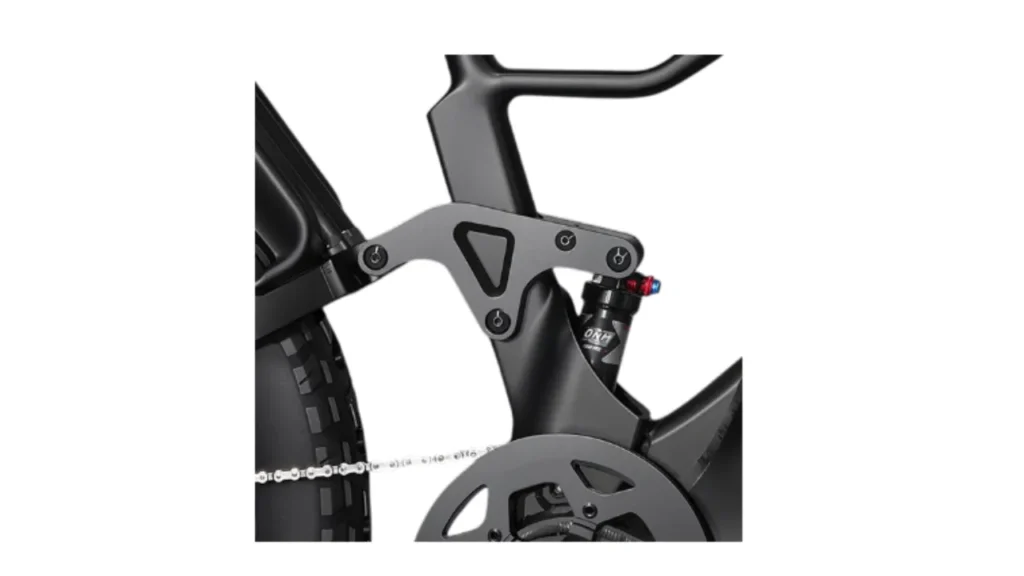
That lockout feature matters more than it might seem. When you’re cranking the throttle and demanding maximum power delivery, something needs to stay firm. You don’t want the rear end squatting and absorbing energy that should be going into forward motion. Locking out the rear shock puts every single watt directly into the ground where it belongs.
One important note though. If you’re riding over rough pavement, keep the suspension active. Riding this machine with everything locked out over cracked roads or potholes is a punishment your body won’t forget quickly. Tune the suspension to match your terrain. Your spine will thank you.
- Also Read: Best Suspension Seatposts for E-Bike
Range, Weight, and Everything in Between
Let’s talk numbers, because the Viper has some interesting ones beyond just speed.
The bike runs on a dual battery setup with a combined capacity of 35 Ah. One battery lives in the down tube of the frame. The other hides neatly in the rear cargo rack.
Together, Wired claims they’re good for up to 90 miles of riding range. Though that number assumes you’re not spending every mile pinned at full throttle.
Realistically? Expect somewhere between 40 and 70 miles depending on how hard you’re riding, road conditions, and your tire pressure.
Underinflated tires are one of the biggest silent killers of e-bike range. Check them before every ride. It takes thirty seconds and it matters more than most riders realize.
With both batteries installed, the Viper tips the scales at 160 lbs. That’s heavy. There’s no sugarcoating it. But that weight also works in your favor at speed, keeping the bike planted and stable in a way that lighter machines simply can’t match.
The maximum load capacity sits at 450 lbs total, giving you roughly 290 lbs to work with for rider weight and cargo combined.
The rest of the build is exactly what a machine like this demands. You get a seven-speed Shimano drivetrain, four-piston hydraulic brakes clamping down on 203mm rotors, metal fenders, an LCD display, and integrated turn signals front and rear along with a brake light.
At 55 mph, making sure everyone around you knows your next move isn’t optional. It’s survival.
- Also Read: Best E-Bikes for Off Road
The Legal Reality You Need to Know
Here’s the part nobody wants to talk about, but everybody needs to hear.
The Viper is fast. Dangerously, thrillingly, impressively fast. But that speed comes with real legal consequences depending on where you live.
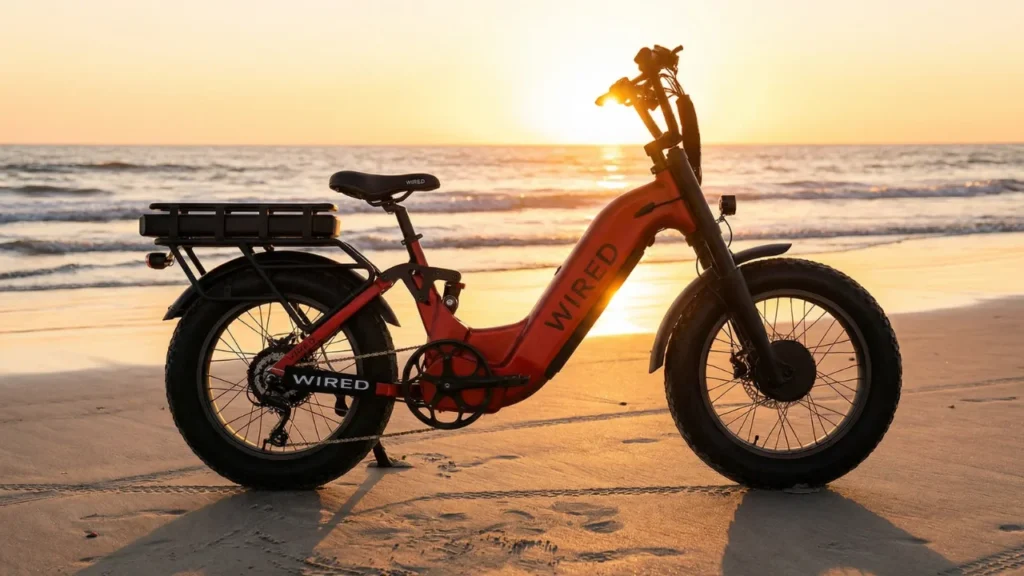
E-bike laws across North America are changing rapidly. Several states have already introduced requirements for registration, licensing, and insurance on high-powered e-bikes. The Viper, with its 8,000-watt output and 55 mph capability, sits well outside the legal definition of a standard e-bike in most jurisdictions.
That doesn’t mean you can’t own one. It means you need to know your local laws before you ride one on public roads. Ignorance isn’t a legal defense, and trust me, a ticket or an outright confiscation isn’t the way you want this story to end. Do your homework. Ride where it’s legal. Enjoy it responsibly.
The Price Tag and Where to Get One
So, what does all of this cost?
The Wired Viper comes in at $3,700. That’s roughly €3,100 at current exchange rates. For everything this machine delivers, that’s a number that’s hard to argue with. Compare it to electric motorcycles offering similar performance and you’d easily be spending two to three times that figure, plus insurance, registration, and licensing costs on top.
Here’s another advantage worth mentioning. Wired is a US-based company headquartered right in Illinois. That means real American customer support if something goes wrong.
It also means there’s a genuine chance you can find a dealer near you, see the bike in person, and actually take it for a test ride before handing over your money. That’s something you simply can’t do with most international e-bike brands shipping units from overseas with no local presence.
The Viper isn’t for everyone. It’s not designed for gentle Sunday morning rides through the park or quiet bike lane commutes. It’s built for riders who want to feel something. Riders who want an e-bike that doesn’t apologize for what it is.
At $3,700, for a dual motor, 55 mph, full suspension machine backed by American customer support, the Viper makes a compelling case for itself.
The only question left is whether you’re ready for it.