
New Jersey has changed its e-bike laws and there is no going back. Governor Phil Murphy has signed a new set of laws that completely redefine how electric bikes, scooters, and other micromobility devices are regulated in the state. And if you own an e-bike in New Jersey right now, your riding life is about to look very different.
But here’s the bigger picture. What happens in New Jersey rarely stays in New Jersey. Other states are watching closely. And what comes next could reshape e-bike laws across the entire country.
Let’s break it all down.
How E-Bike Laws Worked Before
For years, electric bikes in the US were divided into three simple classes.
Class 1 bikes offer pedal assist up to 20 mph with no throttle. Class 2 bikes add a throttle but still cap out at 20 mph. Class 3 bikes go up to 28 mph and are generally treated more like mopeds than bicycles. Anything faster than that was supposed to stay on private property or require a full license to operate legally.
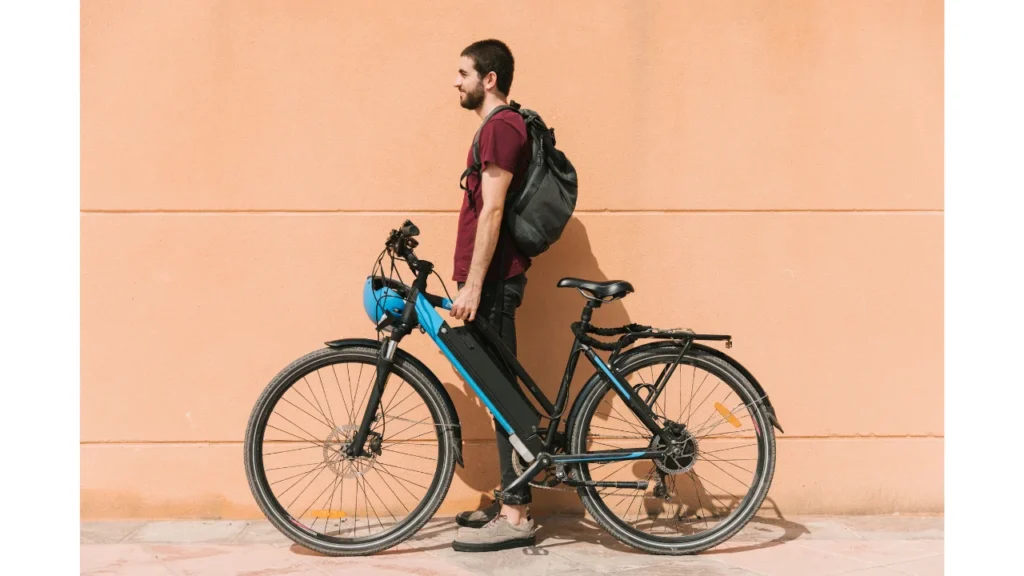
In reality though, most riders ignored these distinctions entirely. Speed limiters got removed. Motors got swapped out. And emergency rooms across the country started filling up with e-bike and e-scooter riders. The common thread? Machines pushed well beyond what their brakes and frames were ever designed to handle.
160mm rotors with cable-driven brakes are perfectly adequate at 20 mph. At 35 mph or beyond, they become a liability. That gap between what riders were doing and what the law allowed was always going to catch up with the industry eventually.
In New Jersey, it just did.
What the New Law Actually Says
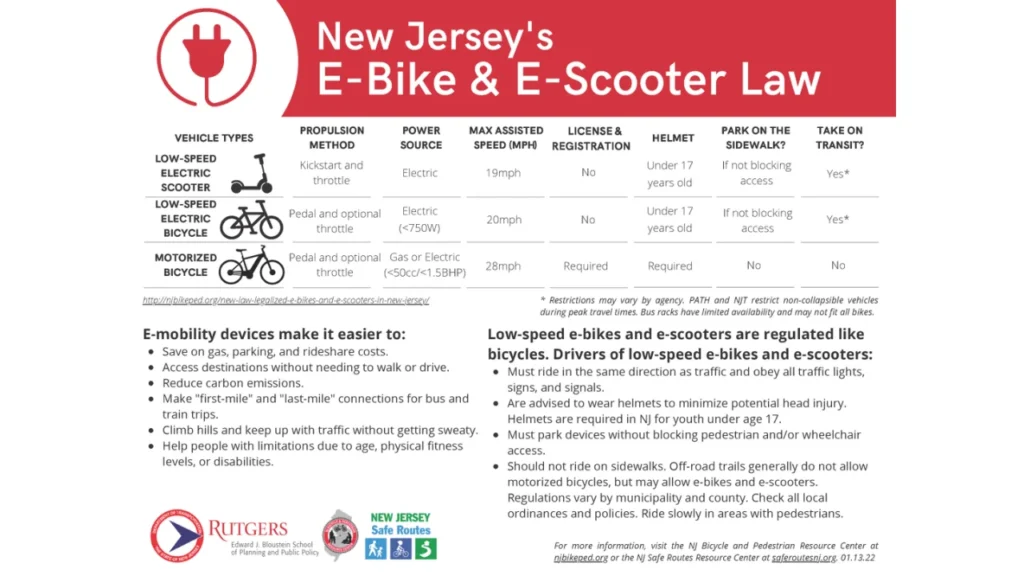
Any motorized bicycle, electric or gas powered, capable of reaching an assisted speed of 28 mph or more must now be registered and insured. And whoever is riding it needs a valid driver’s license too. A helmet is required for every rider regardless of age. These bikes can no longer be parked on sidewalks. They cannot be taken onto buses, trains, or subways either.
For Class 3 e-bikes specifically, the minimum riding age in New Jersey is now 15. Riders in that category need a dedicated Moped or Class 3 e-bike license. That means a trip to your local motor vehicle agency, passing the required tests, and clearing the necessary health checks.
Registration also requires documentation including a VIN number. This is typically stamped near the bottom bracket on most production bikes. If your bike does not have one, that alone could be a problem.
What counts as a low-speed e-bike under the new law? A motor output of no more than 750 watts and a top speed capped at 20 mph. These bikes can still be taken on public transit and parked on sidewalks as long as they are not blocking access. Riders under 17 without a helmet will be ticketed.
The standard rules of the road still apply to everyone. No riding on sidewalks unless transitioning. Ride in the same direction as traffic. Obey all lights, signs, and signals.
- Also Read: Cops on Electric Bikes Are Pulling Cars
Why This Was Always Going to Happen
The number of e-bike and e-scooter related accidents has been climbing steadily for years. Riders removing speed limiters. Heavier machines being ridden at speeds they were never designed for. Minimal road education among new riders. And in too many cases, electric two-wheelers being used for theft and other criminal activity on streets where nobody could catch them.
Registration requirements alone could act as a meaningful deterrent. If your bike has a registered VIN tied to your name, using it to commit crimes becomes significantly riskier.
There is a real downside though and it deserves to be acknowledged honestly. Many cargo e-bike owners legitimately need motors more powerful than 750 watts. Many parents use powerful e-bikes to take their kids to school every morning as an affordable and environmentally friendly alternative to driving. Under the new law they now face unexpected costs and complications they never signed up for. That trade-off is genuinely painful for a lot of families and dismissing their frustration entirely would be unfair.
New Jersey Is Not the First and Won’t Be the Last
New Jersey is making headlines, but it is not breaking entirely new ground.
Hawaii already requires all low-speed e-bikes to be registered and sets the minimum operating age at 15. Several other states treat e-bikes as mopeds depending on their configuration, which triggers registration and licensing requirements automatically. In California, anyone under 16 is already prohibited from operating a Class 3 e-bike.
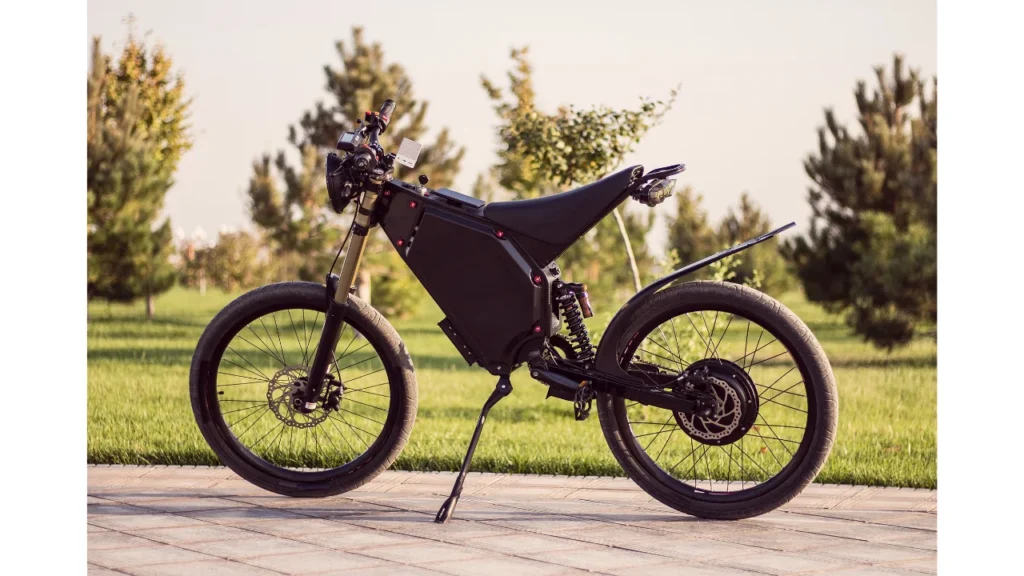
What makes New Jersey significant is the scope and strictness of the new legislation. This is the most comprehensive overhaul of e-bike law any major US state has introduced in recent years. And that is exactly why other states are paying attention.
Will they follow? Most likely yes. But probably not all at once and probably not with the same level of restriction that Murphy introduced. Each state will interpret the growing pressure around e-bike safety in its own way and at its own pace.
- Also Read: Electric Bikes on State Biking Trails
What This Means for Scooters and Skateboards Too
The new legislation does not stop at electric bikes.
Electric scooters fall under the same regulatory umbrella. Helmets are now required for riders 17 and under. Speed is capped at 19 mph. Motorized skateboards face the same rules as motorized scooters under the new framework.
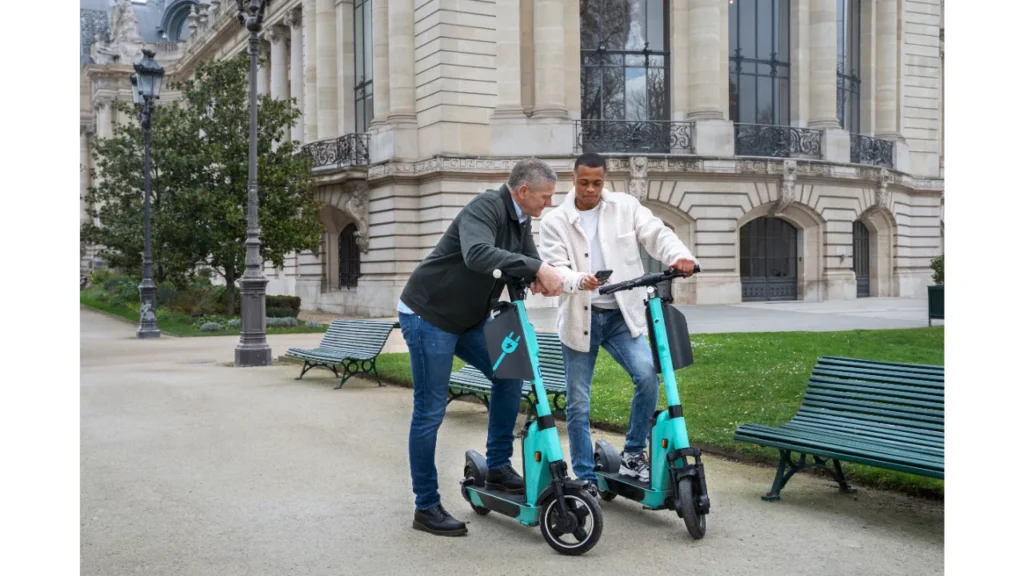
Here is the part that stings the most for scooter riders. New Jersey state law now explicitly prohibits the operation of motorized scooters on public roads, sidewalks, or public lands entirely. These devices may only be operated on private property with the consent of the owner.
That ruling puts shared scooter companies like Bird and Lime in a genuinely difficult position. Both are currently scrambling to negotiate agreements with individual municipalities across New Jersey to continue operating legally. Expect test programs and pilot agreements to start appearing across the state as these companies fight to maintain their presence in the market.
What Should New Jersey Riders Do Now?
Take the new laws seriously. That is the short answer.
The days of riding whatever you want however you want with no consequences are ending in New Jersey. Registration, licensing, insurance and helmets are the new reality for anyone on a Class 3 e-bike or more powerful machine in the state.
If you own a high-powered e-bike that now falls outside the low-speed category, the new e-bike law has just made your situation significantly more complicated. Expect a wave of similar machines hitting Facebook Marketplace as riders look to offload bikes that suddenly come with more legal complexity than they bargained for.
For everyone else, the smart move is simple. Learn the rules. Get properly licensed if required. Wear a helmet. And ride within the law.
The e-bike industry grew fast. Maybe too fast for the regulations to keep up. New Jersey just decided it had waited long enough. The rest of the country is next.