
The hunt for the “perfect” e-bike is still in full swing. Brands everywhere are working hard to find that sweet spot where performance, comfort, design, and price meet. Some get it right, others don’t quite hit the target, and a few are going straight for the luxury market. Cannondale unveils Flying V as part of its quest for balance. This striking carbon-fiber e-bike promises to take your urban riding experience to the next level.
Let’s be honest for a moment. E-bike prices have been skyrocketing, with some models now costing as much as a reliable used car. The Flying V definitely falls into that premium category. It’s designed for urban riders who crave something unique, something that really stands out, and something that exudes quality.
But with a starting price of $6,749, it’s also the kind of figure that makes a lot of folks just scroll on by. And honestly, that reaction is completely understandable.
This bike is one of those rare finds that’s intriguing even if you’re not in the market for one. It’s a perfect example of what can happen when a big name like Cannondale goes all out.
They didn’t settle for just another commuter e-bike; instead, they filled it with top-notch components and took their frame design to new heights. Love it or hate it, it’s definitely worth taking a closer look.
A Carbon Frame That Stands Out
Let’s kick things off by diving into the frame, because this is where the Flying V really sets itself apart. Sure, it’s made of carbon fiber, which isn’t exactly shocking at this price.
But what really grabs your attention is the unique, skeleton-like tube design. It’s sleek and almost has a futuristic vibe. You don’t come across many urban e-bikes that look like this. It definitely gives the bike a standout personality on the road.
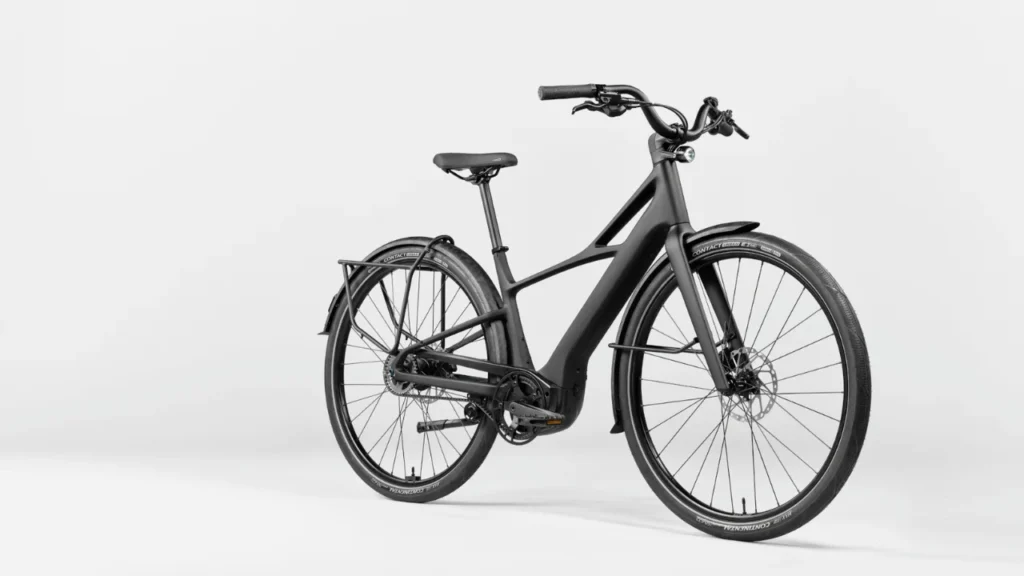
Some bikes with similar open or skeleton-style frames try to incorporate a bit of rider suspension to help smooth out the ride.
The idea is to allow certain areas to flex and absorb bumps, which can make a world of difference in comfort, especially when navigating those bumpy city streets filled with cracks and potholes.
Take the Orbea Diem, for instance. This bike opts for aluminum over carbon, but it features a seat tube that’s designed to flex a little.
According to Orbea, this can help reduce shocks and vibrations by up to 30%. Feedback from riders suggests that this flex is quite noticeable, making those rough roads feel a lot smoother without the need for traditional suspension.
In contrast, the Flying V doesn’t follow that same rider-suspension model. Instead, it capitalizes on the inherent qualities of carbon fiber.
Carbon can be stiff where it’s necessary but also has a bit of give where it matters. Cannondale has meticulously shaped and positioned the tubes, especially the dropped seat stays, to create a smoother ride. So, while you might miss out on suspension, you won’t feel like you’re bouncing around on a jackhammer.
Design Inspiration and All-Carbon Build
According to Cannondale, the Flying V’s design draws inspiration from their Delta V 1000 from the 1990s, which is a lovely nod to their history. But this bike isn’t just about looking retro.
The dropped top tube has a practical purpose: it makes getting on and off the bike a breeze, which is super handy for city riding where you’re often stopping and starting. If you’re commuting through traffic or making a lot of stops, you’ll really value that feature.

Cannondale is particularly excited to call this the world’s first all-carbon urban e-bike, and they really back that up. You’re not just getting a carbon frame; there’s also a carbon fork and even carbon fenders. That’s right, fenders! It’s a level of material dedication you don’t see every day.
Here’s where people might start to disagree. That carbon should make the bike lighter and more agile, and it certainly does. But do we actually need carbon fenders to protect our clothes from water and dirt? Not really. Aluminum or plastic fenders can do the trick for most riders. It feels more like a fancy addition than a must-have.
Weight, Drivetrain, and Everyday Practicality
Cannondale points out that e-bikes are becoming increasingly heavy and bulky. Their goal with the Flying V was to counteract that trend. To their credit, they’ve succeeded quite well. The bike weighs in at just over 18 kg, which is roughly 40 pounds. That’s pretty impressive for a fully equipped e-bike.
When you take a closer look at what’s included, that 40-pound weight starts to seem even more appealing. You’re getting a Gates belt drivetrain, which is celebrated for being clean, quiet, and low-maintenance. Say goodbye to greasy chains, messy rides, and constant adjustments. That’s a huge win for those who ride in the city every day.
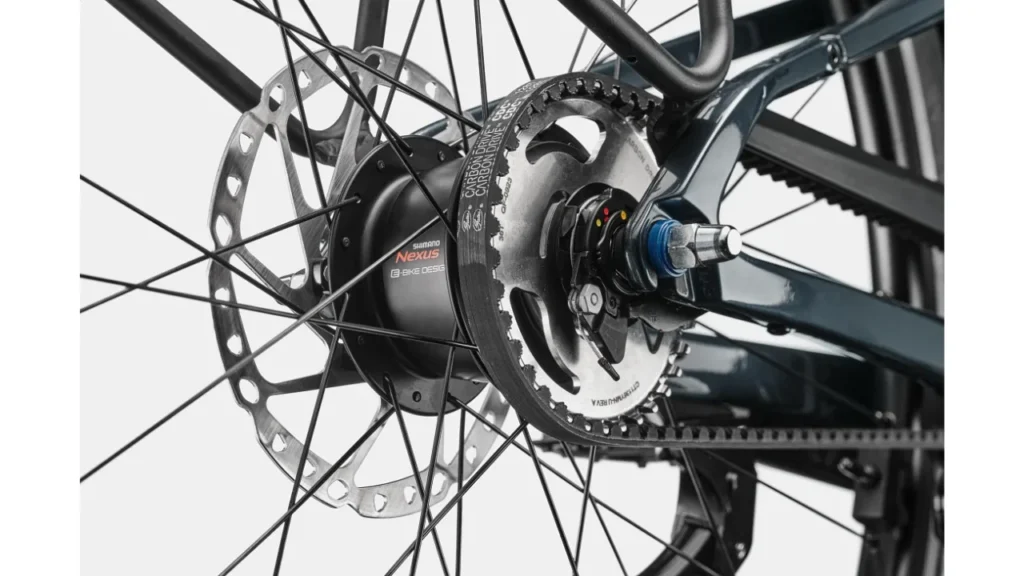
Plus, there’s a Shimano Nexus internal gear hub with five speeds. Internal hubs are fantastic for urban riding since they’re shielded from the weather and need less care. You can even shift gears while stopped, which is super convenient at traffic lights. The entire setup feels like it was made with your ease in mind.
We’re noticing that belt drives paired with internal hubs are gaining traction all over the globe. More and more brands are jumping on this bandwagon. If this trend keeps up, we could see prices drop, which would be fantastic for riders. But for now, it’s still in the premium price range.
Honestly, I might hold off a bit before diving into a Flying V. First-generation models usually come with the highest price tags. If Cannondale rolls out future versions, we might see some improvements or a bit more bang for our buck. Sure, that’s just speculation, but it’s definitely worth considering.
Motor, Speed, and Real-World Range
At the core of the Flying V is a Bosch Performance Line Sprint motor, which packs a punch with 60 Nm of torque and peaks at 600 W, while having a nominal rating of 250 W. That’s pretty impressive for city riding. It might not be a powerhouse for off-road adventures, but that’s not its purpose. This bike is designed for urban environments.
In the US, it can hit a top speed of 28 mph, while riders in the EU are capped at 25 kph due to regulations. This places it firmly in the realm of speedy commuting, allowing you to keep pace with traffic much more easily than on a traditional bike.
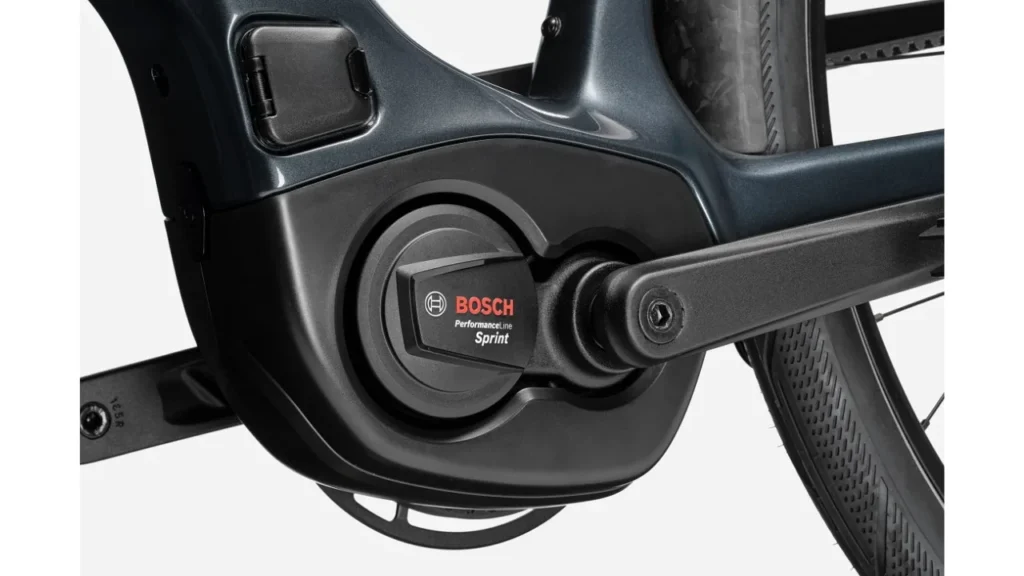
The battery packs a punch with a capacity of 400 Wh. It’s a bit surprising that Cannondale hasn’t provided a clear range estimate. While Bosch has a handy range calculator, this particular motor isn’t included, leaving us to make some educated guesses.
Realistically, you can expect around 50 miles or 80 km per charge in moderate conditions. But keep in mind, the actual range can vary based on factors like rider weight, terrain, assist level, and wind. If you’re riding aggressively, you’ll likely see that battery drain quicker.
Ride Quality and Final Thoughts
Rolling on 700x50c tires, the Flying V strikes a great balance between grip and comfort. While these tires aren’t the oversized balloon types, they still offer a nice bit of cushioning to smooth out the ride. For navigating city streets, that’s a smart choice.
When it comes to stopping power, you’ve got hydraulic brakes with 180 mm rotors. That’s pretty reassuring, especially when you’re cruising at higher speeds. Good brakes are a must-have for a speedy urban e-bike, and Cannondale definitely didn’t skimp on this feature.
Add a cruiser-style handlebar for a comfy riding position and Bosch controls to manage your assist modes. A rear cargo rack adds practicality, giving you a solid urban package. It’s clearly built for real-life city riding, not just for show.
Now, let’s tackle the big question. Would you personally drop close to $7,000 on the Cannondale Flying V? For some riders, the design, materials, and brand reputation might justify the price. For others, it could feel like overkill for everyday commuting.
The Flying V is definitely a fascinating concept. It gives us a glimpse into the future of high-end urban e-bikes. With its lightweight design, top-notch materials, and low maintenance drivetrains, it’s clear that innovation is at play.
It also stands out with a stylish look. Whether these advancements will lead to more affordable options remains to be seen.
At the very least, the Flying V gets people talking. In a bustling e-bike market, that’s no small feat.