
Choosing the wrong electric bike for courier work can lead to lost earnings, dead batteries, and high maintenance costs. The best electric bikes for Uber Eats combine long-range battery life, durable cargo capacity, and reliable motors that can handle urban hills and headwinds. These features help maximize your daily payouts while minimizing downtime and maintenance costs.
We analyzed over 30 different models based on real-world range, charging times, and structural durability to find the absolute best options for delivery riders. If you are in a hurry to get on the road, our top overall recommendation is the Abound SR Ebike because of its dual-battery compatibility and heavy-duty frame layout.
In this guide, we break down the 10 best electric bikes for Uber Eats based on real-world performance metrics:
- Battery Range & Charging Speed (Crucial for back-to-back shifts)
- Motor Power & Torque (For tackling steep city streets)
- Payload Capacity & Frame Durability (To safely carry heavy food insulated bags)
Aventon Abound SR – Best Overall for Full-Time Couriers
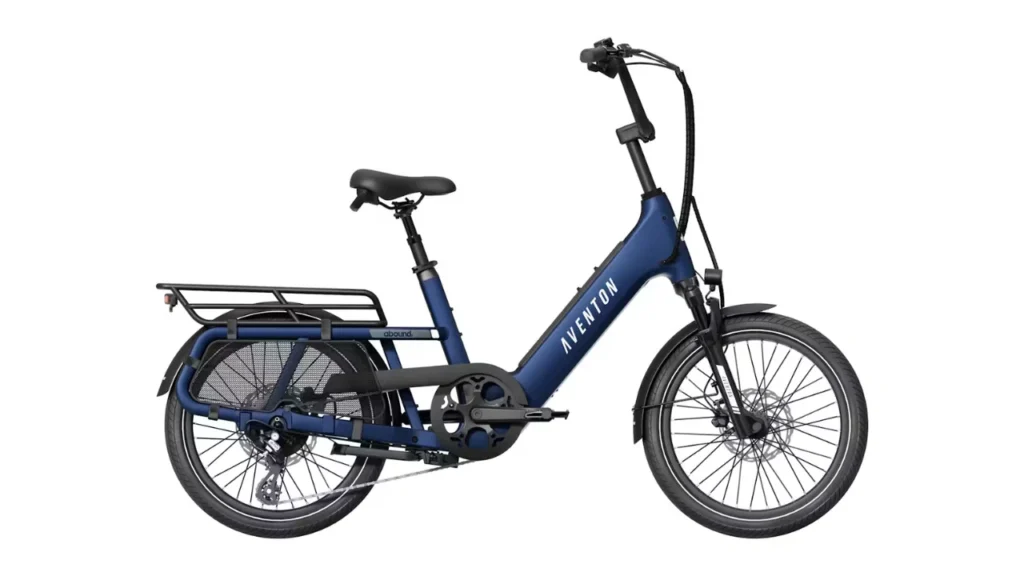
| Feature | Specification |
| Motor | 750W Rear Hub (80 Nm Torque) |
| Battery | 48V, 15 Ah (TUV Certified Safety) |
| Top Speed | 20 mph (Throttle) / 28 mph (PAS) |
| Payload Capacity | 440 lbs (Heavy Cargo Grade) |
Review: The Aventon Abound SR is the undisputed king for full-time food delivery gig workers. Its massive 440 lb payload capacity and integrated rear rack allow you to bolt down massive, commercial-grade thermal food crates without any frame flex. The 80 Nm torque sensor ensures instantaneous motor engagement, which preserves your leg energy during exhausting stop-and-go city riding. It also features turn signals for safe nighttime deliveries.
Under the hood, the Abound SR runs a 733Wh battery (36V/20Ah) rated for up to 60 miles on a single charge in Eco mode. That gives most full-day delivery riders enough range to complete a shift without needing a midday recharge. It’s also one of the few bikes on this list with a Boost Mode that unlocks 120% of peak torque and power for up to 30 seconds. This extra burst is especially useful when pulling away from a stoplight with a fully loaded rear rack.
The frame and battery carry UL 2849 and UL 2271 safety certifications. Aventon also backs the bike with a two-year warranty and a lifetime frame warranty when you register it. One trade-off worth considering is the weight. At roughly 80 lbs, it’s the heaviest bike in this guide, so carrying it up apartment stairs between shifts can be challenging.
Want more details? Read Our In-Depth Aventon Abound SR Review
Pros:
- Massive payload capacity for big catering orders.
- Torque sensor saves battery and leg fatigue.
- Turn signals enhance rider safety at night.
Cons:
- Heavy frame makes it hard to lift up stairs.
👉 [Check Price and Availability on Aventon Here]
Lectric XPedition 2.0 – Best Dual-Battery Utility Bike
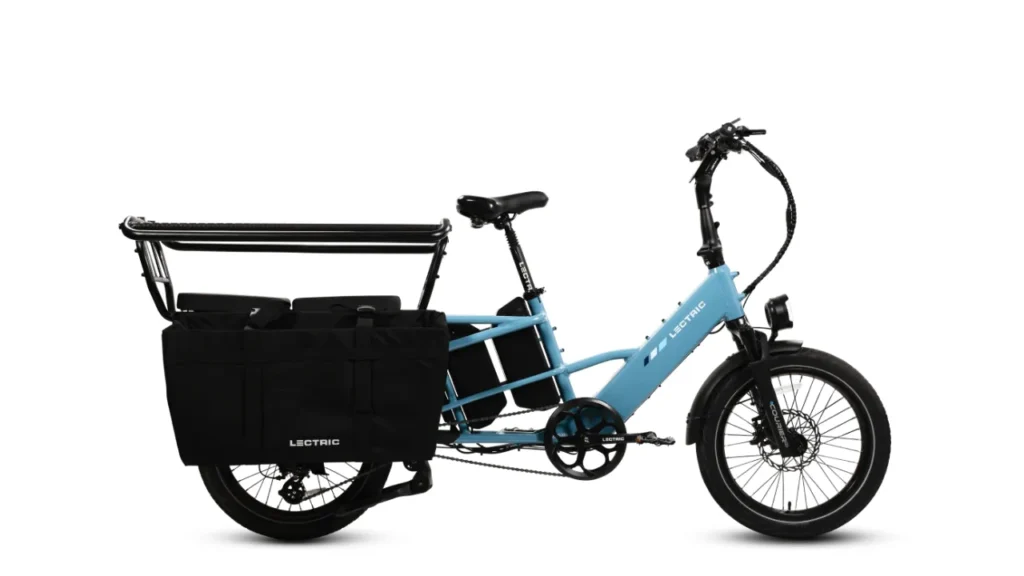
| Feature | Specification |
| Motor | 750W Rear Hub (1300W Peak) |
| Battery | Dual Battery Options Available |
| Top Speed | 28 mph |
| Payload Capacity | 450 lbs |
Review: Range anxiety is the ultimate enemy of an Uber Eats driver, and the Lectric XPedition 2.0 solves it completely. By upgrading to the dual-battery configuration, you can easily run 8-to-12 hour delivery shifts without stopping to recharge. The elongated rear rack is specifically designed to accommodate dual pannier bags, giving you plenty of space for multiple grocery orders.
With both 48V/13Ah batteries installed (1,248Wh combined), Lectric rates the XPedition 2.0 for up to 120 miles per charge. That’s enough for back-to-back lunch and dinner rushes without searching for an outlet. Charging is straightforward with the included 2A charger and takes about 5 to 7 hours per battery. Riders who want faster turnaround between shifts can upgrade to Lectric’s optional 5A fast charger.
The bike comes equipped with integrated turn signals and a rear brake light built into the taillight. Those features improve visibility when riding through traffic after dark. The XPedition 2.0 weighs about 65 lbs without the batteries, and each battery adds roughly 9 lbs. The frame has also been tested to the DIN 79010 cargo bike durability standard, supporting its 450 lb payload rating.
Want more details? Read Our In-Depth Lectric XPedition 2.0 Review
Pros:
- Incredible range via dual-battery setup.
- High-peak motor flattens steep urban hills.
- Competitive pricing for a commercial cargo bike.
Cons:
- Rigid frame transmits bumps if roads are rough.
👉 [Check Price and Availability on Lectric Here]
Fiido T2 Longtail – Best Cargo Frame Layout
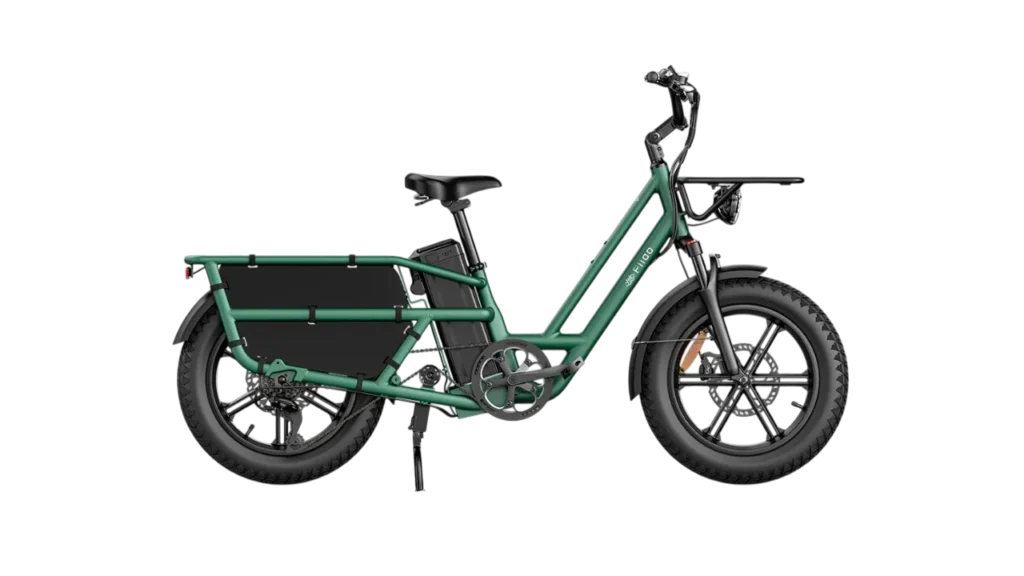
| Feature | Specification |
| Motor | 750W Brushless Hub Motor |
| Battery | 48V, 20 Ah (998.4 Wh) |
| Top Speed | 25 mph |
| Payload Capacity | 440 lbs |
Review: The Fiido T2 features a brilliant step-through longtail design that makes mounting and dismounting completely effortless—even when the rear rack is stacked high with food orders. It comes equipped with massive 4-inch fat tires and a front suspension fork, allowing you to breeze over potholes, curbs, and poorly maintained city streets without ruining the customer’s food.
The 2025 Fiido T2 pairs a 998.4Wh battery with a Mivice torque sensor. Fiido’s real-world range testing, using a combined rider and cargo weight of 187 lbs on flat terrain, produced roughly 85 miles in Eco mode, 71 miles in Sport mode, and 64 miles in Turbo mode. Those are impressive figures for a cargo bike designed to carry heavy insulated delivery bags throughout a full shift.
Braking comes from 4-piston hydraulic disc brakes, a meaningful upgrade over the single-piston systems found on many budget cargo bikes. That extra stopping power becomes especially valuable when you’re carrying more than 30 lbs of food. The bike is also rated IP54 for protection against dust and light rain. At about 87 lbs with the battery installed, it’s a heavy machine, so plan to roll it up curbs and ramps rather than lift it.
Want more details? Read Our In-Depth Fiido T2 Longtail Review
Pros:
- Large 20 Ah battery yields great baseline range.
- Low step-through frame prevents tip-overs.
- Fat tires provide exceptional stability.
Cons:
- Very long wheelbase makes tight turns tricky.
👉 [Check Price and Availability on Fiido Here]
Eunorau FAT-AWD 3.0 – Best All-Weather & Winter Pick
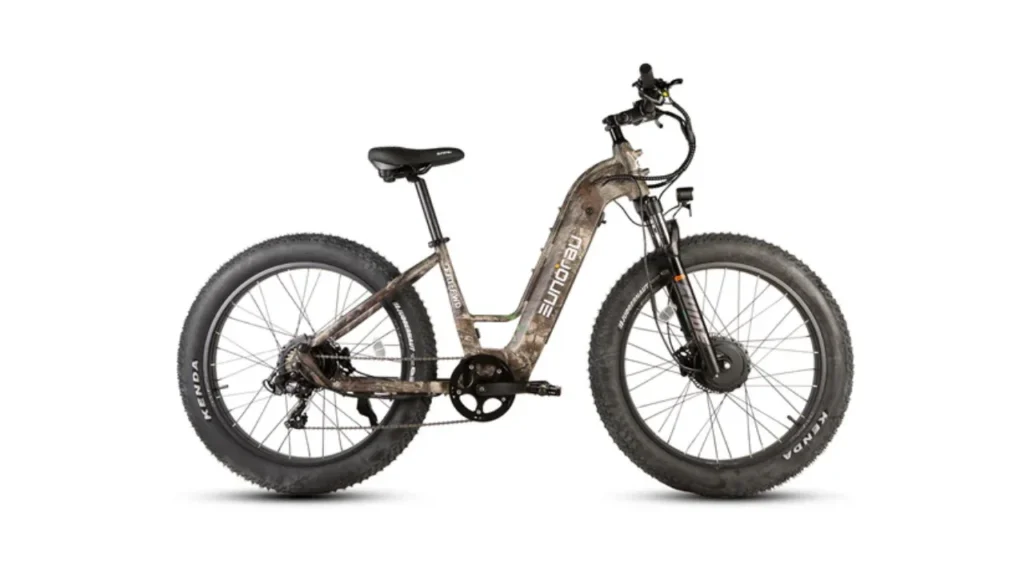
| Feature | Specification |
| Motor | Dual 500W Motors (All-Wheel Drive) |
| Battery | 48V, 20 Ah (Dual Battery Capable) |
| Top Speed | 28 mph |
| Payload Capacity | 375 lbs |
Review: If you deliver food during rainy seasons or freezing winter snowstorms to take advantage of high surge pricing, you need the Eunorau FAT-AWD. Featuring dual 500W motors (one in the front wheel, one in the rear), this bike grips slippery asphalt and snowy roads with unmatched traction. It climbs steep hills with ease, even when fully loaded.
The dual 500W motors, one in each wheel, produce a combined 110 Nm of torque. Riders can switch between the front motor, rear motor, or both using a simple handlebar control. This setup gives the FAT-AWD its reputation for powering through snow, slush, and other slippery conditions during winter surge pricing. With the optional second 15Ah battery installed, Eunorau rates the range at around 80 miles. On the standard single battery, expect noticeably less, especially when using both motors.
The RST front suspension fork provides 95mm of travel, helping smooth out potholes and rough city streets. The frame is UL certified for added peace of mind. Charging is handled by a standard 2A charger, so a full recharge takes about 5 to 7 hours. If you rely on the FAT-AWD for long weather-driven shifts, it’s worth planning your charging schedule in advance.
Want more details? Read Our In-Depth Eunorau FAT-AWD 3.0 Review
Pros:
- Dual-motor AWD gives unmatched traction in snow/rain.
- Solid build quality built for rugged abuse.
- Incredible climbing power on steep hills.
Cons:
- Dual motors drain the battery faster than single motors.
👉 [Check Price and Availability on Eunorau Here]
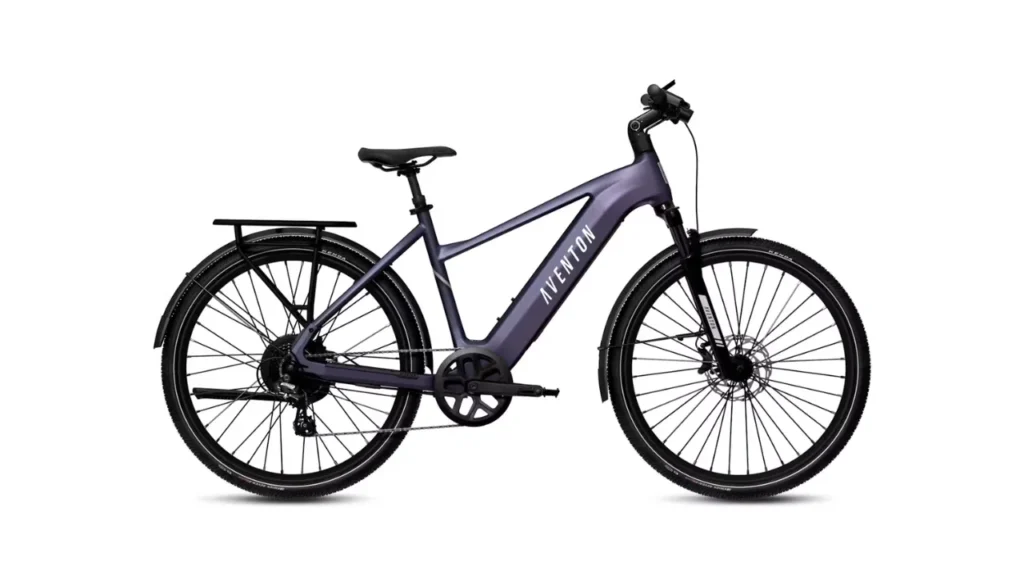
Aventon Level 3 – Best Traditional Commuter Style
| Feature | Specification |
| Motor | 500W Next-Gen Rear Hub |
| Battery | Integrated 48V Battery |
| Top Speed | 28 mph |
| Payload Capacity | 300 lbs |
Review: Not every courier wants to ride a heavy, bulky cargo bike. The Aventon Level 3 offers the nimble agility of a standard commuter bike while packing a punchy motor. It weaves effortlessly through tight gridlock traffic and crowded downtown spaces. It comes standard with a pre-installed rear rack and durable metal fenders to keep road spray off your back.
The Level 3 uses the same 733Wh battery platform as the Abound SR but in a lighter, non-cargo frame that weighs about 67 lbs. Aventon rates it for up to 70 miles of range in Eco mode, which is enough for most single-shift couriers. Charging from empty takes about 5 hours with the included 4A charger.
It shares the Abound SR’s swappable torque and cadence sensor system, along with the 120% power Boost Mode. The included rear rack is rated for 60 lbs, making it better suited to single-order runs and smaller insulated bags than large catering deliveries. Like the other Aventon models in this guide, it carries UL 2849 and UL 2271 certifications. It also comes with a two-year warranty and a lifetime frame warranty upon registration.
Want more details? Read Our In-Depth Aventon Level 3 Review
Pros:
- Agile, lightweight handling compared to cargo bikes.
- Premium torque sensor gives smooth power.
- Clean, stealthy aesthetic with hidden battery.
Cons:
- Smaller rack space than dedicated cargo models.
👉 [Check Price and Availability on Aventon Here]
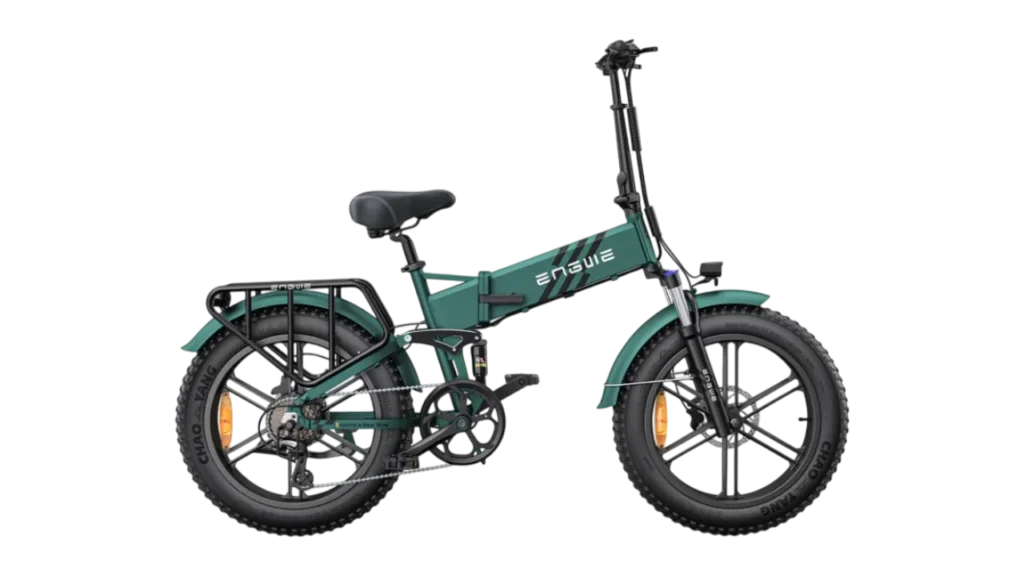
ENGWE Engine Pro 2.0 – Best Folding Option for Tight Spaces
| Feature | Specification |
| Motor | 750W High-Torque Hub |
| Battery | 52V, 16 Ah |
| Top Speed | 28 mph |
| Payload Capacity | 330 lbs |
Review: If you need to store your delivery bike inside a small apartment, a tight hallway, or the trunk of a car, the Engwe Engine Pro 2.0 is your best bet. It folds down in seconds but doesn’t compromise on power, using a high-voltage 52V system that delivers excellent acceleration to help you hit your delivery time windows.
Engwe’s spec sheet lists different range estimates depending on how you ride. Expect about 30 miles using the throttle alone, or up to 68 miles with pedal assist. Your actual delivery range will likely fall somewhere in between, depending on how much you pedal versus using the throttle. The 52V/16Ah battery takes about 6.5 hours to fully recharge with the included charger.
The Engine Pro 2.0 weighs about 70 lbs and folds down to just over 3 feet long. That’s compact enough to fit in a studio apartment closet or the trunk of a car between shifts. This portability is one of its biggest advantages over the fixed-frame cargo bikes in this guide, especially for riders with limited storage space.
Want more details? Read Our In-Depth ENGWE Engine Pro 2.0 Review
Pros:
- Folds tightly for easy storage and security.
- Full suspension handles rough asphalt smoothly.
- 52V system provides snappy acceleration.
Cons:
- Folding hinges require periodic tightening maintenance.
👉 [Check Price and Availability on Engwe Here]
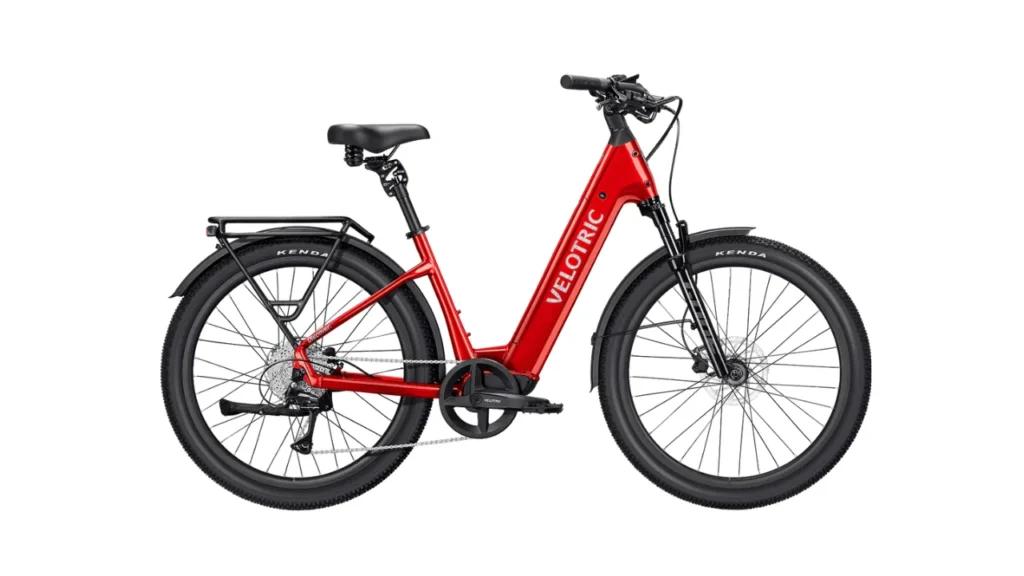
Velotric Discover 3 – Most Tech-Advanced & Comfortable
| Feature | Specification |
|---|---|
| Motor | 48V, 750W (1100W Peak, 75Nm Torque) |
| Battery | 48V, 15.2Ah (730Wh) Samsung/LG Cells |
| Top Speed | 20 mph (Default) / Up to 28 mph (Unlocked) |
| Payload Capacity | 440 lbs Total (Rear rack holds 66 lbs) |
Review: The Velotric Discover 3 is a tech-heavy powerhouse built for intense, stop-and-go inner-city courier shifts. Its standout commercial feature is the industry-first SensorSwap™ system, allowing you to switch between a responsive torque sensor for climbing city hills and a pure cadence sensor to cruise effortlessly when leg fatigue sets in during an 8-hour shift.
Safety is paramount for night delivery drivers; the bike features an ultra-bright 500-lumen front headlight, integrated rear brake lights, and rear turn signals. Additionally, an IPX7 fully waterproof battery rating means you can confidently push through rain surges without risking electrical damage. The triple-insulated ComfortMax™ system—combining an adjustable front air fork, suspension seatpost, and a dual-density foam saddle—shields your spine from long-term road vibration fatigue.
Want more details? Read Our In-Depth Velotric Discover 3 Review
Pros:
- SensorSwap™: Switch between torque and cadence sensors on the fly.
- Commercial Safety: IPX7 waterproof battery with official UL 2271 and UL 2849 safety certifications.
- Anti-Theft: Works natively with Apple Find My and Android Find Hub, plus keyless NFC card unlocking.
Cons:
- The custom speed settings up to 28 mph are restricted and unsupported in California.
👉 [Check Price and Availability on Velotric Here]
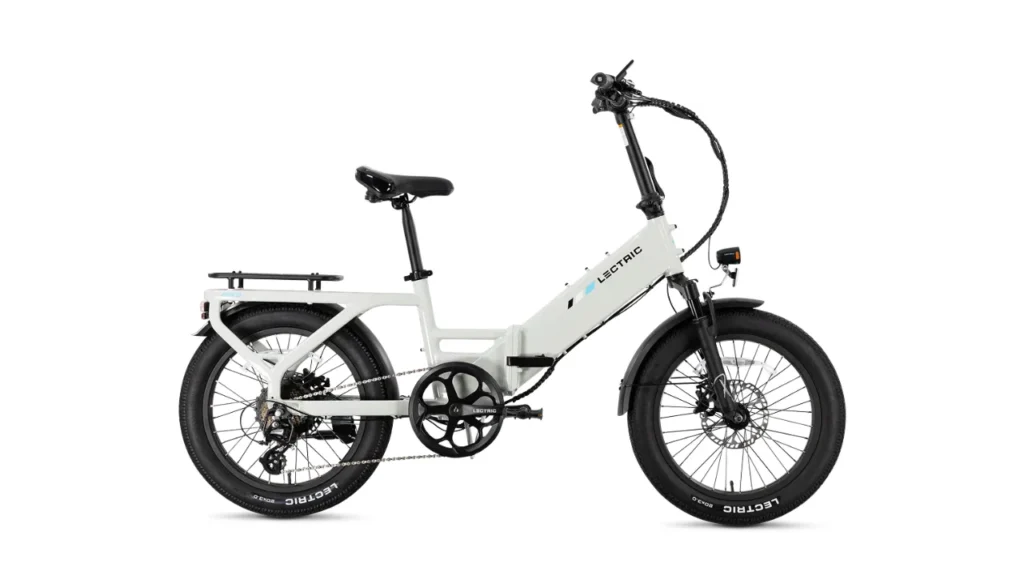
Lectric XP4 – Best Budget Pick Under $1,000
| Feature | Specification |
| Motor | 500W Rated (1000W Peak) |
| Battery | 48V Lithium-Ion |
| Top Speed | 28 mph |
| Payload Capacity | 330 lbs |
Review: For casual or part-time Uber Eats drivers who want to earn extra cash without a massive upfront investment, the Lectric XP 4.0 is the gold standard. For under $1,000, you get a highly capable 28 mph machine with a rear rack. You can easily recoup the entire cost of this e-bike within your first two weeks of delivery work.
The base XP4 comes with a 500Wh (48V/10.4Ah) battery that delivers up to 50 miles per charge. It uses a 500W rear hub motor with a peak output of 1,092W and 55Nm of torque. Riders who need more range or stronger hill-climbing performance can upgrade to Lectric’s optional 750W motor and larger 17.5Ah battery. That combination increases the rated range to around 85 miles, making it a worthwhile upgrade if your delivery area includes steep hills. Charging takes 4 to 6 hours with the included 2A charger, or as little as 2 hours with the optional 5A fast charger.
At 62 lbs with the battery removed, the XP4 is easy to carry upstairs compared with most cargo bikes. It also folds down to roughly 3 feet, making it convenient to store in a small apartment or transport in a car for multi-modal delivery days. The rear rack supports up to 150 lbs, which is more than enough for a standard insulated delivery bag and everyday Uber Eats orders.
Want more details? Read Our In-Depth Lectric XP4 Review
Pros:
- Incredible value for money under $1,000.
- Reliable, no-nonsense mechanical layout.
- Shipped fully assembled out of the box.
Cons:
- Baseline battery range is shorter thn premium models.
👉 [Check Price and Availability on Lectric Here]
Fiido C11 Pro – Best Lightweight Agile City Bike
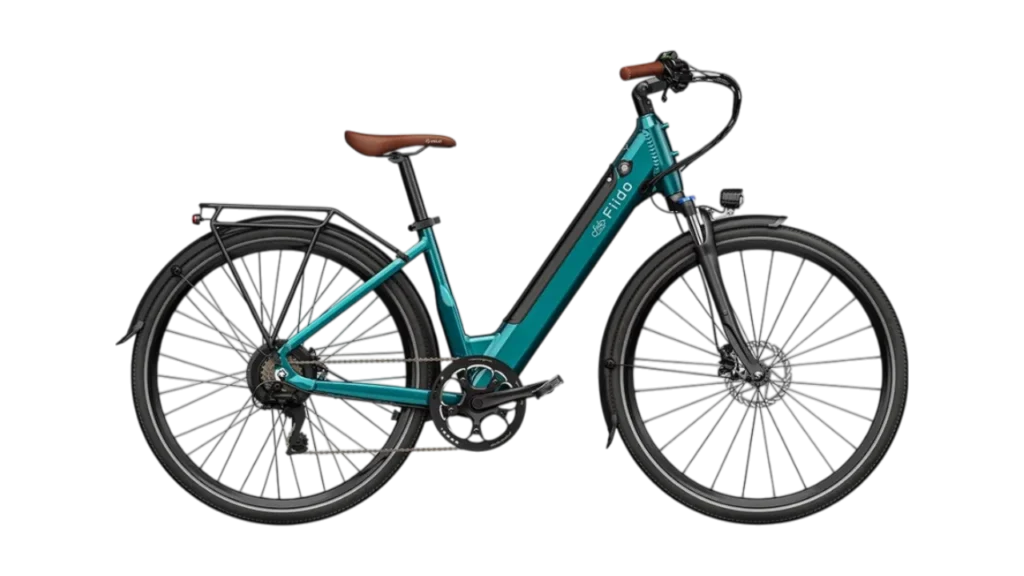
| Feature | Specification |
| Motor | 500W High-Efficiency Hub |
| Battery | 48V, Removable |
| Top Speed | 25 mph |
| Payload Capacity | 265 lbs |
Review: The Fiido C11 Pro strips away the bulk of fat tires and heavy utility frames, leaving you with a lightweight urban cruiser. It handles beautifully around sharp city corners and allows you to easily pedal manually if you want to conserve battery. The removable battery system allows you to bring a spare in your backpack to swap out on the go.
Fiido’s real-world range testing puts the C11 Pro at roughly 65 miles in Eco mode with a rider weighing around 175 lbs. In Turbo mode, the range drops to about 50 miles. Those are impressive numbers for a bike this light. The 55Nm Mivice torque sensor works with dual-piston hydraulic brakes and a front suspension fork to deliver a smooth, confident ride. The bike is also rated IP54 for protection against light rain and dust.
At around 54 lbs with the battery installed, the C11 Pro is noticeably easier to carry upstairs than the fat-tire cargo bikes on this list. The 499.2Wh battery is fully removable, making charging more convenient. Its 265 lb payload capacity and rear rack rated for about 55 lbs are better suited to standard food deliveries than large grocery or catering orders. If you regularly carry multiple heavy bags, one of the cargo bikes in this guide will be a better fit.
Want more details? Read Our In-Depth Fiido C11 Pro Review
Pros:
- Highly lightweight and easy to carry up stairs.
- Feels like riding a natural, traditional bicycle.
- Very affordable price point.
Cons:
- Lower weight capacity limit restricts massive grocery hauls.
👉 [Check Price and Availability on Fiido Here]
Rad Power RadRunner Plus – Best Utility Moped-Style
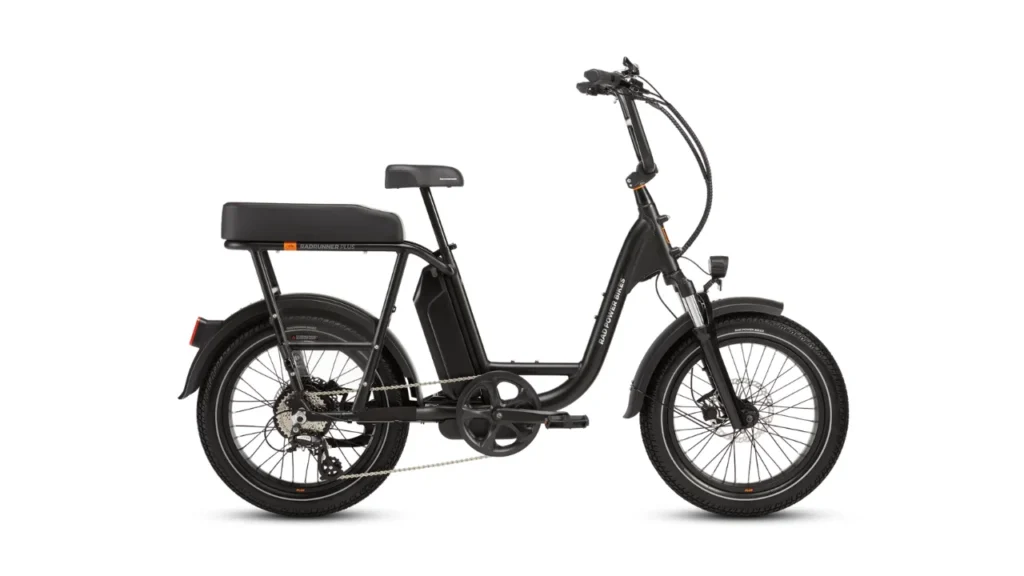
| Feature | Specification |
| Motor | 750W Custom Hub Motor |
| Battery | 48V Semi-Integrated |
| Top Speed | 20 mph |
| Payload Capacity | 350 lbs |
Review: The RadRunner Plus features a low-profile moped style frame that is incredibly comfortable for short riders. Its step-through deck allows you to step off the bike safely even when balancing a massive payload on the back. It features a highly modular accessory system, meaning you can purchase specialized front racks or center center-consoles directly from Rad Power to store extra delivery gear.
The RadRunner Plus pairs a 624Wh Safe Shield battery (UL certified with thermal-resistant protection) with a 750W/60Nm rear hub motor. Rad rates its real-world range at 17 to 55+ miles, depending on how much throttle you use versus pedal assist.
Braking comes from hydraulic discs, and the bike carries an IPX6 water-resistance rating, so light rain shouldn’t slow down a shift. Riders who need more range for double shifts can add Rad’s optional second battery and Range Extender kit for a claimed 120+ miles of total range. At 75 lbs (65 lbs with the battery removed), it’s a genuinely heavy bike. However, the low step-through moped-style frame and the 120 lb rear rack make it easy to load and unload quickly between stops.
Want more details? Read Our In-Depth RadRunner Plus Review
Pros:
- Stable moped-style ride profile.
- Step-through frame structure handles step-offs safely.
- Excellent Step-through safety when fully loaded.
- Great ecosystem of official delivery accessories.
Cons:
- Limited to 20 mph top speed out of the box.
👉 [Check Price and Availability on Rad Power Here]
For a deeper breakdown of how cable tension and fluid pressure affect your performance, read our complete guide on mechanical vs hydraulic disc brakes on electric bikes.
The Bottom Line: Which E-Bike Should You Choose for Uber Eats?
Investing in the right electric bike for your Uber Eats business is a decision that directly impacts your daily take-home pay. A cheap, unreliable bike will leave you stranded with broken components, while a bike with a small battery will force you to head home early right in the middle of a lucrative dinner surge.
To make your final decision simple:
- If you are a full-time courier who values pure cargo utility, heavy payload capacity, and reliable everyday performance, go with the Abound SR Ebike.
- If you are prone to range anxiety and want to pull massive 8-to-12 hour shifts without ever stopping to plug in, invest in the dual-battery Lectric XPedition 2.0.
- If you are working part-time or just getting started on a tight budget, the Lectric XP 4.0 will easily pay for itself within your first two weeks on the road.
No matter which model you choose, make sure to pick up a high-quality lock, a bright set of lights, and a sturdy helmet. Safe riding, and happy delivering!
Frequently Asked Questions
Do I need a license or registration to ride an e-bike for Uber Eats?
In most U.S. states, Class 1, 2, and 3 e-bikes (the categories every bike in this guide falls into) don’t require a driver’s license, registration, or insurance to operate on public roads and bike lanes. Rules vary by city and state, though: some places restrict Class 3 (28 mph) bikes from certain bike lanes, and a few require riders to be a minimum age. Check your local Department of Transportation or DMV guidance before you start delivering.
What’s the difference between Class 1, 2, and 3 e-bikes, and does it matter for delivery work?
Class 1 bikes only assist while you’re pedaling and cap out at 20 mph. Class 2 bikes add a throttle you can use without pedaling, also capped at 20 mph. Class 3 bikes offer pedal assist up to 28 mph (some also include a throttle limited to 20 mph). For delivery work, Class 2 or Class 3 bikes tend to be the most practical, since the throttle helps you get moving quickly from a stop with a full cargo load, and the higher top speed on Class 3 models can shave real time off longer trips.
How much battery range do I actually need for a full shift?
A single 8-hour delivery shift with steady stop-and-go riding typically covers 20–40 miles, depending on your city’s density and how many miles you ride between orders. Most single-battery bikes in the 50–70 mile range (like the Aventon Level 3, Lectric XP4, or Fiido C11 Pro) comfortably cover one shift. If you’re pulling double shifts or don’t want to think about charging at all, a dual-battery bike like the Lectric XPedition 2.0 (up to 120 miles) or a model with an optional range extender removes the guesswork.
How long does it take to charge an e-bike battery?
Most standard chargers included with these bikes take 4–7 hours for a full charge from empty. Several brands (Lectric, Aventon) sell optional fast chargers that cut this to 2–3 hours. If you’re doing back-to-back shifts, charging during your off-hours or investing in a second battery is usually more practical than trying to fast-charge between orders.
What payload capacity should I look for?
Look at two numbers separately: total payload capacity (rider + cargo + accessories combined) and rear rack capacity (how much weight the rack itself can safely hold). A single insulated delivery bag with food rarely exceeds 20–30 lbs, so most bikes on this list handle it easily. If you regularly carry large catering orders, multiple simultaneous deliveries, or stacked bags, prioritize bikes with rear racks rated for 120+ lbs, like the Aventon Abound SR or Rad Power RadRunner Plus.
How do I maintain my e-bike battery to make it last?
Avoid fully draining the battery before recharging, use only the charger that came with your bike, and try not to leave the battery at 100% or 0% for extended periods; many manufacturers recommend storing around 75% charge if the bike will sit unused for more than a few days. Keep the battery and charging port clean and dry, and avoid charging or storing it in extreme heat or cold, both of which degrade lithium-ion cells faster over time.
Is it worth buying a heavier cargo bike versus a lighter commuter bike for delivery work?
It depends on your delivery mix. Heavier cargo bikes (Aventon Abound SR, Lectric XPedition, Fiido T2, Rad Power RadRunner Plus) offer higher payload capacity, bigger racks, and more stable handling when fully loaded, ideal if you regularly carry large or multiple orders. Lighter commuter-style bikes (Fiido C11 Pro, Lectric XP4, Aventon Level 3) are easier to maneuver through traffic, carry upstairs, and store in a small apartment, which matters if you’re squeezing in shifts around city living. Many full-time couriers find a mid-weight bike with a rack rated for 60+ lbs hits the sweet spot.