
Aventon Vs Ecotric is an interesting comparison because these two electric bike brands target different types of riders. Aventon focuses on refined designs, torque sensors, connected security and a broad lineup. Ecotric takes a more budget-friendly approach, offering powerful hub motors, fat tires, folding bikes and specialty models.
So, which brand deserves your money?
My short answer is Aventon for most regular riders. Its bikes generally offer a more polished riding experience, better-connected features and stronger warranty coverage. Ecotric is worth considering if you want a high-powered electric bike without spending as much.
There is one important qualification. Several Ecotric models remain listed on the manufacturer’s website but were marked sold out when I checked. I’ll distinguish between models in the catalogue and bikes that appear available to order.
In this comparison, I’ll look at motor performance, pedal-assist systems, range, comfort, build quality, security and customer support. I’ll also compare the models that compete in commuter, lightweight, mountain and fat-tire categories.
How I Evaluated Aventon and Ecotric
I didn’t put both brands’ entire lineups through a month of testing for this article. Instead, I compared manufacturer specifications, product information, warranty terms, owner feedback and my previous coverage of these bikes.
I focused on the features that make a practical difference when riding and owning an electric bike.
- Motor performance: Rated power, peak output and published torque figures.
- Pedal assistance: Whether a bike uses torque, cadence or speed sensing.
- Battery and range: Battery capacity and manufacturer-claimed riding distance.
- Comfort: Suspension, tire size, riding position and overall weight.
- Safety and security: Brakes, lights, alarms, GPS tracking and locking features.
- Ownership: Warranty coverage, dealer support and availability.
Where a manufacturer didn’t publish a specification, I haven’t guessed. Range figures are manufacturer estimates, not guaranteed distances. Actual performance depends on rider weight, terrain, temperature, assist level and riding conditions.
I also checked product listings for availability. Several Ecotric models were marked sold out during my research, so their displayed prices should be treated as last-listed prices rather than confirmed offers.
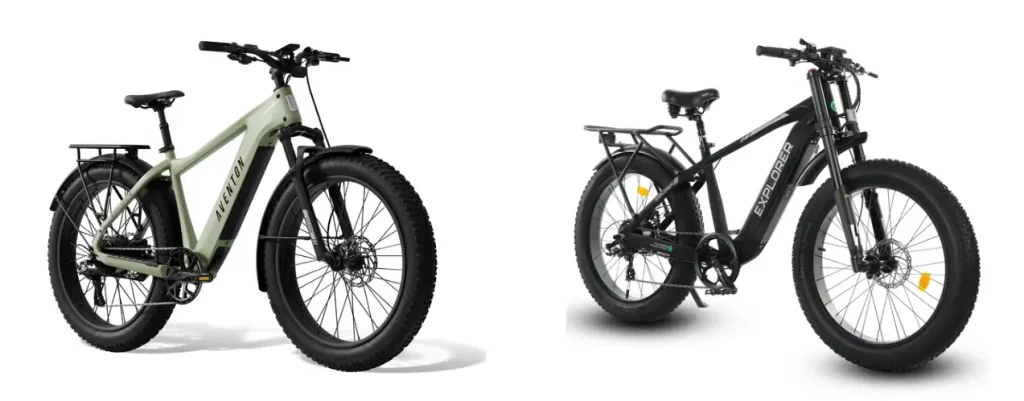
Aventon Vs Ecotric: Quick Comparison
| Category | Aventon | Ecotric |
| Best Known For | Refined, technology-focused electric bikes | Budget-friendly city, folding and fat-tire bikes |
| Commuter Example | Level 4 REC | Peacedove |
| Lightweight Example | Soltera 2.5 | Starfish |
| Fat-Tire Example | Aventure 3 | Bison |
| Mountain Example | Ramblas ADV and Current ADV | Seagull |
| Cargo Options | Abound LR and Abound SR | Explorer and electric trike |
| Motor Options | Hub motors and mid-drive systems | 350W to 1000W hub motors on models reviewed |
| Pedal Assistance | Torque sensing on several current models | Speed sensing or unspecified systems on models reviewed |
| Smart Security | GPS/4G tracking, alarms and rear-wheel lock on selected models | More conventional displays and controls |
| Warranty | Two-year limited warranty and conditional lifetime frame coverage | 18-month limited warranty |
| Best-Suited Rider | Daily commuters and riders seeking refinement | Budget-conscious riders prioritizing motor power and price |
Availability note: Several Ecotric models in this comparison showed sold-out status on their product pages during the research check.
What’s the Difference Between Aventon and Ecotric?
The easiest way to understand these brands is to look at their priorities.
Aventon builds a broad lineup with a strong emphasis on technology and everyday riding quality. Its range includes commuter bikes, lightweight city models, fat-tire bikes, cargo bikes and dedicated electric mountain bikes.
Ecotric focuses more on affordable hardware. Its catalogue includes city bikes, folding models, fat-tire bikes, mountain-style bikes and electric trikes. Some models offer high-rated hub motors and substantial batteries at relatively low advertised prices.
Neither approach is automatically better. The right choice depends on whether you prioritize riding refinement and connected features or affordability and straightforward hardware.
Motor Power
Ecotric has an advantage when comparing the rated motor power of some models. Its Bison and Seagull use 1000W rear hub motors, while Aventon’s Level 4 REC and Aventure 3 use 750W nominal hub motors.
However, rated wattage doesn’t tell the whole story.
The Aventon Level 4 REC reaches 1,188W peak power and up to 1,440W in Boost Mode. The Aventure 3 also reaches 1,440W in Boost Mode and produces 80Nm of torque under its standard setting.
Ecotric doesn’t publish a directly comparable torque figure for the Bison in the product information I reviewed. Its 1000W rating is impressive, but it doesn’t automatically mean the bike will climb better or deliver a more controlled ride.
Torque, motor tuning, gearing, rider weight and battery output all influence performance. If hill climbing is important, don’t choose a bike based on wattage alone.
Winner: Split. Ecotric offers higher rated motor power on some models. Aventon provides more complete performance specifications and a more sophisticated assist experience on its premium bikes.
Torque Sensors and Ride Feel
This is where Aventon pulls ahead.
The Aventure 3 uses a double-sided bottom-bracket torque sensor. Its Sensor Switch allows riders to choose between torque and cadence sensing. The Level 4 REC also offers Sensor Switch compatibility.
A torque sensor measures how hard you pedal and adjusts motor assistance accordingly. This generally creates a more natural connection between your effort and the motor’s response.
Cadence-based assistance works differently. The motor responds primarily to pedal movement rather than how much force you apply. It can feel less natural, although some riders prefer its straightforward operation.
The Ecotric Starfish lists a speed sensor. The Bison offers pedal assist and an on-demand throttle, but its product information doesn’t clearly identify the sensor type.
That doesn’t make Ecotric unsuitable for casual riding. It simply means I wouldn’t assume its bikes provide the same pedal feel as Aventon’s torque-sensing models.
Winner: Aventon. Its sensor technology gives riders more control over how assistance responds to their pedaling.
Range and Battery Size
Aventon’s Level 4 REC uses a 36V, 20Ah battery with a manufacturer-rated capacity of 733Wh. Aventon claims up to 75 miles of range. The Aventure 3 uses the same stated battery capacity and claims up to 65 miles.
Ecotric’s Bison uses a 48V, 17.5Ah removable battery. Multiplying voltage by amp-hours gives an approximate capacity of 840Wh. Its manufacturer-claimed range is up to 37 miles.
The Bison therefore has a larger calculated battery capacity, but that doesn’t translate into a longer advertised range. Its motor output, weight, wide tires and riding conditions all affect energy consumption.
The Starfish uses a 36V, 12.5Ah battery. Ecotric advertises up to 20 miles using electric power and up to 36 miles with pedal assistance.
The Seagull has a 48V, 13Ah battery and a claimed pure-electric range of more than 25 miles. The Explorer also uses a 48V, 13Ah battery and advertises up to 33 miles with pedal assistance.
Remember that manufacturer range figures are best-case estimates. A heavy rider using maximum assistance on steep terrain will usually get less distance than someone riding on flat roads with moderate assistance.
Winner: Aventon. The Level 4 REC and Aventure 3 have higher advertised range figures among the models compared, although the Bison has a substantial battery capacity.
Comfort and Ride Quality
Aventon pays considerable attention to everyday comfort. The Level 4 REC has an 80mm front suspension fork with preload adjustment and lockout, along with a 50mm suspension seatpost.
The Aventure 3 also has an 80mm fork and a 50mm suspension seatpost. Its 26 × 4.0-inch tires provide additional cushioning on uneven surfaces.
Ecotric’s Bison takes a different approach. It features a suspension fork, mid-mounted suspension and a suspension seat, combined with wide 26 × 4.8-inch tires. That’s substantial cushioning for a budget-oriented fat-tire bike.
The Starfish has no suspension listed, which is understandable for a compact folding bike designed around portability and affordability.
Weight is another consideration. The Bison is listed at approximately 79 lbs with its battery, while the Aventure 3 weighs around 76 lbs. Neither is lightweight, but both are heavy enough to make stairs and vehicle transportation challenging.
Winner: Aventon for overall refinement. Ecotric’s Bison still offers an impressive suspension setup for its category.
Build Quality and Durability
Warranty coverage provides one useful way to compare long-term ownership support.
Aventon offers a two-year limited warranty and lifetime frame coverage subject to its conditions. The lifetime frame coverage requires registration within the specified period and applies to the original purchaser. It isn’t an unconditional lifetime guarantee covering every component.
Ecotric advertises an 18-month limited warranty. Its warranty terms also include registration requirements, including registration within 30 days of the original purchase.
Weight and component specifications matter, too. The Aventure 3 weighs approximately 76 lbs, while the Bison is listed at around 79 lbs with its battery.
A heavier bike isn’t necessarily less durable, but it can be harder to lift, transport and store. Before buying either model, consider where you’ll keep it and whether you need to carry it regularly.
Winner: Aventon. Its longer warranty coverage and broader support ecosystem give it an advantage. That doesn’t prove every Aventon component will outlast every Ecotric component.
Security and Smart Features
Aventon has a clear advantage in connected security.
The Aventure 3 and Level 4 REC offer features that include GPS/4G tracking, alarm functions, app connectivity and an integrated rear-wheel lock. The Aventure 3 also includes a first-year tracking subscription under its advertised package.
Ecotric’s models use more conventional displays and controls. Their product pages list basic information such as speed, riding mode, distance and time. I couldn’t confirm equivalent integrated GPS tracking, remote locking and alarm features.
If you regularly park your bike outside, this difference matters. GPS tracking cannot guarantee recovery after theft, but it adds another layer of protection.
Winner: Aventon. Its connected security features are a meaningful advantage for commuters and riders who leave their bikes unattended.
Commuter E-Bikes: Aventon Level 4 REC vs Ecotric Peacedove
The Aventon Level 4 REC is a premium commuter option. It uses a 750W hub motor with 1,188W peak output, 80Nm of torque and a 36V, 20Ah battery with a stated capacity of 733Wh. Its claimed range reaches up to 75 miles.
The bike also has an 80mm suspension fork, a 50mm suspension seatpost and 27.5 × 2.2-inch tires. Hydraulic disc brakes with regenerative braking provide stopping power.
It weighs approximately 68.5 lbs and has a 300 lbs total weight limit.
Ecotric’s Peacedove is a much simpler city bike. It uses a 350W rear hub motor and a 36V, 10Ah battery. The bike weighs approximately 55 lbs and has a 265 lbs maximum load rating.
Its braking setup combines a front V-brake with a rear disc brake. Ecotric advertises a top speed of up to 25 mph, although the default US speed setting is 20 mph. I couldn’t confirm a manufacturer-published range figure for this model.
These bikes aren’t direct specification competitors. The Level 4 REC is a premium, connected commuter, while the Peacedove is a basic city bike designed around affordability.
The Peacedove’s product page showed sold-out status during my research. Its last-listed price was around $359, but that shouldn’t be treated as a confirmed current offer.
For daily commuting, I’d choose the Level 4 REC. Its torque-sensing technology, connected security, suspension and stronger warranty make it the more complete option. The Peacedove may appeal to occasional riders if it returns to stock.
Winner: Aventon.
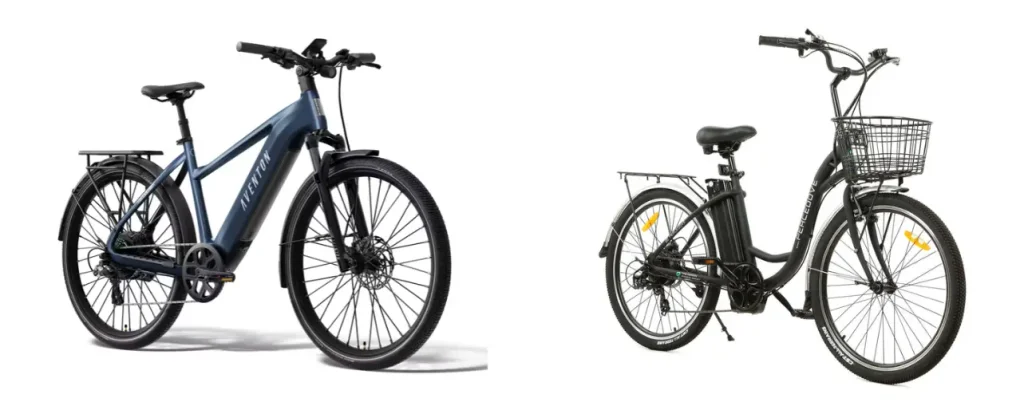
Lightweight E-Bikes: Aventon Soltera 2.5 vs Ecotric Starfish
The Soltera 2.5 and Starfish approach lightweight riding differently.
Aventon’s Soltera 2.5 uses a 350W motor with 540W peak power and 45Nm of torque. It has a torque sensor, a 36V battery with a stated capacity of 345.6Wh and a claimed range of up to 46 miles.
The bike weighs approximately 46 lbs and has a 300 lbs maximum payload.
Ecotric’s Starfish is a compact folding bike with a 350W rear hub motor and a 36V, 12.5Ah battery. Its calculated battery capacity is approximately 450Wh. Ecotric advertises up to 20 miles using electric power and up to 36 miles with pedal assistance.
The Starfish weighs 50.7 lbs and has a 200 lbs maximum load rating. It uses a speed sensor, a front V-brake and a rear disc brake, with 20 × 1.95-inch tires.
The Soltera 2.5 is lighter, supports more payload and has a torque sensor. The Starfish folds, which is a major advantage if storage space is limited or you need to transport your bike in a compact vehicle.
Ecotric’s product listing showed the Starfish as sold out during my research. Its displayed price should therefore be treated as a last-listed figure rather than a confirmed offer.
If you want a lightweight bike for regular city riding, the Soltera 2.5 is the stronger choice. If folding convenience matters more than weight and ride refinement, the Starfish has a practical advantage.
Winner: Aventon for lightweight riding and ride quality; Ecotric for folding convenience.
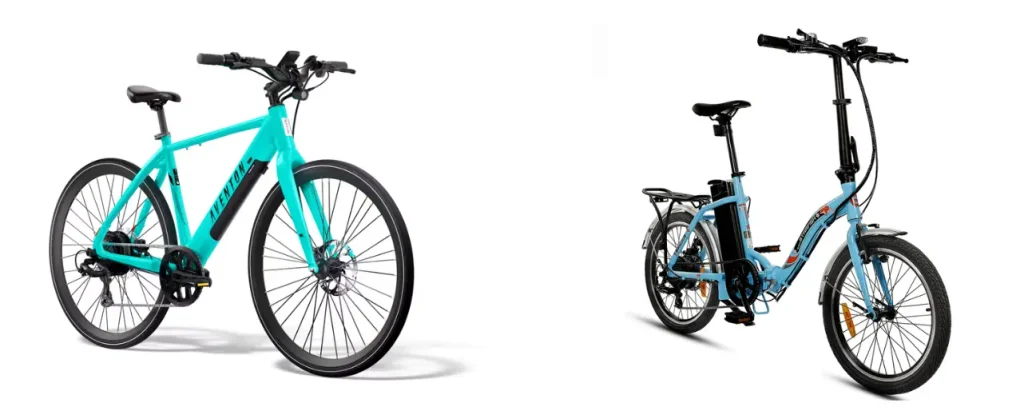
Mountain E-Bikes: Aventon Ramblas ADV vs Ecotric Seagull
Aventon offers the hardtail Ramblas ADV and the full-suspension Current ADV. Ecotric’s Seagull is a more affordable electric mountain-style bike.
The Ramblas ADV uses a mid-drive motor with up to 100Nm of torque. Its design is aimed at riders who want a purpose-built electric mountain bike for trail riding.
The Current ADV adds full suspension. Its motor offers 110Nm of torque in its standard setting and up to 120Nm in Boost Mode. Aventon also advertises up to 105 miles of range, although actual distance will vary considerably with trail conditions and assist level.
The Ecotric Seagull uses a 1000W rear hub motor and a 48V, 13Ah battery. Its manufacturer claims more than 25 miles of pure-electric range. The bike weighs approximately 65 lbs with its battery and has a 265 lbs maximum load rating.
One important detail: the Seagull is not a fat-tire mountain bike. Its official tire specification is 26 × 2.125 inches. It also has hydraulic disc brakes.
The Seagull offers an affordable way to try electric off-road riding, but it isn’t a direct substitute for a dedicated mid-drive trail bike such as the Ramblas ADV. The motor system, frame design and intended riding conditions are different.
Ecotric’s Seagull product page showed sold-out status during my research. Its last-listed price shouldn’t be treated as a confirmed available offer.
If you’re serious about trail riding, I’d choose the Ramblas ADV or Current ADV. The Seagull makes more sense for casual riders who want an inexpensive mountain-style electric bike.
Winner: Aventon. Its mountain-bike models are more purpose-built for trail riding.
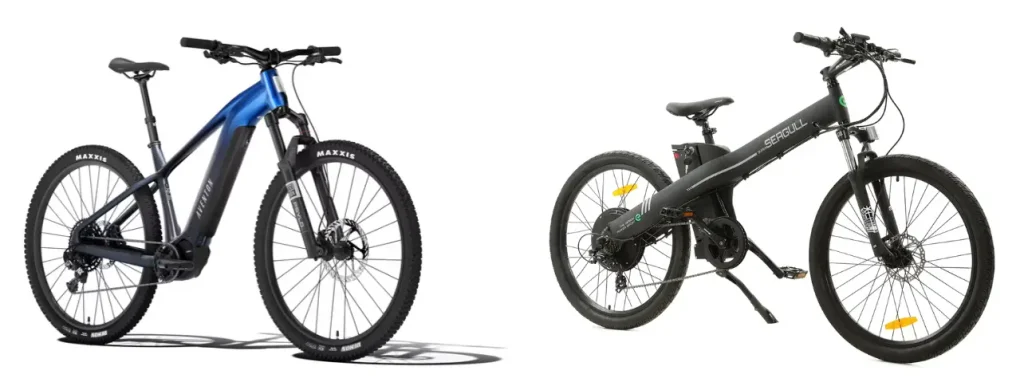
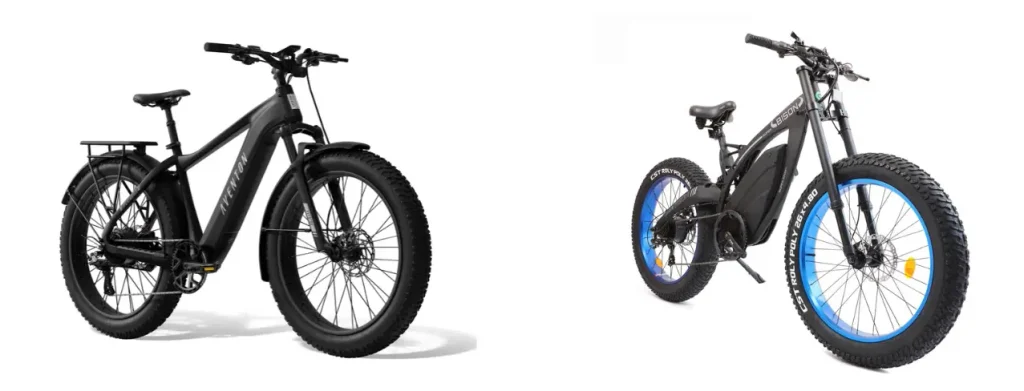
Fat-Tire E-Bikes: Aventon Aventure 3 vs Ecotric Bison
This is one of the more interesting comparisons because both brands offer substantial fat-tire bikes.
The Aventon Aventure 3 has a 750W nominal motor, up to 1,440W peak power in Boost Mode and 80Nm of torque. Its 36V, 20Ah battery has a manufacturer-rated capacity of 733Wh, with a claimed range of up to 65 miles.
It uses 26 × 4.0-inch tires, hydraulic disc brakes and an 80mm suspension fork. The 50mm suspension seatpost adds comfort on rough roads.
The bike weighs approximately 76 lbs and has a 400 lbs maximum load rating. It also offers connected security features, including GPS/4G tracking, an alarm and a rear-wheel lock.
The Ecotric Bison has a 1000W rated rear hub motor and a 48V, 17.5Ah battery. Its calculated battery capacity is approximately 840Wh, and the manufacturer claims up to 37 miles of range.
It uses wider 26 × 4.8-inch tires, hydraulic disc brakes and a suspension setup that includes a fork, mid-mounted suspension and a suspension seat. The bike weighs approximately 79 lbs with its battery and has a 265 lbs maximum load rating.
Ecotric’s main technical specification lists a 17.5Ah battery, although some product image descriptions refer to 17.6Ah. I’ve used the main specification for this comparison.
The Bison has a higher-rated motor, a larger calculated battery capacity and wider tires. The Aventure 3, however, offers a higher payload, longer advertised range, connected security and a more sophisticated sensor system.
The Bison’s product page showed sold-out status during my research. Its last-listed price is not a guarantee that you can currently order one.
I’d choose the Aventure 3 for regular riding and a more complete ownership experience. The Bison is interesting if you prioritize motor rating, wide tires and budget value, provided it becomes available.
Winner: Split. Aventon wins on refinement, payload, security and advertised range. Ecotric has the advantage in rated motor power and tire width.
Trike and Specialty E-Bikes
Ecotric offers something Aventon doesn’t: an electric tricycle.
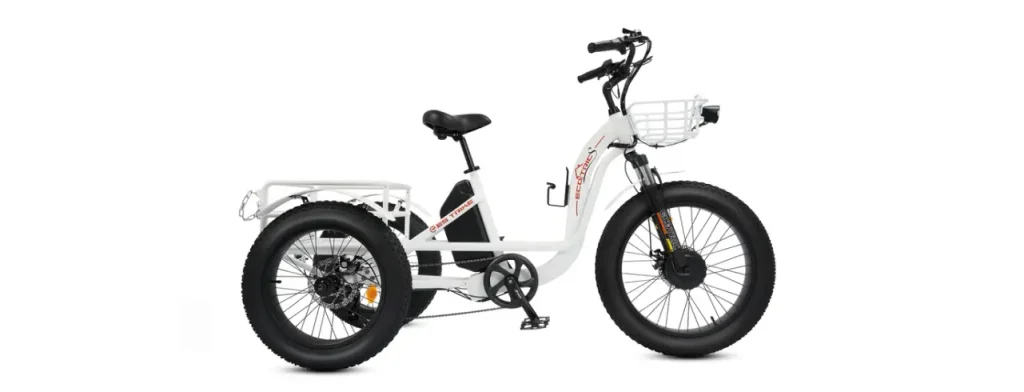
Its electric trike uses a 750W rear hub motor and a 48V, 22.4Ah battery. It has a 24 × 4.0-inch front tire and 20 × 4.0-inch rear tires.
The manufacturer lists a maximum load rating of 265 lbs and a weight of approximately 147.1 lbs with the battery. That weight is worth considering before buying, especially if you need to transport or store the trike.
Aventon doesn’t currently offer a direct electric-trike equivalent.
A trike may appeal to riders who prefer a three-wheel design, but it isn’t automatically safer or easier for everyone. Turning, braking, storage and getting on and off the bike all deserve consideration.
Ecotric’s trike page showed sold-out status during my research. Check with the manufacturer before treating its displayed price or specifications as a current purchase offer.
Winner: Ecotric. It offers a specialty format that Aventon doesn’t currently match.
Cargo and Utility E-Bikes
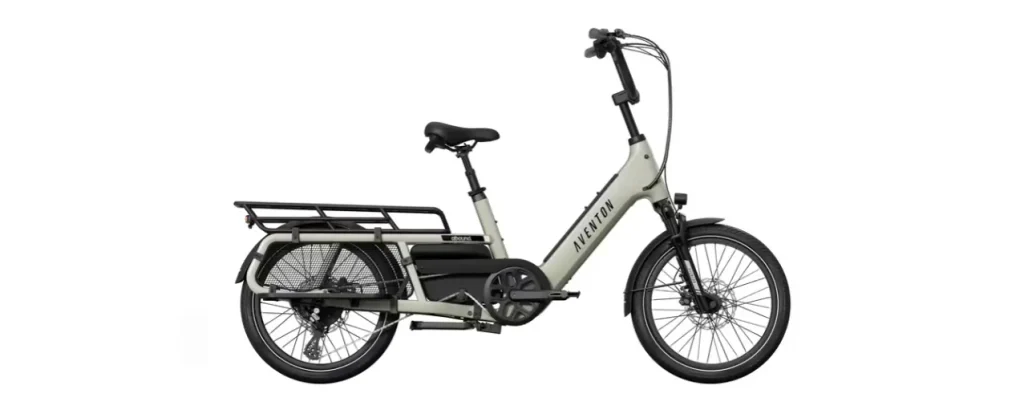
Aventon’s cargo lineup includes the Abound LR and Abound SR. These are purpose-built cargo bikes rather than ordinary electric bikes with a rear rack.
The Abound models are designed for carrying everyday gear and handling utility-focused riding. This gives Aventon a clearer position in the cargo category.
Ecotric’s closest alternatives are the Explorer fat-tire bike with a rear rack and its electric tricycle.
The Explorer uses a 750W rear hub motor and a 48V, 13Ah battery. Ecotric advertises up to 33 miles of range with pedal assistance. The bike weighs approximately 76 lbs and has a 265 lbs maximum load rating.
However, I wouldn’t treat that total load rating as a confirmed rear-rack payload. The product information I reviewed doesn’t establish a comparable dedicated cargo capacity.
The Explorer’s product page showed sold-out status during my research. Its last-listed price should not be considered a guaranteed offer.
If you regularly carry groceries, children or heavier equipment, Aventon’s purpose-built cargo platform is the stronger choice. If you only need a rear rack for occasional light errands, the Explorer may be worth considering if it becomes available.
Winner: Aventon. Its Abound models are dedicated cargo bikes with a clearer utility-focused design.
Where the Two Brands Stop Overlapping
After comparing the categories, I see a consistent pattern.
Aventon covers commuter, lightweight, mountain, fat-tire and cargo bikes with an emphasis on technology and riding refinement. Ecotric offers budget-oriented fat-tire, folding, city, mountain and specialty models.
The brands overlap most clearly in fat-tire bikes. They also have some similarities in city, folding and mountain-style categories, but their models don’t always target the same riders.
The Seagull is a good example. It has a 1000W motor and a 48V, 13Ah battery, but its 2.125-inch tires and budget-oriented design make it quite different from a dedicated mid-drive trail bike.
The same applies to the commuter category. The Level 4 REC is a feature-rich commuter, while the Peacedove is a much simpler city bike.
That’s why I wouldn’t declare one brand the winner based only on the number of categories it offers. Compare the specific bikes you’re considering, and make sure the model is actually available.
Value for Money
Price is one of Ecotric’s strongest selling points. Its catalogue has included models with high-rated hub motors, substantial batteries and basic equipment at relatively accessible price points.
Aventon generally asks buyers to spend more. However, the additional cost can bring meaningful improvements in pedal-assist technology, connected security, suspension, warranty coverage and dealer support.
I wouldn’t judge value by motor wattage or battery capacity alone. A bike also needs to fit your body, handle your regular routes, provide dependable braking and offer practical support when something needs repair.
Availability is another important part of value. Several Ecotric models were marked sold out during my research. An attractive last-listed price doesn’t help much if the manufacturer cannot confirm that the bike is available.
For buyers with a limited budget, Ecotric deserves consideration when the right model is in stock. For someone planning to ride regularly and keep the bike for several years, Aventon’s additional features and ownership support may justify the higher investment.
My advice is to compare the complete package rather than choosing the bike with the biggest motor rating. Check the warranty, replacement battery availability, service options and actual payload before making a decision.
Customer Support and Warranty
Warranty coverage is another area where Aventon has an advantage.
Aventon lists a two-year limited warranty and lifetime frame coverage subject to its terms. The frame coverage requires registration within 90 days of purchase and applies to the original retail purchaser. It isn’t transferable, and it doesn’t mean every component is covered for life.
Ecotric advertises an 18-month limited warranty. Its terms require registration within 30 days of the original purchase to activate coverage.
Ecotric also advertises a 30-day at-home trial and a seven-day price match. Its published support information includes weekday phone and email assistance from 9:00 a.m. to 5:00 p.m. Pacific Time. Check the conditions and eligibility requirements before relying on these offers.
Aventon has an established network of more than 2,000 bike shops and service locations. That can make test rides and in-person support easier to find.
I couldn’t confirm equivalent dealer coverage for both brands from the product information reviewed. Before buying either one, I’d check whether a local shop can service the bike and whether replacement parts are readily available.
This is especially important with heavy electric bikes. Shipping one back for repair can be inconvenient and expensive.
Winner: Aventon. Its longer warranty coverage and wider dealer network make ownership more reassuring.
Aventon Vs Ecotric: Category Winners
Here’s how the comparison breaks down.
| Category | Winner | Why |
| Motor Power | Split | Ecotric offers higher-rated hub motors; Aventon offers mid-drive options and more complete torque information |
| Commuting | Aventon | Better sensor technology, connected features and refinement |
| Lightweight Riding | Aventon | Soltera 2.5 is lighter and has a torque sensor |
| Folding Convenience | Ecotric | Starfish offers a folding design |
| Fat-Tire Riding | Split | Aventure 3 has better features and payload; Bison has a higher-rated motor and wider tires |
| Mountain Biking | Aventon | Ramblas and Current are more purpose-built trail bikes |
| Cargo | Aventon | Dedicated Abound cargo models |
| Advertised Range | Aventon | Level 4 REC and Aventure 3 have higher claimed range figures among the models reviewed |
| Connected Security | Aventon | GPS/4G tracking, alarms and rear-wheel lock |
| Trike and Specialty Formats | Ecotric | Offers an electric trike without a direct Aventon equivalent |
| Warranty and Support | Aventon | Longer coverage and broader dealer network |
| Budget Value | Ecotric | Lower last-listed prices and high motor ratings |
Aventon wins more categories overall, but that doesn’t make Ecotric a poor choice. Ecotric has a genuine appeal for buyers who prioritize affordability, motor power and specialty formats.
The sold-out listings are an important qualification. A bike’s value only matters if you can actually buy it.
Who Should Choose Aventon?
I’d recommend Aventon if you:
- Commute regularly and want a natural-feeling torque sensor.
- Value GPS tracking, alarms and connected security features.
- Prefer longer warranty coverage and a wider dealer network.
- Want a bike with a higher advertised range on selected models.
- Need a clearly published payload rating on models such as the Aventure 3.
- Want a purpose-built electric mountain bike.
- Carry cargo or children regularly.
- Prefer a more connected app and software experience.
Aventon is particularly appealing if you want one electric bike for regular commuting, weekend rides and everyday errands.
Who Should Choose Ecotric?
Ecotric may suit you better if you:
- Want a powerful fat-tire bike without spending as much.
- Prefer straightforward controls and throttle-friendly riding.
- Need a folding bike for compact storage.
- Are interested in an electric trike.
- Want to try e-biking before investing in a more expensive model.
- Are comfortable with a simpler feature set.
- Find a suitable model in stock and can confirm its warranty and support arrangements.
I’d pay particular attention to availability and replacement-part support before ordering an Ecotric bike. The specifications may look attractive, but you should confirm that the manufacturer can supply the model and support it after purchase.
Aventon Vs Ecotric: Which Should You Buy?
If I had to summarize this comparison in one sentence, I’d say buy Aventon if you ride often and want a refined, connected electric bike with stronger warranty support. Consider Ecotric if you prioritize motor power and affordability over advanced features.
For daily commuting, regular riding or parking outside, I’d choose Aventon. Its torque sensing, connected security and dealer network make it the more complete option.
For an occasional-use fat-tire bike, a folding model or a first electric bike on a tight budget, I’d consider Ecotric. Just confirm that the specific model is available before making plans around its advertised price.
Before buying either brand, check your height against the manufacturer’s sizing chart and compare the maximum payload with your weight and any cargo you plan to carry.
Also consider how you’ll transport and store the bike. A heavy electric bike can be difficult to lift onto a vehicle rack or carry up stairs.
Finally, check your local electric bike regulations. Motor power, speed limits and permitted riding locations can vary depending on where you live.
The Bottom Line
I’d choose Aventon for most riders. Its torque sensors, connected security features, suspension, longer advertised range on selected models and warranty coverage add up to a more refined ownership experience. Those advantages matter when you ride every day.
I’d choose Ecotric when price and motor power are the deciding factors, particularly if you’re looking for a fat-tire bike, folding model or electric trike. Its specifications can look impressive for the money, but several models were marked sold out on the manufacturer’s website during my research.
Whichever brand you choose, check the live specifications, stock status, warranty terms and local riding rules before buying. Product listings and prices change, and the right electric bike is the one that fits your needs and is actually available.
For more brand comparisons, you can also read my guides to Aventon vs Addmotor and which Aventon electric bike is best for you.